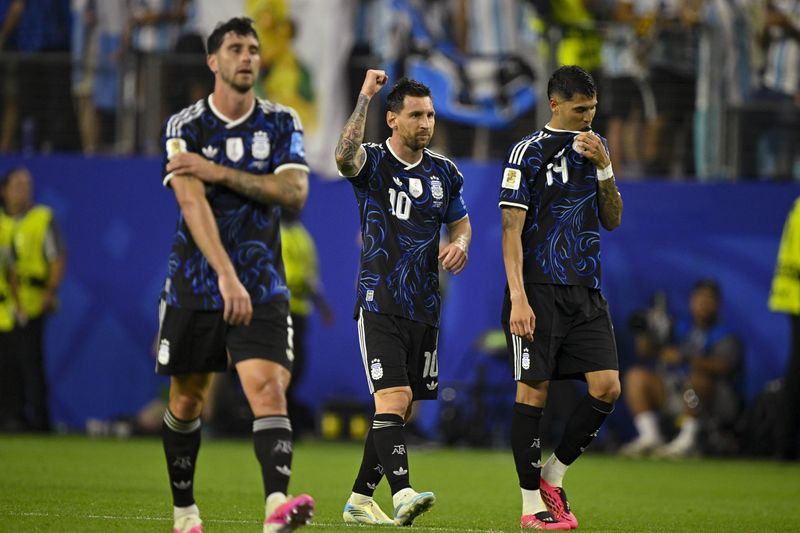
The conversation around Cape Verde's World Cup campaign has shifted fundamentally since their arrival in Miami. What began as a narrative of underdog participation has evolved into something far more consequential: a genuine bid for tournament advancement against the sport's most dominant recent force. On Friday, the nation's football team will face Argentina in a decisive last-32 encounter, and their coach Bubista has made clear that Cape Verde intends to compete with the same intensity and tactical discipline that has already produced stunning group-stage results.
Bubista, a former centre-back who understands defensive structure and organisational rigour, has maintained unwavering consistency in his messaging throughout this competition. His strategic vision—emphasising humility, collective discipline, and concentrated ambition—has resonated through three group matches that fundamentally redefined expectations surrounding the African outsiders. The results speak loudly: Cape Verde drew with Spain, drew with Uruguay, and drew with Saudi Arabia, outcomes that seemed implausible before the tournament began. These performances have validated his philosophical approach and given his players genuine conviction heading into a knockout scenario where margins between success and elimination become razor-thin.
At Thursday's pre-match media briefing in Miami Stadium, Bubista articulated a clear and singular objective. The team's focus remains narrowly trained on progressing to the next round, with no dilution of effort or attention devoted to secondary considerations. He emphasised that Cape Verde earned their tournament place through the rigorous qualification process and subsequently secured advancement from their group by finishing second, achievements that carry weight and legitimacy regardless of global perceptions. This framing matters because it rejects the victim narrative often imposed on smaller nations, instead positioning Cape Verde as participants who have competed on merit and deserve recognition for doing so.
The coach's confidence stems from demonstrable evidence. Throughout the three group matches, Cape Verde approached each encounter with the realistic possibility of victory rather than mere participation. This mentality distinguishes his team from genuinely overwhelmed opponents and suggests an institutional belief in tactical competitiveness. Bubista told gathered journalists that his players intend to maintain this approach against Argentina, combining respectful acknowledgment of their opponent's quality with sustained ambition to achieve a result that would represent one of World Cup football's great upsets.
Argentina, ranked first globally and led by coach Lionel Scaloni, represents a fundamentally different challenge from Cape Verde's group opponents. The presence of Lionel Messi, still performing at exceptional levels despite his advancing career stage, adds another dimension to their threat. However, Bubista deliberately resisted the temptation to construct a specific game plan designed around containing a single player. Instead, he framed Argentina as a complete organisational threat, suggesting that attempting to isolate Messi would represent a tactical distraction rather than a solution. This reveals sophisticated coaching thinking: elite teams rarely depend on one individual, and overcommitting resources to neutralise a famous name often creates vulnerabilities elsewhere.
The reigning world champions arrived in Miami having won the Copa América the previous year, establishing themselves as the tournament's most balanced and mentally hardened squad. Yet Bubista's refusal to adopt a deferential posture carries significance beyond mere rhetorical confidence. Throughout their qualification campaign and subsequent group performances, Cape Verde demonstrated that adaptation need not involve compromising core identity. The coach explained that his team will attempt the same balance against Argentina: respecting the opposition while maintaining strong conviction about their own capabilities and systems.
Geographically and culturally, Cape Verde represents a small island nation off Africa's western coast with a population barely exceeding half a million. Their presence at a World Cup remains extraordinarily rare, making this tournament a generational opportunity. The stakes surrounding Friday's match extend far beyond football; successful progression would constitute a transformative achievement for Cape Verdean sport and national pride. Bubista's messaging acknowledges this without becoming overwhelmed by it, channelling aspiration into concrete tactical preparation.
The question confronting Argentina involves whether their world-class talent and tournament experience can overcome a disciplined, organised opponent determined to exploit any tactical opening. Cape Verde's group performances suggest they possess both the structural discipline and individual technical competence to create difficulties for any opponent, even one as accomplished as Argentina. The African nation will not abandon their principles or become paralysed by opponent quality; instead, they will execute their system while remaining alert to opportunities.
Bubista's pre-match stance reflects a coaching philosophy increasingly prevalent among smaller nations' representatives at major tournaments. Rather than accepting subordinate status as inevitable, he presents the fixture as a genuine competitive encounter where tactical intelligence and collective discipline can overcome hierarchical advantages. Cape Verde's success in the group stage has earned them credibility to sustain this approach, making Friday's match genuinely compelling not because of underdog sentiment but because of demonstrated capability. For Malaysian and Southeast Asian observers, Cape Verde's tournament trajectory offers an instructive example of how structural competence and strategic clarity can enable smaller nations to compete respectably and occasionally transcend modest expectations.

