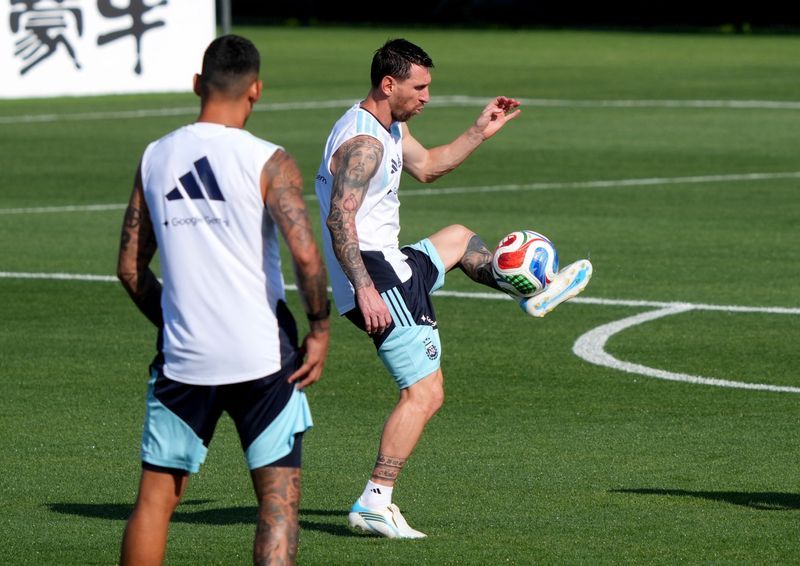
Cape Verde's improbable journey to the World Cup knockout stage has confounded expectations at nearly every turn, and the island nation's coaching staff insists they will not be intimidated when facing reigning champions Argentina and Lionel Messi in the Round of 32. Despite bookmakers and analysts placing their chances of victory at around four percent—a marginal improvement from pre-tournament assessments—the African side carries genuine confidence into their Friday encounter, viewing the matchup less as an insurmountable obstacle and more as an opportunity to write another chapter in their remarkable debut campaign.
The path that has brought Cape Verde to this juncture itself defies conventional football logic. Drawing with Spain and Uruguay, both former World Cup champions with far greater resources and established international pedigrees, propelled the island nation through a notoriously difficult group stage. Rather than lamenting their knockout draw against Argentina, assistant coach Humberto Bettencourt articulated an attitude of privilege, describing the prospect of facing the Albiceleste as "a pleasure" for his squad. This mindset reveals a fundamental shift in how underdogs approach elite opposition in modern football—not through paralysis born of fear, but through confidence in their own preparation and tactical acumen.
Bettencourt's philosophical stance on the upcoming clash emphasises the gap between statistical probability and the unpredictable nature of football competition. In remarks delivered at the team's training base in Tampa, he dismissed the relevance of pre-match odds, arguing that historical precedent demonstrates how matches are decided by action within the field rather than by external assessments. His assertion that Cape Verde would not substantially alter their tactical approach to contain Argentina suggests a squad comfortable with their identity and methodology, refusing to become reactive to their opponent's reputation. This represents a considerable psychological advantage for an underdog team, as it eliminates the self-doubt that often accompanies playing against elite opposition.
The question of how Cape Verde would manage Messi's threat proved central to pre-match discussions. Rather than committing multiple defenders to man-marking the Argentine genius—a tactic that historically leaves gaps elsewhere—Bettencourt's strategy focuses on understanding Argentina's collective movement and the spaces they create for their star player. This approach acknowledges Messi's individual brilliance while refusing to sacrifice defensive shape to contain him, a sophisticated tactical acknowledgment that modern football demands fluidity over rigid assignment-marking. By concentrating on team structure and anticipating Argentine patterns of play, Cape Verde hopes to neutralise their opponents' primary weapon without leaving themselves vulnerable elsewhere.
Cape Verde's significance extends far beyond sporting achievement. As the least populous nation ever to reach the World Cup's knockout phase, their participation represents a validation of the tournament's global reach and competitive depth. The squad's composition reflects generations of migration from the island nation across Europe, North America, and South America, with players carrying Cape Verdean heritage but having been born and developed in the Netherlands, Portugal, France, the United States, and Ireland. This diaspora connection strengthens their bond to a homeland relatively few squad members have spent significant portions of their careers defending, adding emotional resonance to their tournament run.
The Argentine diaspora community's presence in Cape Verde adds another intriguing dimension to the fixture. A considerable population from Argentina has migrated to the island over the decades, creating complex loyalties and family connections that transcend the typical club-versus-country binary. For many Cape Verdean players, facing Argentina carries implications beyond straightforward international competition, touching upon personal and familial ties that few other matchups would generate.
Team selection concerns emerged during the week preceding the Argentina encounter. Telmo Arcanjo, Cape Verde's skilful midfielder, remained a fifty-fifty proposition for the knockout match due to persistent leg injury, with the player absent from team training sessions midweek. His absence would represent a notable loss to Cape Verde's technical capacity in midfield, potentially reducing their ability to control tempo and construct attacking patterns. Sidny Lopes Cabral, the combative left back, cleared the way for his participation after completing a one-match suspension incurred through accumulated yellow cards against Spain and Uruguay.
Argentina's preparation took a different character, with coach Lionel Scaloni indicating plans to restore Messi to the starting eleven after utilising him as a substitute against Jordan in their final group match. The change acknowledged Messi's six goals through three group games and the attacking threat his presence generates from the opening whistle, rather than asking him to provide impact from the bench. Scaloni maintained multiple tactical options for breaking down Cape Verde's defensive structure, possessing a squad depth that has seen Argentina win all three opening matches. The Argentina coach's selection choices would determine how aggressively his side approaches breaking down the underdog defence and preventing what would constitute one of the tournament's most remarkable upsets.
The broader context of underdog performances at World Cups reveals that tactical discipline, psychological resilience, and refusal to surrender to intimidation can occasionally overcome vast differences in playing quality and resources. Cape Verde's success in reaching the knockout stages already established them among the tournament's most improbable success stories, and their willingness to approach Argentina without fundamental tactical concessions suggests an emerging generation of football that rejects predetermined outcomes based on national reputation or historical precedent.

