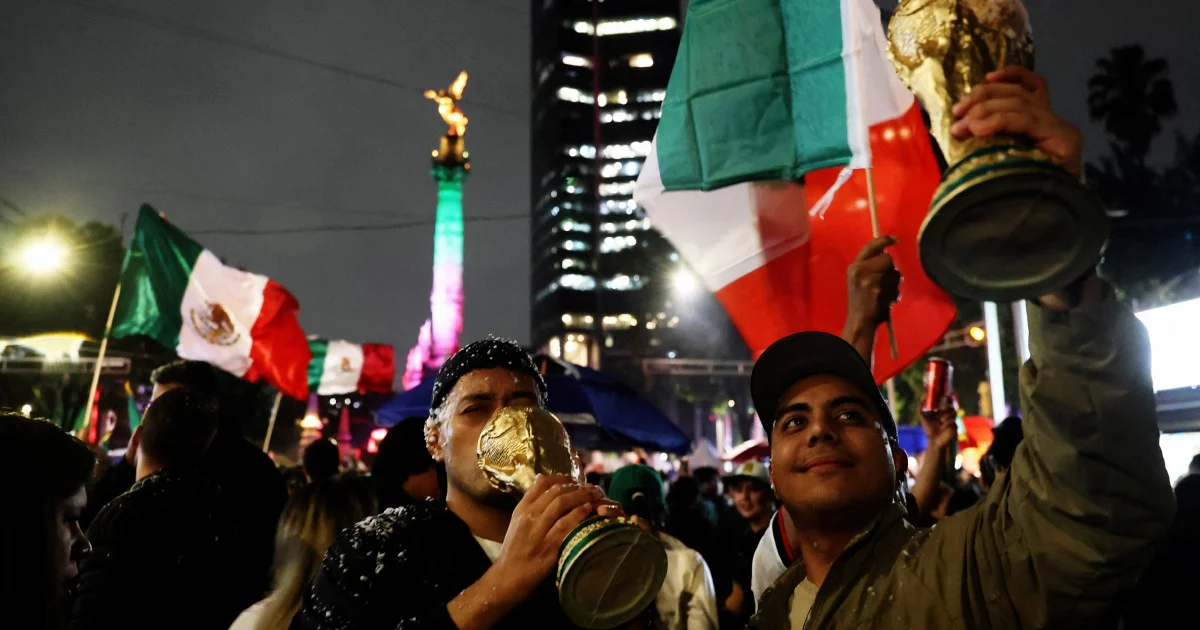
Festivities surrounding Mexico's World Cup match victory deteriorated into tragedy on Wednesday evening when a vehicle accelerated through a densely packed crowd of supporters in Cabo San Lucas, a major tourism destination on Mexico's Baja California Peninsula. The incident resulted in injuries to 17 individuals who required medical intervention, according to an official statement released by the Los Cabos municipal administration. Among those treated was the driver of the vehicle, who was apprehended at the scene.
Social media footage verified by Reuters captured the moment the black sedan was initially surrounded by jubilant spectators draped in Mexico's national team apparel. The vehicle then surged forward with apparent force, propelling pedestrians into the air as it ploughed through the assembly before striking protective bollards that line the area. The sudden acceleration created chaos among the gathered celebrants, many of whom were caught off guard by the dramatic escalation.
Subsequent video evidence documented the volatile aftermath, showing members of the crowd extracting an individual from the vehicle and subjecting them to physical violence. Simultaneously, numerous injured persons lay scattered across the ground with visible bloodstains, their conditions undetermined at the time of filming. The juxtaposition of celebration and violence captured in these clips underscores the alarming speed with which festive gatherings can devolve into dangerous situations.
Cabo San Lucas, situated at the southern tip of the Baja California Peninsula where the Pacific Ocean meets the Sea of Cortez, draws hundreds of thousands of international visitors annually. The resort town's reputation as a premier destination for beach holidays, water sports, and entertainment makes it a natural gathering point for major sporting events and their attendant celebrations. Wednesday's incident raises fresh concerns about public safety during large spontaneous assemblies in popular tourist zones, where crowd control measures may be inadequate.
The circumstances precipitating the driver's decision to accelerate through the crowd remain unclear. Authorities have not released statements regarding potential motives, whether mechanical failure, intentional action, or other factors contributed to the incident. The rapid arrest of the driver suggests law enforcement presence was sufficient to respond quickly, though questions linger about whether earlier intervention might have prevented the tragedy.
This episode reflects broader patterns of violence that have periodically intersected with public celebrations across Mexico in recent years. While most sporting events pass without incident, occasional eruptions of chaos serve as reminders of underlying social tensions and the unpredictability of large uncontrolled gatherings. The World Cup remains one of the most emotionally charged sporting occasions, capable of drawing enormous numbers of passionate supporters into public spaces.
For Malaysian readers and Southeast Asian observers, the incident offers sobering perspective on crowd management during major international sports events. As regional nations prepare to host or celebrate major tournaments, including potential World Cup qualifying matches and continental championships, the Cabo San Lucas incident demonstrates the necessity for comprehensive safety planning. Tourist destinations throughout Southeast Asia frequently host large spontaneous celebrations following football victories, and authorities may need to consider enhanced protocols for managing such assemblies.
The treatment of the 17 injured persons and their prognoses will likely emerge in subsequent reporting. Medical facilities in Cabo San Lucas, while adequate for the resort's typical needs, may face challenges treating multiple trauma victims simultaneously. The incident underscores the importance of pre-positioned emergency medical resources in areas where large crowds are anticipated.
Government responses to the incident will reveal much about accountability measures in Mexico's tourism sector. Insurance and liability questions may arise, particularly if negligence or mechanical failure is determined. The broader question of whether organising authorities should have implemented crowd barriers or controlled access to celebration zones will undoubtedly feature in post-incident analyses.
For the broader context of fan safety during international football competitions, Wednesday's events in Cabo San Lucas contribute to growing recognition that spontaneous public celebrations require coordinated response frameworks. Unlike structured stadium environments where security protocols are established, street celebrations occur organically and present unique management challenges. The incident serves as a case study in how quickly celebratory atmospheres can transform into emergency situations without adequate preparation.

