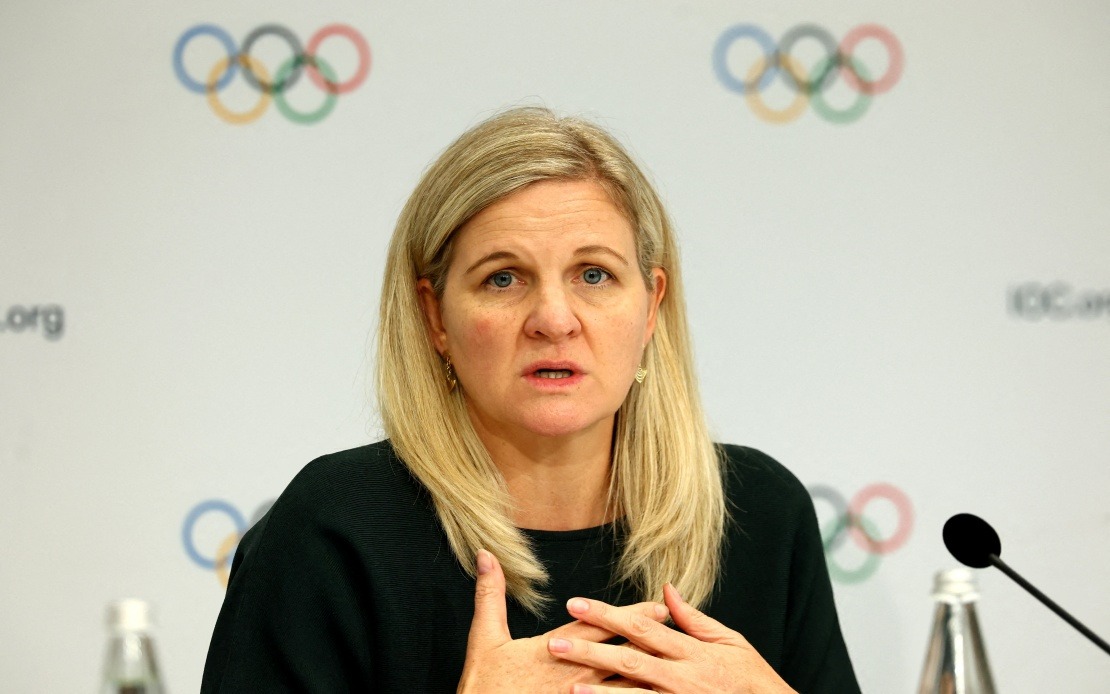
The International Olympic Committee is preparing institutional safeguards to shield the 2028 Los Angeles Olympics from potential political interference, with IOC President Kirsty Coventry confirming that the Court of Arbitration for Sport stands ready to address any legal disputes that may arise. Speaking at a press conference in Moscow on Tuesday, Coventry indicated that existing dispute resolution mechanisms within Olympic governance structures offer a framework for handling contentious matters, should political actors attempt to influence competition outcomes or regulatory decisions during the Games.
The IOC chief's remarks follow a recent incident that highlighted potential vulnerabilities in international sports governance. On July 5, FIFA's disciplinary committee suspended the red card issued to United States national team player Folarin Balogun, a decision that permitted the striker to compete in a Round of 16 match against Belgium. The timing and nature of the reversal drew scrutiny, particularly after Trump announced publicly that he had contacted FIFA following Balogun's initial dismissal, subsequently praising the organisation for what he termed "reversing a great injustice."
The Balogun case illustrated the blurred boundaries between executive pressure and sports administration. Despite Belgium formally protesting the decision to reinstate the American player, Balogun participated in the knockout encounter. Belgium's subsequent 4-1 victory over the United States served as a reminder that even controversial decisions do not guarantee the preferred outcome, though the precedent of political intervention itself remains troubling for independent sports governance. The incident underscored how easily political figures can leverage their platforms to shape international competition in real time.
Coventry's acknowledgment of the CAS as the primary mechanism for dispute resolution suggests the IOC recognizes the need for robust legal frameworks independent from political influence. The Court of Arbitration for Sport operates with a dedicated ad hoc division specifically designed to function during Olympic competition, enabling rapid adjudication of disputes that might otherwise derail the Games. This temporary institutional structure has become increasingly important as sports events face mounting pressure from external political actors seeking to manipulate outcomes or bend rules in their favour.
The prospect of presidential interference in Olympic affairs carries particular significance for Southeast Asian observers and stakeholders. The region hosts significant numbers of athletes competing in international sports, and Malaysian athletes regularly participate in Olympic and Commonwealth Games. Any erosion of governance standards at major international sporting events sets troubling precedents that could embolden political actors elsewhere to similarly pressure sports bodies. A weakening of institutional independence in Olympic administration would diminish the meritocratic foundation that underpins international competition.
The 2028 Los Angeles Olympics will take place in a polarised geopolitical environment where great power competition increasingly extends into sporting domains. China, Russia, and other nations have previously faced sanctions and scrutiny regarding alleged interference in sports governance and athlete eligibility. If major Western powers were perceived to be exploiting political leverage to influence outcomes, it would further corrode global confidence in the independence of international sports bodies and fuel accusations of double standards in how different nations are treated.
Coverty's emphasis on the CAS's temporary division reflects the IOC's confidence in its dispute resolution apparatus. However, the effectiveness of such mechanisms depends on their ability to operate genuinely independently from political pressure. The Court of Arbitration for Sport has established itself as a respected arbiter over decades, but like any institution, it remains vulnerable to subtle pressures and political considerations that might influence judicial decision-making. The FIFA incident suggests that even explicit reversals of regulatory decisions are now within the realm of political possibility, indicating that procedural safeguards alone may prove insufficient.
The broader challenge facing Olympic governance lies in preventing political figures from exploiting the Games' visibility and global stakes to advance national interests through improper means. Sports competition succeeds as a unifying force precisely because participants and spectators trust in the fairness of the process. When presidents can publicly claim credit for overturning disciplinary decisions, the legitimacy of the entire enterprise comes into question. The IOC's reliance on the CAS represents an appropriate institutional response, but it requires vigilance against subtle forms of interference that fall short of overt pressure.
Looking ahead to Los Angeles 2028, the IOC will likely strengthen protocols for managing political engagement around Olympic affairs. The precedent set by recent events may prompt development of clearer guidelines distinguishing between legitimate political participation in Olympic hosting and improper attempts to influence sporting outcomes. International coordination among sports bodies to present a united front against political interference will also become more important. For Malaysian stakeholders following Olympic developments, the challenge of maintaining sporting integrity amid geopolitical tensions represents a matter worthy of close attention, as weakened standards could affect competition environments for Asian athletes.

