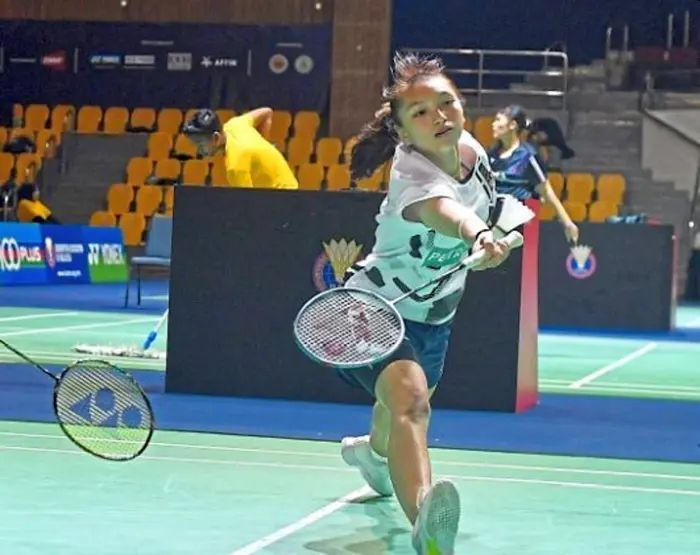
Nineteen-year-old shuttler Noraqilah Maisarah Ramdan possesses the technical credentials to become a top-tier badminton player, but her mixed doubles coach Nova Widianto argues that cultivating personal discipline and mental resilience will prove equally vital to her trajectory. The Indonesian coach, overseeing Noraqilah's development in mixed doubles, insists that character formation deserves as much coaching attention as stroke refinement or tactical awareness if the young Malaysian is to sustain a successful career.
Noraqilah has demonstrated impressive adaptability across multiple disciplines in recent months, competing simultaneously in women's doubles and mixed doubles while maintaining competitive ranking progress. This versatility reflects genuine skill and court intelligence, yet Nova emphasises that the coaching philosophy extends beyond what happens during rallies. The mentor's concern centres on the psychological environment surrounding young players who experience rapid success, where external validation can create false confidence or complacency that undermines long-term development.
Nova's perspective reveals a deeper coaching philosophy increasingly embraced at the elite level of badminton development. Malaysia's badminton fraternity has long prioritised technical instruction, but voices like Nova's underscore that mental framework—how players process praise, handle setbacks, and maintain humility—often separates those who sustain careers from those who plateau. The coach observed Noraqilah's talent trajectory from her childhood years, confirming that exceptional shot-making ability was evident early, yet technical gift alone provides insufficient foundation for elite international success.
The delicate balance between nurturing ambition and preventing ego inflation represents a persistent challenge in Malaysian badminton development. When young players achieve visible success—tournament victories, ranking improvements, international exposure—the surrounding ecosystem tends to magnify their achievements through media coverage, sponsorship attention, and peer recognition. Nova's intervention reflects awareness that this external reinforcement requires careful management to prevent psychological distortion that could damage a player's competitive mindset or interpersonal relationships within the team environment.
Noraqilah's recent competitive achievements validate the coaching staff's faith in her potential. Partnering with Low Zi Yu in women's doubles, she reached the Australian Open quarter-finals and achieved a career-high world ranking of number 70, a significant milestone for a player her age. In a separate showcase of adaptability, she claimed the women's doubles title at the second leg of the Under-21 National Championship in Kuantan partnering with scratch partner Ong Xin Yee, demonstrating ability to perform effectively with different playing partners and adapting to varied stylistic demands.
Her mixed doubles partnership with Loo Bing Kun similarly progressed through the Sydney tournament's second round, currently holding a world ranking of number 115. These simultaneous achievements across two disciplines represent genuine competitive breadth unusual among youth players, yet Nova cautions that such versatility, while valuable developmentally, eventually requires consolidation for athletes targeting the sport's pinnacle. The ranking progression and tournament results confirm technical development is proceeding as intended, but Nova's intervention focuses on ensuring the psychological architecture matches the external achievement metrics.
Malaysia's badminton pipeline has historically produced players with strong technical foundations, but the emergence of multiple young talents simultaneously creates a crowded developmental landscape where character and mental discipline become competitive differentiators. Players with equivalent skill levels often diverge significantly in career longevity and peak performance achievement based largely on how they navigate psychological pressures and maintain focus amid competing demands. Nova's emphasis reflects recognition that Malaysia's competitive advantage depends not solely on identifying talented youth but on developing the mental resilience necessary for sustaining excellence over a decade-long career.
The question of discipline consolidation represents another dimension of Noraqilah's developmental trajectory that Nova anticipates. While competing across women's doubles and mixed doubles provides valuable experience and maximum court exposure during formative years, the coach acknowledges that elite-level performance increasingly demands specialisation. A player pursuing Olympic medals or world championship titles must eventually commit principally to one discipline where focus and training intensity can be maximised. Nova does not yet recommend such restriction given Noraqilah's age, but he indicates that competitive priorities will eventually necessitate choice.
The Olympic pathway specifically requires such specialisation according to Nova's assessment, as the Games' concentrated competition schedule and psychological demands suit players with singular focus rather than competing interest across multiple formats. This represents a structural reality of international badminton that affects Malaysian athletes across the entire system, from national selection criteria through to resource allocation and coaching specialisation. The decision of whether Noraqilah ultimately pursues singles, women's doubles, or mixed doubles prominence will substantially reshape her long-term development trajectory and competitive positioning.
Nova's intervention also reflects the Malaysian coaching culture's evolution toward more holistic athlete development models that mirror practices implemented by leading badminton nations. Rather than viewing character building as peripheral to technical coaching, contemporary approaches integrate psychological preparation, emotional intelligence, and team dynamics into the primary coaching agenda. This represents a maturing perspective within Malaysian badminton that increasingly recognises technical instruction represents only a partial component of elite player development.
The developmental challenge ahead for Noraqilah involves maintaining upward trajectory while absorbing the psychological impact of increasing visibility and expectation. Early success can paradoxically introduce complicating factors—intense pressure from supporters, media scrutiny, sponsorship obligations—that distract from focused training and competition. Nova's coaching emphasis on keeping the young shuttler grounded reflects practical awareness that many talented young Malaysians have struggled with precisely these transitions from promising junior into consistent senior performer.
For Malaysian badminton observers, Noraqilah's development trajectory merits close monitoring precisely because it embodies the contemporary coaching challenge of balancing technical excellence with psychological robustness. Her progress across the next two to three seasons will test whether Nova's character-focused approach produces the resilience necessary for Olympic qualification and world ranking advancement. The outcomes will likely inform developmental philosophies across Malaysia's badminton ecosystem regarding optimal methods for nurturing young talent through the critical transition from youth success toward sustained elite performance.

