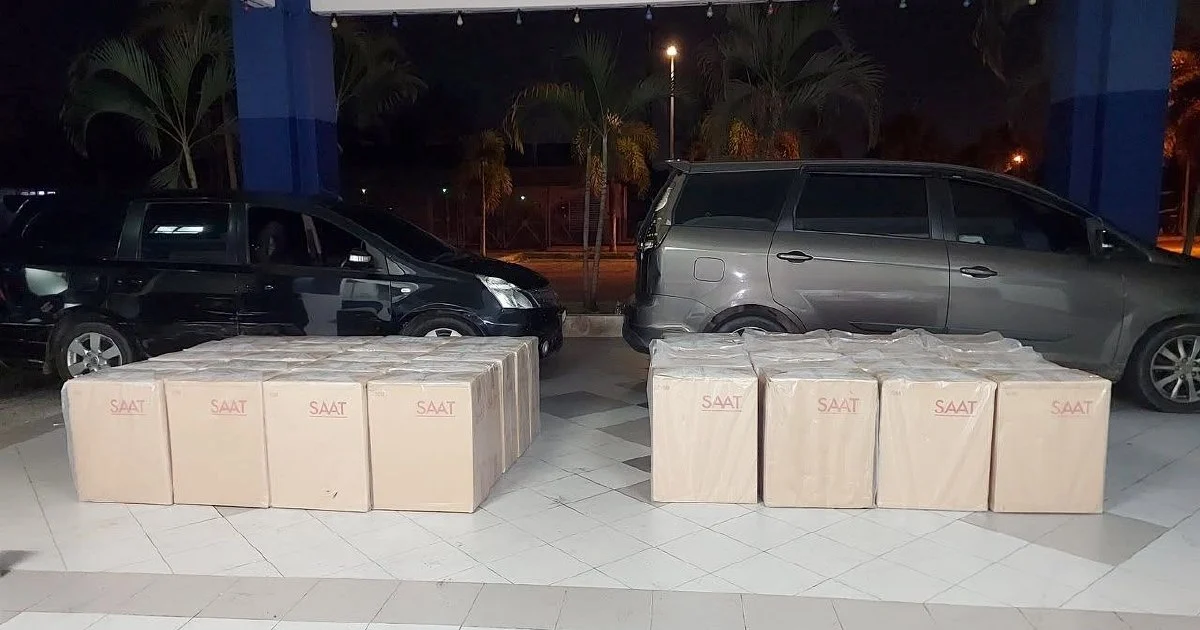
A high-speed pursuit through a rural Kelantan village culminated in one of the state's largest recent seizures of smuggled cigarettes, with law enforcement apprehending a 29-year-old suspect and confiscating over 400,000 sticks valued at more than RM813,000. The dramatic interception took place late yesterday evening in Kampung Pulau Panjang near Kota Baru, where officers from the General Operations Force (GOF) had been conducting a surveillance operation targeting contraband trafficking networks operating along the eastern corridor.
The scale of this seizure underscores the persistent challenge Malaysia faces in combating the illegal cigarette trade, a problem that continues to drain significant revenue from government coffers whilst enriching criminal syndicates. Smuggled cigarettes typically originate from neighbouring Thailand or are diverted from legitimate supply chains, flooding Malaysian markets at prices substantially below official retail levels. This illicit activity not only deprives the government of excise tax revenue but also fuels organised crime, corrupts officials at border checkpoints, and undermines legitimate tobacco retailers who operate within the regulatory framework.
The GOF's intervention in Kampung Pulau Panjang reflects a broader intensification of enforcement efforts across Malaysia's borders, particularly in states like Kelantan which sit along major smuggling corridors. The region's proximity to Thailand, combined with its network of rural roads and waterways, makes it an attractive conduit for traffickers seeking to move illicit goods into peninsular Malaysia. Organised syndicates have become increasingly sophisticated in their logistics, employing decoy vehicles, rotating routes, and encrypted communications to evade detection. This latest arrest suggests authorities are developing better intelligence networks and faster response capabilities.
The arrested individual remains in custody pending further investigation and formal charges. Authorities have not yet disclosed whether the suspect is believed to be a small-time courier or a mid-level operative within a larger smuggling organisation, details that would significantly impact the broader strategic implications of the seizure. In Malaysia's contraband cigarette supply chains, individual arrests often represent only the visible tip of much larger criminal enterprises. Distributors typically employ numerous couriers and dealers, insulating the organisational hierarchy from law enforcement exposure. The focus of investigators will likely extend beyond the singular arrest to establishing connections with suppliers, middlemen, and distribution networks.
The monetary value attributed to the seized contraband reflects retail pricing rather than wholesale cost, highlighting the substantial profit margins available at each stage of the illicit supply chain. A carton of smuggled cigarettes might sell for between RM30 and RM50 compared to RM100 or more for legitimate brands, making them attractive to price-sensitive consumers and retailers seeking competitive advantage. This price differential has created a parallel economy in cigarette retail, with underground networks supplying convenience stores, petrol stations, and street vendors across the country. The Customs Department and other agencies have struggled to shut down these distribution endpoints, partly because enforcement resources remain stretched and partly because small-scale retailers face minimal penalties relative to potential profits.
Kelantan's vulnerability to cigarette smuggling extends beyond simple geography. The state has experienced persistent challenges with corruption at various checkpoints, and its relatively lower enforcement capacity compared to more urbanised states has made it an attractive transit point for traffickers. Additionally, the state's border regions include isolated communities with limited economic opportunities, creating recruitment pools for individuals willing to participate in smuggling operations despite legal risks. The GOF's presence in the area indicates federal recognition of these structural vulnerabilities and a commitment to supplementing state-level resources.
The implications of continued smuggling operations extend into public health policy. The readily available contraband cigarettes undermine tobacco control efforts by maintaining low-cost access to smoking products, potentially discouraging cessation and encouraging youth uptake. The Malaysian government has pursued progressive taxation policies to increase cigarette prices as a smoking deterrent, yet the existence of substantially cheaper illicit alternatives partly negates these policy objectives. Health advocates have long argued that border security and domestic enforcement against smuggling should be considered integral components of tobacco control strategy rather than purely customs or crime issues.
Future enforcement strategies will likely require greater coordination across multiple agencies and jurisdictions. The Royal Malaysian Police, Customs Department, GOF, and state authorities each maintain separate investigative mandates and intelligence networks. Enhanced information-sharing and joint task forces have proven effective in other enforcement contexts and could yield similar dividends against organised smuggling. Additionally, addressing the supply-side vulnerabilities through stricter regulations on transport and storage of legitimate cigarettes, enhanced tracking systems, and increased penalties for diversion could reduce the availability of legally-produced cigarettes for illicit re-export.
International cooperation, particularly with Thai authorities given the cross-border nature of the problem, remains underdeveloped despite mutual interests in combating transnational crime. Joint border patrols, intelligence exchanges, and coordinated prosecutions could increase the operational costs and risks for smuggling syndicates substantially. The arrest in Kampung Pulau Panjang represents meaningful short-term enforcement success, yet sustainable progress will require addressing the structural incentives—price differentials, profit opportunities, and logistical ease—that make cigarette smuggling economically rational for criminal entrepreneurs and their workforce.

