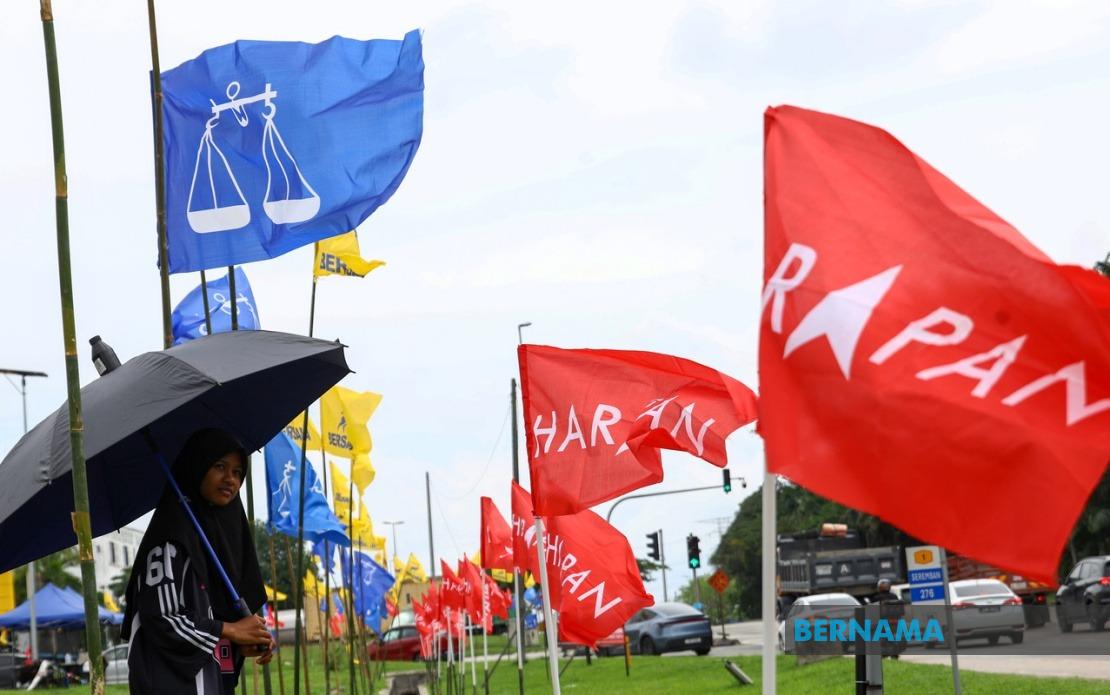
Pakatan Harapan's performance in the upcoming Johor state election carries significance beyond electoral mathematics, according to DAP secretary-general Anthony Loke, who has positioned the coalition's campaign around the need for institutional safeguards in state governance. Speaking at a party gathering in Kluang on July 3, Loke articulated a broader argument about the structural health of Johor's political system, contending that the distribution of power across multiple political forces is essential to preventing democratic erosion.
The case Loke presents rests on a familiar argument within Malaysian opposition politics: that concentrated power in a single coalition or party creates conditions where government accountability diminishes. He emphasised that without meaningful competition and the presence of an organised alternative government-in-waiting, the ruling administration faces reduced pressure to maintain transparency or responsiveness to public concerns. This framing extends beyond typical opposition rhetoric by linking specific electoral outcomes to fundamental questions about institutional design and democratic resilience.
For Johor specifically, this argument carries particular weight given the state's history of political stability under long periods of single-coalition rule. The state has experienced relative predictability in governance, but Loke's intervention suggests that PH strategists view the upcoming election as an opportunity to introduce new dynamics into the state's political ecology. Whether voters embrace this argument or prioritise other considerations—economic performance, development agendas, or local issues—will partly determine the election's outcome and its implications for Malaysian federalism.
The coalition fielding candidates across all 56 state assembly seats represents a significant logistical commitment and reflects confidence in the breadth of its appeal. Pakatan Harapan, comprising PKR, DAP, and Amanah, has consolidated its presence as a coherent alternative force at the state level, even as its role in national government remains complex following the 2022 elections. The scale of the candidature suggests the coalition is prepared to compete seriously for control rather than merely seeking a larger opposition presence.
Context around the broader competitive landscape is important for understanding Loke's rhetoric. The 2023 Johor state election saw Barisan Nasional retain control, though with a reduced majority compared to historical patterns. The fact that 172 candidates are contesting this 16th election demonstrates that multiple political forces continue to view the state as genuinely contested terrain. This level of competition itself suggests that Johor's electoral dynamics have evolved, and that assumptions about inevitable dominance no longer necessarily hold.
The gathering where Loke spoke included DAP deputy national chairman Nga Kor Ming and deputy secretary-general Steven Sim Chee Keong, signalling the importance the party places on the Johor contest within its broader strategic calculations. DAP's role as the coalition's anchor in urban and semi-urban constituencies makes its performance particularly consequential, as these areas often determine the overall balance of representation in state assemblies. The visible presence of senior party figures underscores that this is not peripheral to DAP's national positioning.
For Malaysian readers tracking broader questions about political competition and democratic quality, the Johor election offers a practical test case. The principle Loke articulates—that democracy functions better when no single force holds overwhelming power—represents an orthodox view in comparative politics and democratic theory. Yet implementing this principle in practice requires voters to prioritise institutional health over other potentially compelling concerns, a calculation that differs across constituencies and demographic groups.
The scheduled voting dates of July 7 for early polling and July 11 for the main election establish a compressed timeline for campaigning. This condensed period may advantage parties with existing organisational infrastructure and established messaging, potentially favouring familiar political forces over insurgent challengers. How Pakatan Harapan deploys its resources during this window, and whether its message about checks and balances resonates with target voters, will significantly shape the outcome.
From a regional perspective, Johor's electoral fortunes carry implications for how Malaysian federalism evolves. Johor's economic importance and geographic position make it strategically significant within the national system. A Johor state government aligned differently from the federal administration could create productive tension and force negotiation between levels of government. Conversely, alignment across federal and state structures may enable more coordinated policy implementation but could reduce the oversight mechanisms Loke identifies as crucial.
The argument about checks and balances also reflects evolving conversations within PH itself about what role the coalition should play if it gains state power. The coalition's experience in Selangor, Penang, and other states where it has governed provides reference points for how multi-party coalitions manage internal dynamics while maintaining coherent policy direction. Success in Johor would expand these laboratories of coalition governance.
Loke's intervention also addresses scepticism some voters may harbour about whether opposition parties can deliver effective governance. By framing victory not merely as replacement of the ruling coalition but as introduction of competitive discipline into the system, he offers a performance-based rationale for supporting PH that extends beyond simple partisan preference. This appeals to swing voters and those motivated primarily by instrumental concerns rather than ideological alignment.
The path forward for Johor's political system depends substantially on how voters respond to the choices before them on July 11. The arguments advanced by Loke and other PH campaigners represent one framing of what is at stake. Whether that framing proves persuasive, and whether the resulting composition of the state assembly leads to the institutional outcomes Loke anticipates, will only become clear once voting concludes and the work of governing begins.

