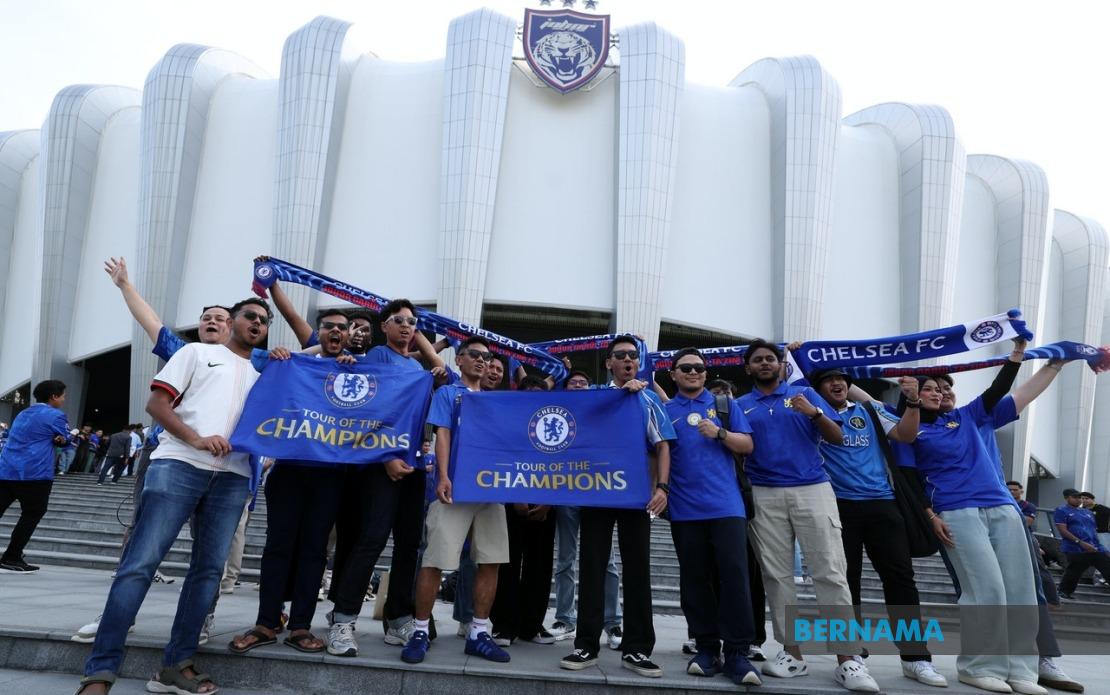
Chelsea's arrival in Malaysia for a friendly fixture against Johor Darul Ta'zim at Sultan Ibrahim Stadium (SSI) in Iskandar Puteri on August 9 turned the sprawling Johor venue into a festival of football fervour, with thousands of supporters converging from across the region to witness the Premier League giants in action. The atmosphere began building in the afternoon as waves of supporters wearing the distinctive colours of both clubs—Chelsea's sky blue and JDT's red—created an electrifying backdrop to one of Malaysian football's marquee events of the year.
The sheer diversity of the crowd underscored the universal appeal of the encounter. Families brought their children, youth groups arrived in coordinated outfits, and seasoned football enthusiasts travelled considerable distances to be present. Supporters seized the pre-match hours to capture photographs with the stadium's striking architecture as their backdrop, creating a carnival-like atmosphere that extended well beyond the turnstiles. The presence of fans from neighbouring Singapore highlighted how major football events in the region transcend national boundaries, drawing supporters willing to cross international borders for the opportunity to witness elite international talent.
The commercial dimensions of the match were equally evident, with official merchandise stalls emerging as major focal points throughout the stadium grounds. Queues stretched back from these outlets as supporters sought limited-edition items commemorating the fixture, a testament to the commercial magnetism that global clubs like Chelsea command. For many fans, acquiring match-day merchandise represented a tangible memento of an occasion they considered historically significant for Malaysian football.
Traffic management became a critical consideration as the kickoff hour approached. By 7 pm, congestion along primary routes feeding the stadium was notable but remained orderly, with Royal Malaysia Police (PDRM) personnel maintaining visible security presence to regulate flow and prevent bottlenecks. The police's measured approach reflected the logistical complexity of hosting such a high-profile international fixture at a domestic venue.
Among the attendees was Ahmad Danial Muhammad, 28, a Chelsea devotee from Bangsar in Kuala Lumpur who articulated the profound significance of the match for Malaysian-based supporters of the English club. Having followed Chelsea through the Didier Drogba era, Ahmad viewed the opportunity to witness Premier League calibre football without travelling to London as a transformative moment. His perspective reflected broader sentiment among Malaysian Chelsea supporters who often face considerable expense and logistical barriers to attending matches in England.
The cross-border appeal extended tangibly through supporters like Tan Wei Sheng, 34, from Singapore, who strategically departed at noon to navigate the Johor Causeway ahead of peak congestion. Tan's appreciation extended beyond the match itself to encompass the stadium's infrastructure, underscoring how world-class facilities enhance the overall experience for regional supporters. His observations about the quality of football anticipated contributed to the broader narrative of the fixture serving as a platform for showcasing Malaysian football development.
From the perspective of JDT loyalists, the fixture carried symbolic weight beyond sporting competition. Mohd Khairul Anuar Ismail, 41, from Bukit Piatu in Melaka, interpreted Chelsea's willingness to visit Iskandar Puteri as validation of JDT's standing within international football circles. This sentiment tapped into broader aspirations within Malaysian football regarding recognition and respect at global level, positioning domestic clubs as increasingly credible international partners rather than merely aspirational participants.
The political dimensions underlying the fixture also surfaced in supporter commentary. Safiyah Rosli, 32, from Batu Pahat, contextualised Chelsea's presence within the broader narrative of Malaysian football's institutional development, explicitly crediting Tunku Mahkota Ismail's stewardship of Johor football for creating conditions attracting world-class opposition. This framing situated the match within larger conversations about leadership, investment, and strategic vision in Malaysian sports administration.
The convergence of international footballing prestige with local enthusiasm created a unique moment for Malaysian football discourse. Chelsea's visit transcended typical friendly fixture parameters, functioning instead as a validation mechanism for proponents of elevated investment in domestic football infrastructure and administration. The visible excitement transcended conventional supporter categories, encompassing families, youths, regional visitors, and individuals for whom Chelsea represented a connection to global football excellence hitherto experienced primarily through broadcast media.
For Malaysian football stakeholders, the gathering assumed significance as evidence of latent demand for elite international fixtures within domestic contexts. The willingness of Singaporean supporters to cross borders, the documented enthusiasm among Malaysian-based international club supporters, and the pride expressed by local football partisans collectively suggested that major international matches hosted domestically could generate both economic activity and psychological benefits for Malaysian football's positioning within regional hierarchies.
The August 9 convergence ultimately represented more than a single friendly match. It constituted a demonstration that when properly resourced venues and high-profile opposition align, Malaysian audiences will engage enthusiastically with elite international football. Whether this occasion catalyses further investment in hosting comparable fixtures, or remains an isolated prestige event, remained an open question as supporters filed into Sultan Ibrahim Stadium for the 8 pm kickoff.

