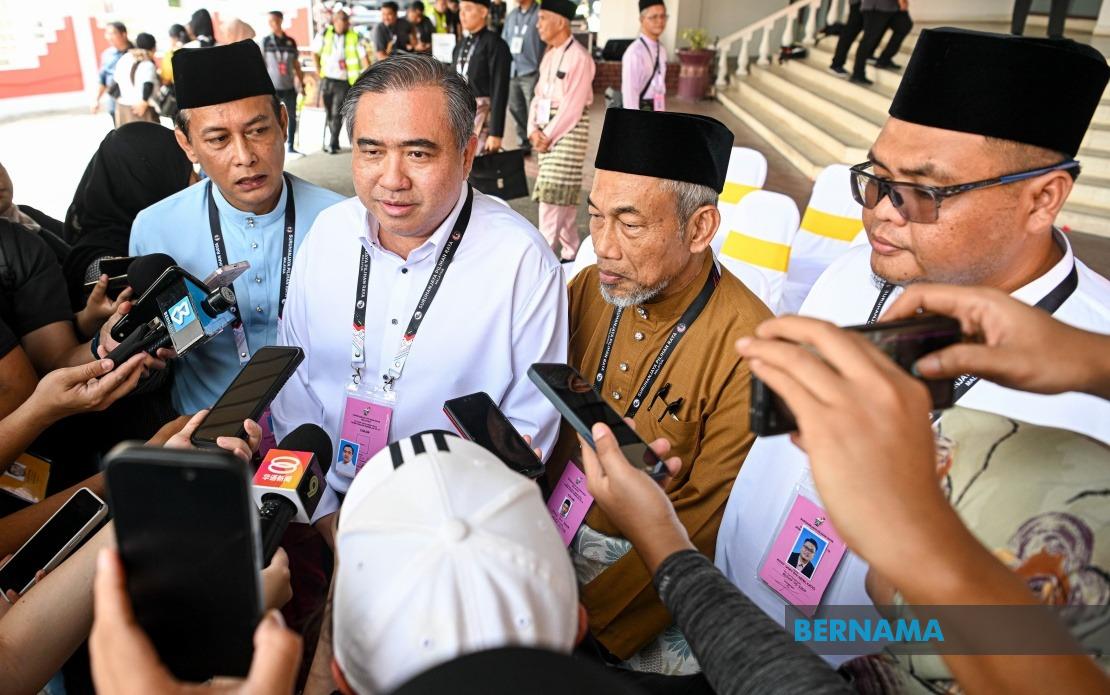
In a clear signal of the high stakes involved in the Negeri Sembilan state election, Transport Minister Anthony Loke has highlighted the Chennah state seat as one of four pivotal constituencies within the Jelebu parliamentary division that will determine whether Pakatan Harapan can hold onto control of the state government. Speaking after nomination proceedings at Dewan Besar Kuala Klawang, Loke underscored the symbolic and strategic importance of this particular seat in the broader contest facing the coalition.
The candidacy situation in Chennah has crystallised into a direct contest between Loke and Siow Kong Choon, the Barisan Nasional nominee, according to an announcement by returning officer Abdul Rahim A Aziz. This two-way race strips away any possibility of vote fragmentation and makes the outcome particularly meaningful both for local constituents and for the broader interpretation of voter sentiment across the state.
Loke's confidence in retaining the seat rests substantially on Pakatan Harapan's tenure in office since the 2018 general election. The Transport Minister pointed to the coalition's track record of delivering infrastructure development and maintaining political stability as its primary credential for seeking another mandate. He emphasised that the past two terms have provided tangible evidence of the government's capacity to implement its policy agenda and maintain administrative competence, a message clearly aimed at persuading swing voters to maintain their support.
The significance of Chennah extends beyond the immediate constituency boundaries. Loke specifically referenced the 2018 election outcome, when two state seats in the Jelebu parliamentary area—Chennah and Kelawang—proved decisive in facilitating Pakatan Harapan's formation of the state government. This historical precedent underscores why the coalition regards these seats as electoral linchpins rather than peripheral contests. A loss in either seat threatens the numerical foundation of any future government that Pakatan Harapan might seek to construct.
For Malaysian political observers, the Negeri Sembilan state election represents a significant test of whether Pakatan Harapan can sustain its 2018 breakthrough across multiple election cycles. State-level contests often function as barometers of national sentiment, and the outcome in Negeri Sembilan will carry implications for federal political dynamics. The coalition faces the classic challenge confronting any incumbent government: demonstrating sufficient performance and progress to justify continuity while combating voter fatigue and the opposition's narrative of declining effectiveness.
Barisan Nasional's decision to field Siow Kong Choon in Chennah signals its determination to regain ground in Negeri Sembilan, where it governed for decades before the 2018 upheaval. The traditional opposition coalition retains organisational networks and institutional memory in the state and will campaign on themes of experience and administrative know-how. For Siow and the BN machinery, capturing seats like Chennah that were previously held by the alliance represents both a realistic and symbolically important objective.
The Jelebu parliamentary division itself encapsulates the competitive dynamics of contemporary Malaysian politics. Within this single parliamentary constituency, multiple state seats generate distinct local contests, each reflecting specific community priorities and voter compositions. The concentration of four crucial constituencies within Jelebu suggests that the parliamentary division will function as a crucial bellwether for understanding broader electoral shifts within Negeri Sembilan. Candidates who succeed in these seats will likely shape the overall composition of the state assembly and determine government formation.
Loke's visibility as both the incumbent Chennah representative and Transport Minister at federal level brings additional prominence to his local contest. His ability to secure developmental projects for his constituency and translate ministerial position into tangible benefits for constituents will feature prominently in campaign narratives from both sides. Voters will assess whether his presence in the federal government has meaningfully improved local infrastructure, employment prospects, and service delivery.
The upcoming state election invites Negeri Sembilan voters to make a fundamental choice about governance direction. Pakatan Harapan's pitch emphasises continuity, progress and stability, while Barisan Nasional offers alternative leadership grounded in historical experience. The Chennah seat, far from being a peripheral contest, functions as a microcosm of this larger choice, which explains why Loke and the coalition leadership regard it as essential to their broader electoral calculations and their capacity to form a government that commands majority support in the state assembly.

