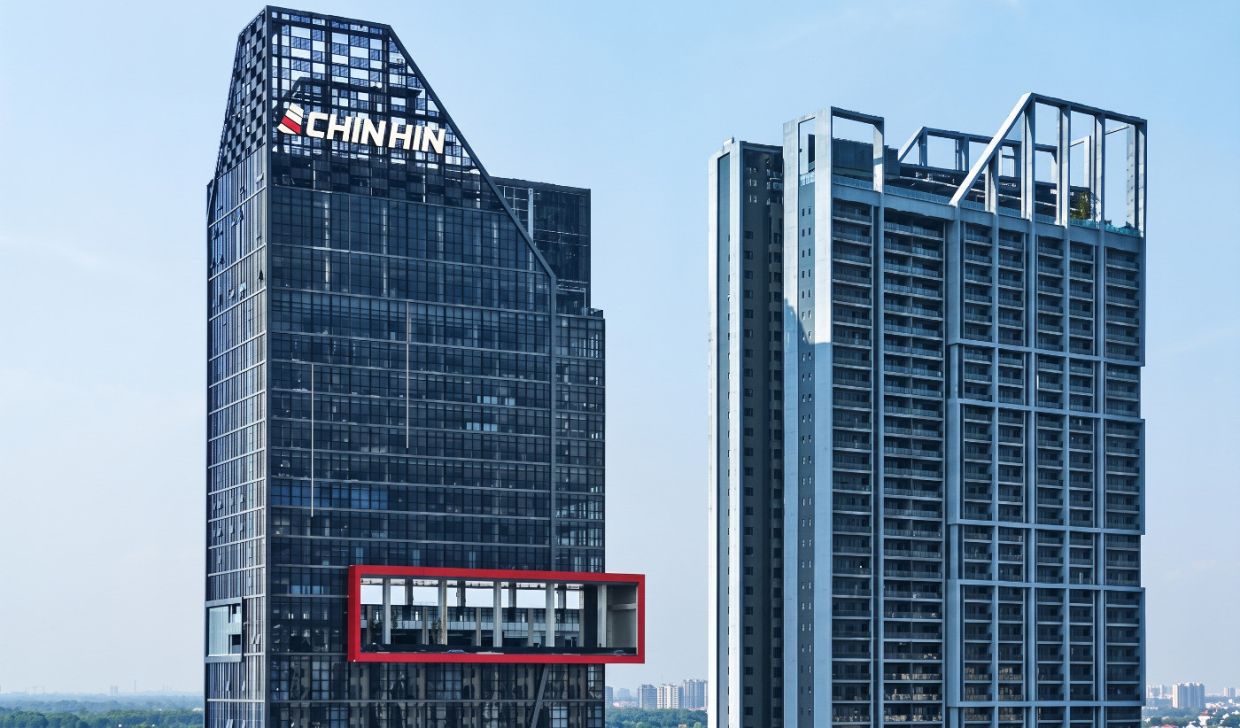
CHGP has announced plans to acquire a strategically positioned freehold land parcel in Kuala Lumpur's prestigious KLCC precinct for RM455 million, marking a significant expansion of the developer's landbank in one of Malaysia's most coveted commercial zones. The acquisition, disclosed through a Bursa Malaysia filing, represents the company's commitment to capturing premium development opportunities within the nation's capital city and reflects broader confidence in the long-term trajectory of high-value commercial real estate in the region.
The transaction will be financed through a mixed structure designed to optimise the company's capital allocation. CHGP will deploy RM409.5 million in cash reserves to cover the majority of the purchase price, while simultaneously issuing 455,000 redeemable preference shares valued at RM45.5 million through its subsidiary Chin Hin Property (JSI) Sdn Bhd. The vendor will receive an additional 25,000 ordinary shares in the subsidiary priced at RM1 per share, completing the three-pronged payment arrangement. This layered approach demonstrates the company's sophisticated financial engineering, balancing immediate capital outlays against equity instruments that provide both parties with medium to long-term upside potential.
The acquisition vehicle, CHPJSI, operates as a 70 percent-owned subsidiary of BKG Development Sdn Bhd, itself a wholly-owned subsidiary of CHGP. This corporate structure provides the developer with operational flexibility and liability compartmentalisation while maintaining consolidated accounting treatment of the asset and its eventual development returns. Such hierarchical ownership configurations are commonplace within large Malaysian property groups seeking to ring-fence specific development projects and manage tax efficiency across multiple entities.
The land occupies a premium position along Jalan Sultan Ismail, situated directly across from the established Concorde Hotel Kuala Lumpur. This corridor represents the heartbeat of Kuala Lumpur's established Golden Triangle, an enclave that has commanded investor attention for decades due to its concentration of high-grade office towers, international hospitality brands, upscale retail offerings, and essential civic infrastructure. Proximity to these established commercial and tourism anchors provides inherent traffic generation and tenant demand characteristics that underpin property valuations in the area.
What amplifies the strategic appeal of this particular holding is the approved development order already granted for the site, which permits a mixed-use scheme incorporating a generous plot ratio of 15.99. This regulatory clearance substantially de-risks the development process by eliminating the need for arduous municipal negotiations and environmental assessments that typically accompany urban commercial projects in Kuala Lumpur. For a developer like CHGP, acquiring land with pre-approved density parameters effectively shortens the pathway to construction commencement and revenue recognition, translating regulatory certainty into tangible competitive advantage.
CHGP's acquisition strategy reflects a deliberate pivot toward consolidating its presence within Malaysia's most economically productive geographic zones. By prioritising prime commercial land in locations such as KLCC, the company positions itself to capture appreciation in an environment where land scarcity remains a powerful driver of development values. The Kuala Lumpur City Centre district, despite decades of intensive development, continues to experience constrained available acreage for new large-scale commercial schemes, a phenomenon that invariably inflates land acquisition costs but simultaneously guarantees robust tenant demand for completed projects.
The company explicitly framed this acquisition as consistent with its overarching growth strategy aimed at expanding its development landbank while gaining foothold in premier locations offering sustained long-term appreciation trajectories. Management commentary emphasised the suitability of the site for a sizeable development initiative, positioning the company to execute an ambitious project rather than a routine infill scheme. This messaging carries implications for future shareholder returns, as the scale of the approved development order suggests the completed project will generate meaningful revenue and profit contributions once undertaken.
The location's commercial viability derives not solely from its physical attributes but from its embeddedness within Kuala Lumpur's established ecosystem of financial institutions, multinational corporate headquarters, premium accommodation providers, and international retail brands. Enterprises seeking Kuala Lumpur office space demonstrate persistent preference for KLCC-adjacent locations due to the agglomeration benefits afforded by clustering with peer firms, easier talent attraction, and proximity to transportation nodes. These network effects sustain rental demand and justify premium pricing relative to outlying precincts.
CHGP's assessment that land scarcity within KLCC substantially enhances the strategic value proposition of its acquisition reflects a realistic appraisal of Kuala Lumpur's constrained urban land supply in prime commercial zones. Whereas suburban land remains relatively abundant, developable acreage in established high-value precincts commands multiples reflecting both current use value and forward-looking development potential. For institutional property investors and Malaysian-listed developers competing for such sites, scarcity dynamics frequently justify aggressive acquisition postures as insurance against future competitive disadvantage.
The transaction carries broader implications for Malaysia's commercial real estate sector, signalling sustained investor appetite for premium urban land despite macroeconomic headwinds. That a significant Malaysian property company continues committing substantial capital to Kuala Lumpur acquisition suggests confidence in the city's trajectory as a regional financial and commercial hub and anticipated resilience of office, retail, and hospitality demand through economic cycles. The deal also underscores how competitive land acquisition has become, with pricing reflecting investors' expectations of long-term value appreciation in geographically constrained premium locations throughout Southeast Asia.
Board-level endorsement of this acquisition implies CHGP's management and shareholders view the investment as accretive to future earnings potential once the approved development programme reaches completion and operational stage. The company's willingness to mobilise RM455 million in capital, representing a meaningful commitment relative to typical developer balance sheets, reflects conviction that returns will justify the outlay over the medium to long-term development and leasing horizons typical for commercial real estate ventures. Future investor attention will centre on project execution timelines, construction costs, tenant demand manifestation, and ultimately achieved rental rates and occupancy dynamics once the completed asset reaches market.

