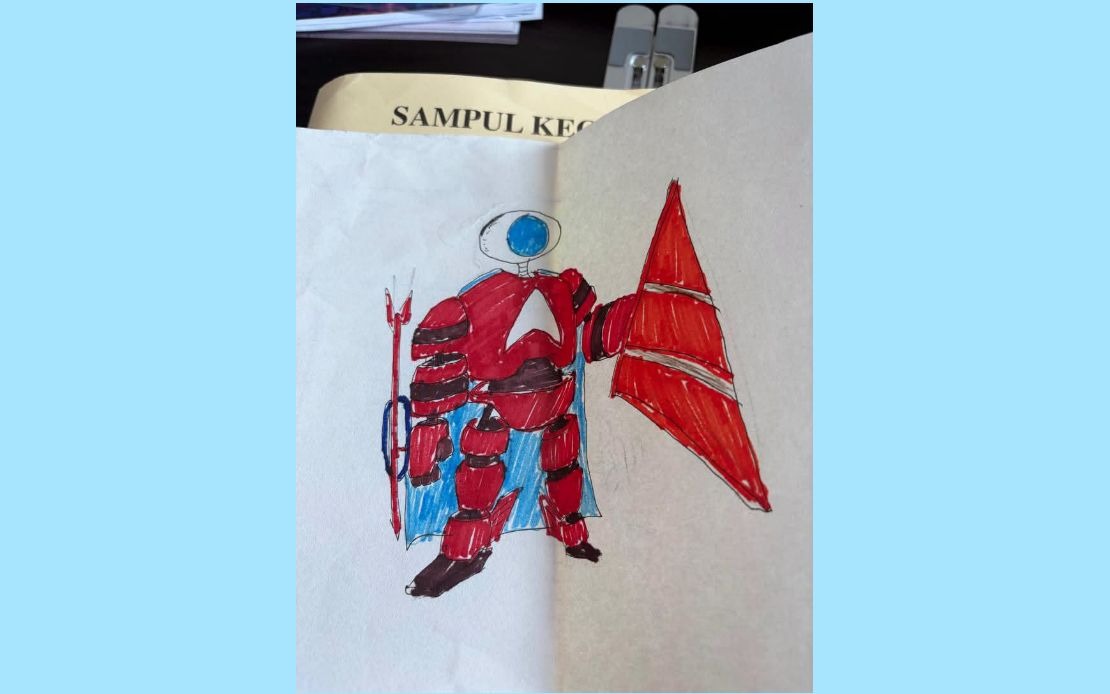
Prime Minister Datuk Seri Anwar Ibrahim has kept a drawing presented to him by a child with special needs as a cherished memento following a Temu Anwar programme held in Negeri Sembilan recently. The gesture moved the Prime Minister sufficiently for him to acknowledge the gift publicly through a Facebook post, reflecting on the touching moment when the artwork was handed to him during the engagement.
According to Anwar's social media account, the drawing was presented by the child while being held by his father during the interactive session. The Prime Minister expressed his gratitude for what he described as a deeply meaningful gift, emphasising the personal significance the artwork holds for him. The simple yet heartfelt nature of such gestures from members of the public underscores the human dimension often associated with direct engagement platforms.
The artwork itself depicts a robot character rendered in red and blue armour, equipped with what appears to be a staff-like implement held in its left hand. While a child's drawing might seem modest compared to formal state gifts, the Prime Minister's public acknowledgement suggests he values the sincerity and personal effort behind such offerings, particularly when they come from younger Malaysians with special needs.
Temu Anwar functions as a structured dialogue mechanism designed to facilitate direct interaction between the Prime Minister and various segments of Malaysian society. These engagements bring together young people and members of the general public from diverse backgrounds, creating informal spaces where citizens can connect with leadership and express themselves. The programme reflects a broader contemporary emphasis on accessibility in governance and the importance of inclusive platforms that accommodate voices from across the societal spectrum.
The inclusion of children with special needs in such national-level programmes demonstrates an important commitment to ensuring that no segment of society feels excluded from meaningful interaction with government leadership. For such families, participation in these events often represents not merely political engagement but acknowledgment and recognition of their place within the national community. The significance of these moments extends beyond the individual encounter and carries implications for how inclusive governance is perceived and practiced.
The Prime Minister's public sharing of this encounter through social media serves a dual purpose: it personalises political leadership by showing responsiveness to individual citizens and their contributions, however modest, while simultaneously highlighting the value placed on participation from all Malaysians. The gesture of a child creating artwork and presenting it directly to the nation's leader encapsulates a form of civic participation that transcends formal political processes and speaks to deeper cultural values around respect and connection.
For parents and caregivers of children with special needs across Malaysia, such moments carry particular resonance. Public figures acknowledging and treasuring gifts from their children sends a powerful message about the inherent worth and potential of individuals with disabilities to participate meaningfully in society. It normalises their presence in public and political spaces, challenging any lingering perceptions that might otherwise marginalise or exclude such individuals from full participation in national life.
The Temu Anwar platform, by continuing to facilitate such interactions at various locations throughout Malaysia, reflects a governance philosophy that values direct contact and accessibility. These engagements, whether in urban centres or regional states like Negeri Sembilan, help bridge the often significant gap between ordinary citizens and those in highest office. In a regional context where democratic participation and inclusive governance remain ongoing challenges, such initiatives carry particular importance.
The memento itself—a simple child's drawing—represents something far more substantial than its physical form might suggest. It embodies the intersection of childhood creativity, parental support, and national inclusion. That the Prime Minister found it sufficiently meaningful to preserve and publicly acknowledge it demonstrates an understanding that leadership encompasses emotional resonance and human connection alongside policy formulation and administrative responsibility. This dimension of public service often receives less attention than legislative achievements or economic outcomes, yet it profoundly shapes public perception of governance and national values.
As Malaysia continues to develop more comprehensive frameworks for inclusion and accessibility across all sectors, the normalisation of such interactions becomes increasingly important. When children with special needs can participate in national events and feel genuinely welcomed and valued, it sends signals throughout society about expectations and cultural norms. The drawing now held by Anwar thus becomes more than a personal keepsake—it represents a small but significant step toward creating a society where all Malaysians, regardless of ability, can contribute and be recognised for their unique perspectives and talents.

