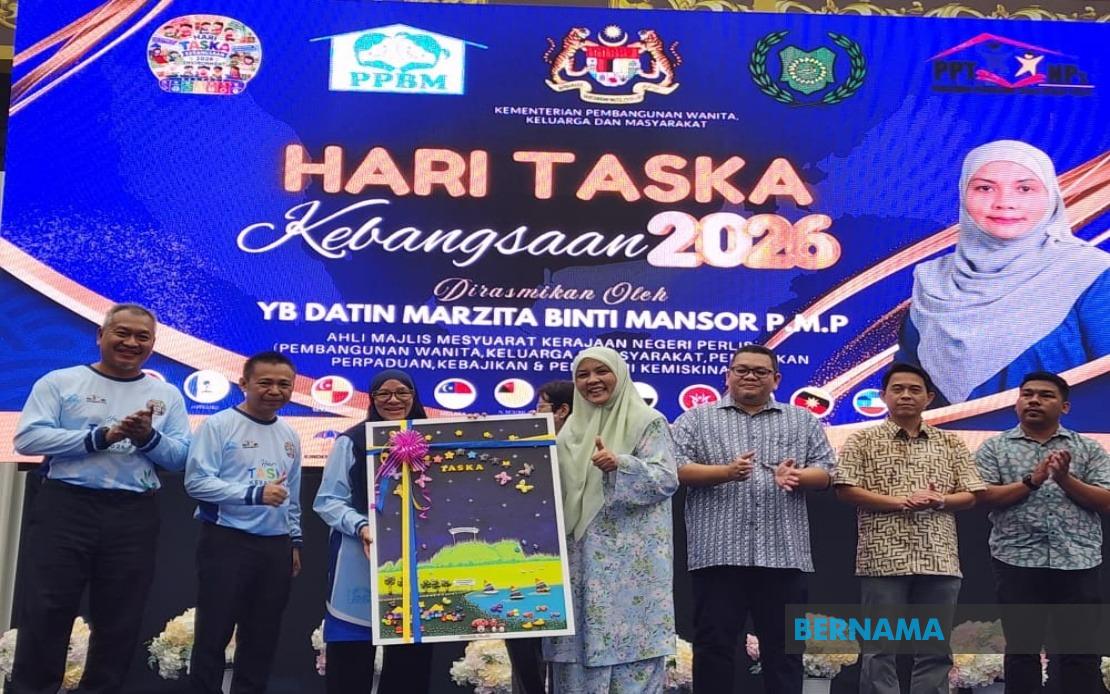
The future development of Malaysia's children depends on childcare systems that go significantly beyond feeding, hygiene and physical supervision, according to industry leaders marking the 2026 National Childcare Day. Speaking at the event in Kangar, Adjunct Professor Norsheila Abdullah, president of the Association of Registered Childcare Providers Malaysia, stressed that quality early childhood facilities must embody the principles of the Convention on the Rights of the Child through comprehensive, rights-based approaches that recognise each child as an individual deserving protection and dignity.
Norsheila's remarks, delivered as Datin Marzita Mansor, chairman of the Perlis Women, Family and Community Development, Education, Unity, Welfare and Poverty Eradication Committee, officiated the celebration, underscore a growing recognition in Malaysia that childcare provision has evolved into a multidimensional responsibility. The 2026 theme, "The Environment as a Driver of Holistic Child Development", reflects international best practices emphasising that physical spaces and relational dynamics profoundly shape how young children grow emotionally, socially and cognitively.
Expanding on what quality childcare truly entails, Norsheila articulated a definition that encompasses emotional scaffolding, positive human connections, safeguarding measures, learning opportunities and respect for individual dignity. Her framing challenges the traditional model in which caregivers are judged primarily on operational metrics—cleanliness, meal provision, punctuality—rather than on deeper indicators of child wellbeing. This distinction matters significantly for Malaysia's early childhood sector, where rapid urbanisation and rising parental workforce participation have created surging demand for childcare services even as regulatory oversight remains uneven.
The principle of asking not merely whether children are "cared for" but whether they are genuinely "protected, respected, heard and given room to develop as individuals with rights and dignity" represents a philosophical shift toward child-centred rather than institution-centred childcare. For Malaysian policymakers and childcare operators, this framing carries implications for staff training, facility design, child-to-provider ratios and the integration of developmental monitoring into daily routines. Many existing childcare centres, particularly in rural and lower-income urban areas, struggle to meet even basic structural standards; embedding rights-based practices requires additional investment and expertise.
Norsheila called on all stakeholders—childcare providers, parents, extended families, communities and broader society—to recognise that creating safe, caring, inclusive and stimulating environments constitutes a collective obligation, not merely a commercial service transaction. This reframing aligns childcare provision with children's fundamental rights rather than viewing it through a purely economic or convenience lens. The shared responsibility model is particularly relevant in Malaysia's multicultural context, where diverse parenting traditions and community values intersect with evolving national standards.
The association's advocacy for the principle "no child left behind" emphasises inclusive practice that accommodates children with varying needs and abilities. This inclusive ethos holds particular resonance in Malaysia, where children with developmental delays, disabilities or learning differences often face systemic barriers to quality early education. Translating inclusion from policy rhetoric into childcare practice requires ongoing professional development, accessible physical environments and funding mechanisms that do not penalise providers serving vulnerable populations.
Safeguarding remains non-negotiable within this framework. Norsheila stressed that every adult involved in childcare must maintain vigilance toward signs of abuse, neglect and safety hazards, with clear protocols for intervention. Malaysia's childcare sector has faced periodic scandals involving inadequate supervision and physical mistreatment; embedding child protection as a core operational value—rather than a compliance checkbox—demands cultural change within the industry and robust government oversight mechanisms.
The research foundation supporting early childhood investment is robust. Children who experience safety, emotional attunement and developmentally appropriate stimulation during formative years demonstrate measurably stronger trajectories across physical health, emotional regulation, social competence, language acquisition and character formation. These gains compound across the lifespan, reducing later remedial educational costs and associated social interventions. For Malaysia, viewing early childcare investment as a long-term economic and social strategy reframes the conversation from a parental convenience issue to a national priority aligned with Vision 2050 ambitions.
The 2026 National Childcare Day celebration thus serves as a moment to recalibrate how Malaysia conceptualises and provisions early childhood services. While the nation has made strides in increasing access to childcare through workplace facilities and regulated centres, the quality dimension—particularly regarding children's psychological and relational needs—remains inconsistently delivered. Norsheila's leadership platform provides an opportunity for the Association of Registered Childcare Providers Malaysia to advocate for policy reforms, professional standards and resource allocation that reflect this more holistic understanding of what children genuinely require to thrive.
Implementing these principles across Malaysia's diverse childcare landscape presents substantial challenges. Rural areas often lack trained childcare providers; informal family-based care remains prevalent in many communities; and socioeconomic disparities mean lower-income families have fewer options for quality services. Yet Norsheila's emphasis on rights-based, inclusive, protective childcare establishes a north star for sector development. As Malaysia continues urbanising and family structures diversify, childcare systems that genuinely prioritise children's dignity, development and protection will prove essential not only for individual family wellbeing but for the nation's long-term human capital and social cohesion.

