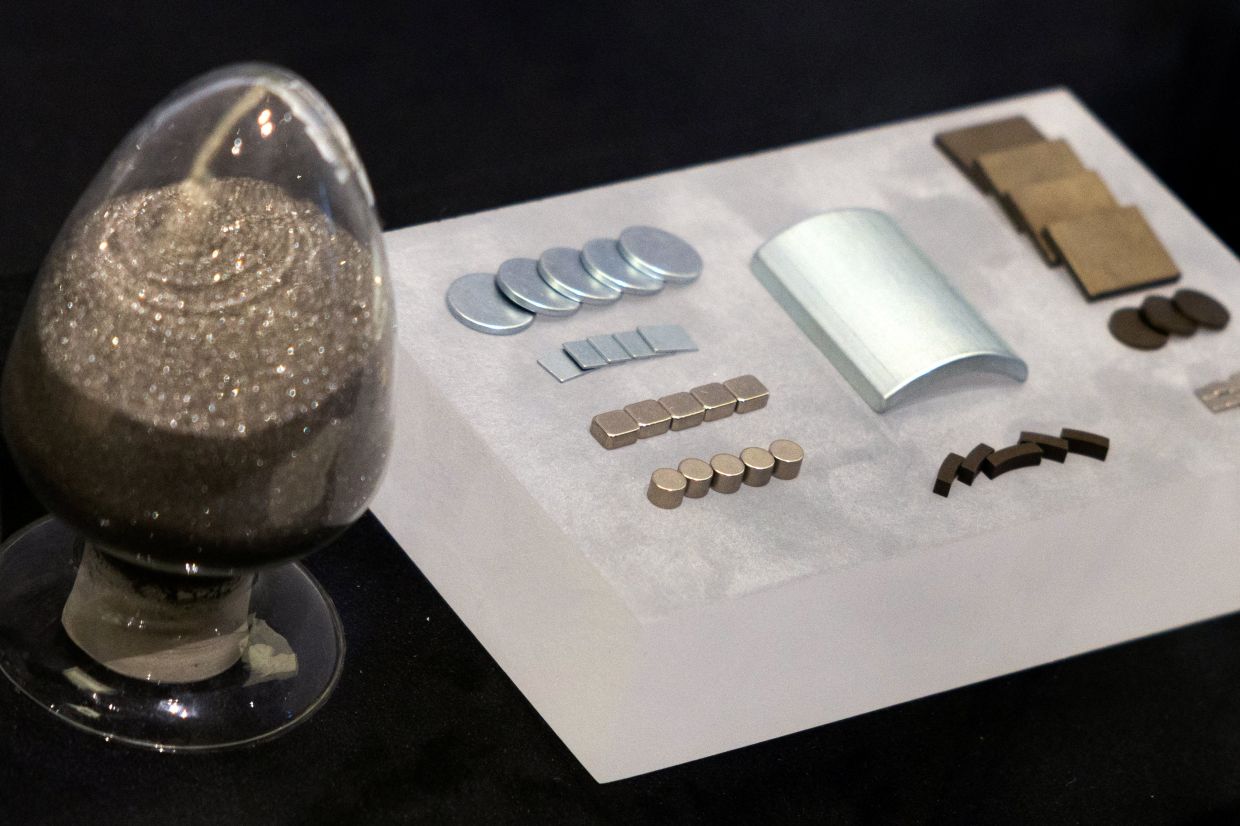
China is stepping up scientific cooperation with Iran in the strategically contested domain of rare earth mineral exploration and processing, signalling Beijing's determination to secure alternative supply sources and strengthen ties with Tehran amid escalating geopolitical tensions. The initiative reflects China's broader strategy to consolidate control over critical minerals essential to modern military systems while simultaneously reducing Western leverage over its technological development.
The collaboration, managed through their respective national science foundations, allocates 30,000 yuan (approximately US$4,200) per workshop, with funding covering essential operational costs such as venue arrangements, accommodation and domestic transportation. Iran's National Science Foundation contributes by facilitating international travel for its researchers and providing lodging for Chinese scientists visiting the country. This structured funding arrangement demonstrates the institutionalised nature of the partnership, moving beyond theoretical cooperation into concrete research activities.
Rare earth elements occupy a uniquely important position in contemporary military and industrial applications. These 17 metallic elements possess exceptional magnetic and electronic characteristics that make them indispensable components in advanced defence systems, including missile guidance systems, fighter aircraft avionics, sophisticated radar installations and numerous other electronic warfare technologies. The strategic importance of securing reliable rare earth supplies has transformed these obscure elements into frontline weapons in geopolitical competition between major powers.
The timing of this announcement carries profound significance. The United States has recently deployed rare earth export restrictions as a counter-measure against China, while simultaneously launching a 3 billion dollar investment programme aimed at revitalising domestic production of critical minerals and battery components. These American initiatives seek to replenish military stockpiles and reduce Washington's dangerous dependence on Chinese supply chains, reflecting deep anxiety over potential supply disruptions during any future conflict.
China's dominance in the global rare earth sector remains virtually unmatched. The country possesses the world's largest confirmed reserves of these elements and maintains overwhelming control of international production and processing infrastructure. More strategically significant, Beijing has progressively tightened restrictions on exporting rare earth technology and processing knowledge, effectively creating bottlenecks that prevent other nations from developing independent capabilities. This technological gatekeeping has proven extraordinarily effective in compelling reliance on Chinese suppliers.
The precedent for Chinese strategic use of rare earth leverage occurred following President Trump's initial trade war against Beijing last year. China responded with coordinated export restrictions that severely disrupted supplies reaching American manufacturers, dramatically exposing Washington's structural vulnerability. That episode fundamentally reshaped American thinking about supply chain resilience and drove policy decisions prioritising domestic production and international diversification away from China.
Iran's rare earth potential represents an intriguing but still largely underdeveloped frontier. The country's geological formations, particularly extensive iron ore and phosphate deposits in central regions, possess characteristics typically associated with concentrated rare earth accumulations. A February analysis by the Hague Research Institute identified rare earth anomalies distributed across approximately 7,000 square kilometres of central Iran, suggesting meaningful reserves potentially exist. Nevertheless, Iran's current extraction and processing infrastructure remains embryonic, substantially far from achieving commercially viable industrial-scale production.
This scientific partnership builds upon institutional foundations established in 2017, when both countries signed a memorandum of understanding in Beijing laying groundwork for systematic cooperation. Chinese officials have framed Iran as strategically integral to Beijing's Belt and Road Initiative, emphasising how scientific collaboration serves mutual development objectives. Since the initial agreement, the two science foundations have systematically funded joint research projects spanning remarkably diverse fields including mathematics, biological sciences, medical research, renewable energy technologies, advanced materials, climate science and artificial intelligence.
The workshop programme itself launched during 2024, initially encompassing climate change, artificial intelligence, advanced materials and manufacturing, with each workshop receiving 150,000 yuan in funding. This year's expanded iteration broadens focus significantly, incorporating nano materials for medical diagnostics, environmental pollution monitoring, earthquake-resistant architectural design and environmentally sustainable manufacturing processes alongside the newly prominent rare earth research track. The breadth of this agenda suggests Beijing views Iran as a multifaceted scientific partner extending far beyond mineral acquisition.
For Malaysia and the broader Southeast Asian region, this development carries important implications for regional stability and economic positioning. China's strategy of diversifying rare earth sourcing through partnerships with countries outside Western influence fundamentally alters global supply chains and geopolitical alignments. As China consolidates alternative suppliers, Western nations including the United States face mounting pressure to either develop domestic capabilities or negotiate separate agreements with countries like Vietnam, which possesses modest rare earth deposits. Southeast Asia's positioning as a potential alternate source increasingly becomes strategically valuable, potentially attracting investment and technological cooperation proposals from both Western and Chinese interests competing for secure supply chains.
Moreover, the scientific cooperation framework between China and Iran demonstrates how ostensibly neutral research collaboration becomes intertwined with strategic competition over resources and technology. Malaysia and other regional nations must carefully evaluate similar partnership proposals, recognising that scientific workshops and research funding often serve broader geopolitical objectives beyond academic merit. The expansion of Chinese influence in critical mineral sectors globally raises questions about how resource-dependent nations can balance technological advancement opportunities against risks of strategic dependency on single suppliers.

