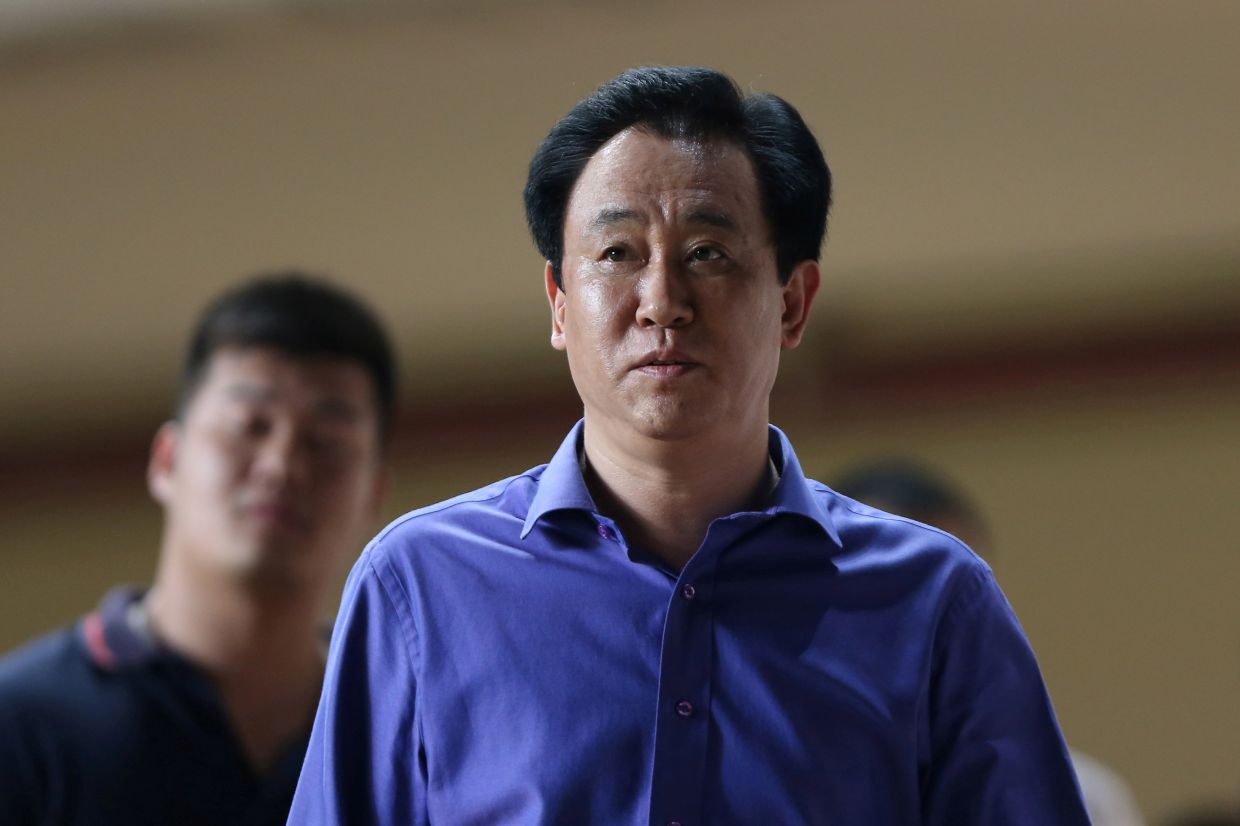
China has handed down a life sentence to Xu Jiayin, the founder of Evergrande Group, and imposed fines exceeding US$2.4 billion on the company and its real estate subsidiary following convictions for financial crimes. The Shenzhen Intermediate People's Court delivered the verdict on Thursday in what represents one of the most severe penalties against a major Chinese business leader in recent years. The court also stripped Xu of his political rights for life and ordered the confiscation of his personal assets, cementing the dramatic downfall of a once-celebrated property tycoon.
Evergrande's trajectory from industry darling to cautionary tale illustrates the boom-and-bust cycle that has defined China's property sector over the past two decades. For years, the conglomerate epitomised the ambitions and excesses of Chinese real estate development, leveraging aggressive expansion strategies and prolific marketing to position itself as a builder of homeownership dreams across the nation. The company accumulated significant assets and market influence during this period, becoming synonymous with China's seemingly unstoppable property boom. However, this expansion was built on foundations that proved far less solid than investors and creditors believed.
The court's findings reveal systematic misconduct spanning six years from 2016 to 2021. According to the Shenzhen court, Xu and Evergrande engaged in continuous, large-scale financial fraud that artificially inflated the company's assets while deliberately obscuring its mounting liabilities. Prosecutors established that these misrepresentations were not isolated incidents but rather formed part of a coordinated strategy to maintain access to credit and capital markets. The scale of the deception was sufficiently severe to warrant multiple fraud convictions, demonstrating that the infractions extended across various business divisions and financial operations.
Beyond fraud, the court documented evidence of bribery and embezzlement among Xu's specific charges. Most significantly, the judgment indicated that Evergrande used corrupt payments to gain control of financial institutions, a revelation that extends the scandal beyond property development into the banking sector. The court did not identify the specific financial institutions involved, but the allegation underscores how deeply the company's misconduct penetrated financial system infrastructure. This aspect of the verdict has profound implications for Chinese financial regulation and raises questions about oversight mechanisms that failed to detect such control arrangements.
The events leading to this verdict originated with Evergrande's dramatic default in 2021, which sent shockwaves through global markets and raised fears about contagion effects across China's property sector. Prior to the default, the company had faced increasingly stringent government restrictions on borrowing and speculation as Beijing sought to rein in excessive leverage and unsustainable growth within the real estate industry. These policy tightening measures, often characterised as the "three red lines" framework, were specifically designed to curb the kind of aggressive expansion strategies that Evergrande had employed. As credit channels narrowed, the company's financial weaknesses became apparent, ultimately forcing it to acknowledge that it could not meet obligations to creditors.
The investigation and prosecution that followed Evergrande's collapse appear to have been comprehensive in scope. Five additional senior executives received sentences ranging from six to eighteen years for their roles in the fraud and related crimes, indicating that the misconduct involved coordinated action across multiple levels of management. Xu's admission of guilt in April to the charges, including embezzlement and bribery alongside financial fraud, may have influenced the severity of sentencing, though the life sentence reflects the court's assessment of the gravity and scale of his wrongdoing.
The financial penalties imposed on Evergrande and its real estate subsidiary totalled 15.82 billion yuan, equivalent to approximately US$2.4 billion at current exchange rates. For context, this represents a substantial sum even for a company of Evergrande's former size, though the group's assets have deteriorated significantly since the default. The fines are unlikely to be recovered in full given the company's ongoing restructuring and asset depletion, but they serve as an official accounting of economic harm caused by the misconduct.
This case carries broader significance for Southeast Asia, particularly for Malaysia and neighbouring economies that host Chinese developers and investors. Chinese property firms operating across the region have increasingly become major players in residential, commercial, and mixed-use development. Evergrande's experience serves as a cautionary lesson about the risks of opaque corporate governance and aggressive financial engineering, factors that investors and regulators in Malaysia and other ASEAN nations should carefully evaluate when assessing Chinese developer credibility and financial health.
The verdict also reflects China's evolving approach to corporate accountability and its willingness to pursue severe penalties against prominent business figures. Under President Xi Jinping's administration, anti-corruption campaigns have extended into the private sector, particularly targeting major corporations deemed to have engaged in systemic fraud. The Evergrande case demonstrates that even companies of enormous scale and influence are not immune from prosecution, signalling to other large corporations that financial misconduct carries serious consequences.
Looking ahead, the case may reshape how creditors, investors, and regulators evaluate risk within China's property sector. The revelation of systematic asset inflation and hidden liabilities raises questions about the reliability of financial disclosures from other major developers, potentially affecting their access to international capital. Property companies across Asia, including those with exposure to Chinese markets or financing structures similar to Evergrande's, may face enhanced scrutiny from stakeholders concerned about reputational contagion.
For Malaysia specifically, where Chinese property investments have been significant in recent years, the Evergrande prosecution underscores the importance of rigorous due diligence and transparent financial practices. Malaysian authorities and investors should consider the lessons from this case when evaluating investment proposals from Chinese firms, particularly those involving complex financing structures or ambitious expansion plans.

