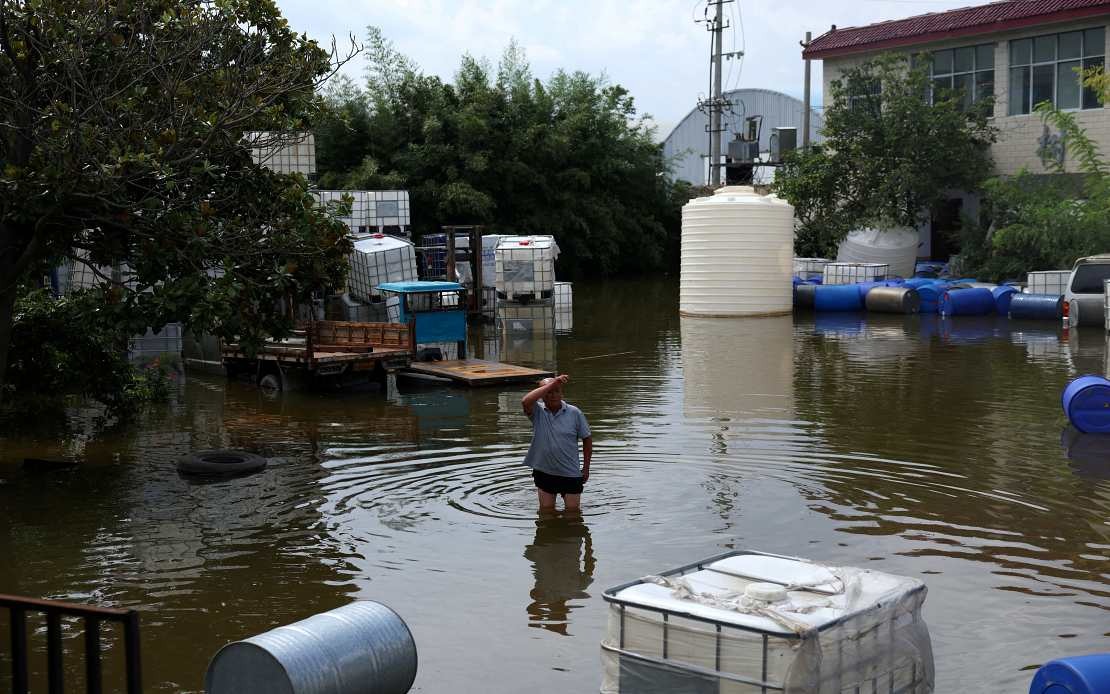
China has launched a comprehensive emergency response to catastrophic flooding in Henan Province following the breach of a critical river levee, with rescue forces and extensive relief supplies now mobilising across affected regions. The Ministry of Emergency Management announced Friday that specialised teams had been sent to Zhoukou City after heavy precipitation from Typhoon Dolphin, the year's thirteenth such storm system, caused water levels to surge dramatically. The levee failure occurred around 11 pm on Thursday, marking a pivotal escalation in what has become a significant regional disaster requiring coordinated national response measures.
The scale of the rescue deployment reflects the severity of the situation unfolding across central China's most populous province. Beijing dispatched 200 specialist engineering rescue personnel from China Anneng Group alongside 110 sets of large-scale engineering equipment, with these forces arriving on site Friday morning to join ongoing emergency operations. The rapid mobilisation of such substantial resources indicates authorities recognised the potential for widespread humanitarian consequences from the infrastructural failure, necessitating immediate intervention beyond local capacity. Engineering teams specialising in emergency response bring critical capabilities for stabilising infrastructure, managing water flow, and extracting stranded residents from affected zones.
The National Commission for Disaster Prevention, Reduction and Relief escalated its response framework Friday by activating a Level-IV national disaster relief emergency response across Henan Province. This classification reflects the magnitude of anticipated impacts and signals central government recognition that recovery will demand coordinated support across multiple provincial jurisdictions and administrative levels. Such elevated alert statuses streamline resource allocation, simplify inter-agency coordination, and enable faster deployment of national reserves typically reserved for the most serious calamities. The decision to activate this level demonstrates that officials anticipated consequences extending beyond localised flooding to encompass broader infrastructure damage and population displacement.
Material support for affected communities has begun flowing through official channels with impressive speed. The National Commission's office coordinated with the Ministry of Emergency Management and the National Food and Strategic Reserves Administration to dispatch 30,000 items from central disaster relief stockpiles to impacted areas including Zhoukou, Xuchang and surrounding regions. These supplies include folding beds, summer quilts, and emergency family kits designed for rapid deployment in temporary shelters where displaced residents require immediate accommodation and basic necessities. The composition of aid packages reflects practical understanding of needs arising from sudden evacuation and mass displacement scenarios typical of levee failures affecting populated areas.
Typhoon Dolphin represents the thirteenth typhoon to threaten China this meteorological year, underlining a broader pattern of intensified weather phenomena affecting East Asian geography. The storm system brought sufficient precipitation to overwhelm local drainage systems and swell river networks to dangerous levels, creating pressures that existing levee infrastructure ultimately proved insufficient to contain. The breach mechanism appears attributable to cumulative hydraulic forces rather than structural defect, though investigations will likely examine maintenance protocols and design adequacy relative to evolving climate patterns. For Malaysia and Southeast Asian nations, such events carry sobering implications regarding infrastructure resilience as regional climate patterns continue shifting in ways that specialists expect will generate more frequent extreme precipitation events.
The disaster underscores vulnerabilities in water management infrastructure across Asia more broadly, with Henan Province's experience offering cautionary lessons for neighbouring countries managing major river systems. Malaysia's monsoon seasons and typhoon exposure, while generally managed through established protocols, require ongoing evaluation of levee systems, drainage capacity, and early warning mechanisms in light of intensifying meteorological phenomena. The rapidity with which China mobilised national resources—deploying specialised teams within hours and coordinating multi-agency supply chains—provides a template for emergency management that developing economies might study carefully.
For Malaysian observers, the incident illustrates how quickly natural disasters can escalate from local weather events into national emergencies demanding presidential-level coordination and central government resource commitment. Henan Province's population density and economic importance within China's development architecture amplified the disaster's significance, much as major flooding in Malaysia's industrial heartland would demand similar emergency frameworks. The sophisticated coordination visible in China's response—integrating military-grade engineering capabilities, national supply networks, and disaster relief systems—suggests that managing modern catastrophes requires integration across civilian, military, and administrative structures.
The levee breach in Zhoukou represents infrastructure failure with profound consequences for ordinary residents whose homes, livelihoods, and safety were compromised suddenly. Mass displacement creates secondary crises extending far beyond immediate physical danger, including disease transmission risks, psychological trauma, and economic disruption as communities require months or years for complete recovery. Authorities' deployment of family emergency kits and bedding supplies addresses immediate humanitarian needs, but sustained recovery will demand reconstruction investment, livelihood restoration programmes, and psychological support services extending well beyond the emergency response phase now underway.
Regional developments warrant close attention from Malaysian policy makers managing similar geographic and climatic challenges. Henan Province's experience with levee infrastructure failure and the necessity for large-scale rescue deployment suggest that even wealthy nations with advanced engineering capabilities face mounting pressure from extreme weather events that outpace existing infrastructure design parameters. Malaysia's own system of dams, barriers, and water management installations may require periodic reassessment in light of shifting precipitation patterns and intensifying monsoon phenomena that scientists increasingly associate with climate change trajectories.

