China's Ministry of Foreign Affairs has expressed approval of Prime Minister Datuk Seri Anwar Ibrahim's recent remarks affirming Malaysia's adherence to the one-China principle, particularly regarding the status of Taiwan. The Chinese government's endorsement comes after Anwar reiterated in an Al Jazeera interview that Taiwan constitutes an integral part of China, a position he described as universally accepted in the international community. Beijing's formal acknowledgment through its official diplomatic channels underscores the significance it places on Malaysia's consistent stance on this sensitive geopolitical matter.
The Chinese Ministry of Foreign Affairs spokesperson posted a statement on X on Wednesday commending the Malaysian premier for maintaining a resolute position on an issue that Beijing considers fundamental to its national interests and sovereignty. This public validation reflects China's appreciation for Malaysia's diplomatic alignment, particularly as Taiwan remains one of the most contentious issues in global politics and a potential flashpoint in regional tensions. The statement's publication on a social media platform accessible to international audiences suggests Beijing's intention to broadcast its satisfaction beyond Chinese domestic audiences, signalling to other nations the value it places on support from key regional partners.
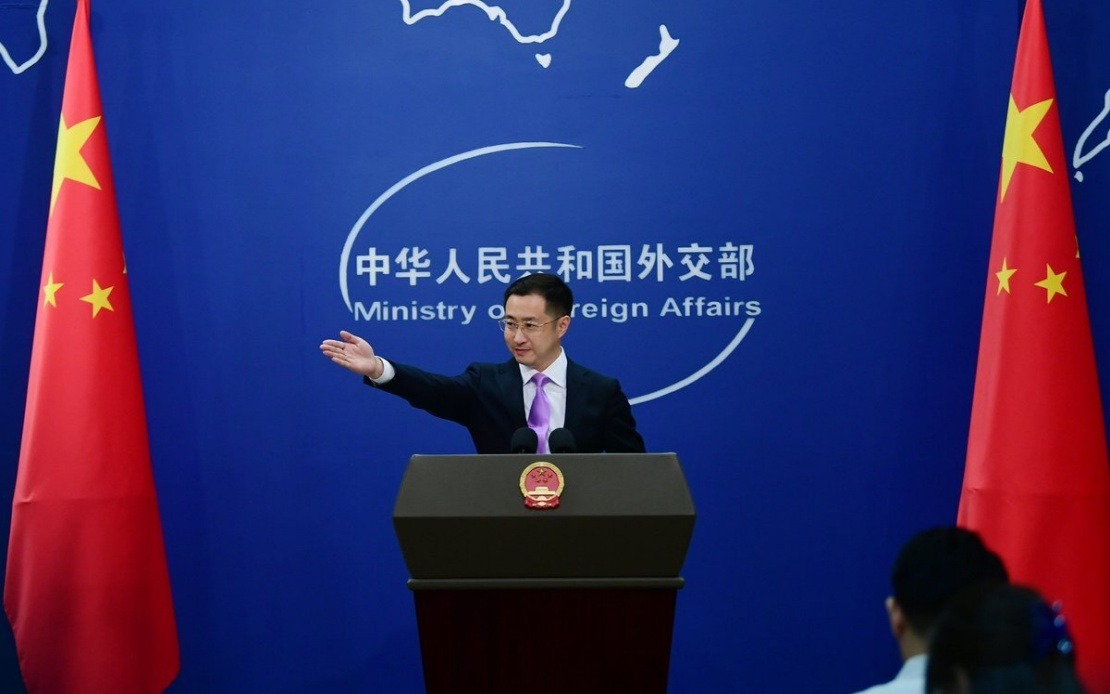
Chinese foreign ministry spokesperson Lin Jian elaborated on Beijing's position during a regular press briefing in Beijing on Wednesday, articulating the ideological and political framework underlying China's stance. Lin emphasised that upholding the one-China principle reflects the authentic sentiment of the Chinese people and aligns with universal principles of justice and international law. By framing Malaysia's position as consistent with popular will and moral rectitude, China attempts to legitimise its own claims and encourage similar commitments from other nations throughout the Asia-Pacific region.
The spokesperson reiterated Beijing's core assertion that Taiwan constitutes an inalienable component of Chinese territory, rejecting the notion that the island's political status remains subject to negotiation or alternative interpretations under international law. Lin further characterised China's eventual reunification with Taiwan as an inevitable historical process rather than a contingent political objective, employing language that suggests inevitability and determinism. This rhetorical approach aims to establish the perceived irreversibility of China's ultimate objectives while simultaneously pressuring the international community to accept this eventuality as fait accompli.
Anwar's statements carry particular weight in the Malaysian and Southeast Asian context, given Malaysia's role as a major regional economy and influential member of the Association of Southeast Asian Nations. Malaysia's explicit endorsement of the one-China principle through its prime minister's public pronouncements reinforces Beijing's diplomatic position within a region where several nations maintain complex relationships with both China and Taiwan. The Malaysian government's clear articulation of this stance helps Beijing counter Western and allied nations' efforts to maintain Taiwan's de facto autonomy and international presence.
The timing of China's formal commendation reflects broader diplomatic dynamics within Asia-Pacific geopolitics, where Beijing continuously seeks to consolidate support from major regional actors. Malaysia's position becomes particularly significant given the nation's geographic proximity to the Taiwan Strait and its economic interdependence with China through trade, investment, and infrastructure projects including those under the Belt and Road Initiative. By publicly praising Anwar's remarks, China reinforces the strategic alignment between Kuala Lumpur and Beijing while potentially encouraging other regional governments to adopt similarly explicit positions.
Anwar's characterisation of one-China as globally accepted represents a diplomatic assertion rather than an empirical description of actual international consensus, as numerous nations maintain official diplomatic relations with Taiwan or recognise Taiwan's autonomous governance in practical terms. However, it reflects Malaysia's official foreign policy stance and aligns with the position of most United Nations member states that recognise the People's Republic of China rather than the Republic of China. This diplomatic reality, combined with Malaysia's own significant economic interests in mainland China, shapes Kuala Lumpur's public statements on Taiwan regardless of broader international debate on the island's political future.
The exchange between Malaysian and Chinese officials occurs against a backdrop of increasing cross-strait tensions and competing visions for Taiwan's future. The United States and its allied nations have intensified efforts to maintain Taiwan's international presence and strengthen its democratic institutions, creating a counterbalance to Beijing's assertions regarding inevitable reunification. Malaysia's explicit statements supporting the one-China principle thus carry strategic importance in Beijing's broader campaign to isolate Taiwan diplomatically and establish international consensus around its sovereignty claims.
For Malaysian policymakers, the delicate balance between supporting Beijing's one-China position and maintaining pragmatic regional relationships remains an ongoing challenge. While Malaysia's official policy unambiguously supports the one-China principle, the nation also maintains extensive economic and people-to-people connections with Taiwan, creating inherent contradictions in practice despite consistency in diplomatic rhetoric. Anwar's public statements therefore serve to clarify Malaysia's official position for international audiences while internally managing the complexity of these competing interests.
China's appreciation for Anwar's remarks reflects broader patterns in Beijing's diplomatic strategy throughout Southeast Asia, where leaders who publicly reaffirm support for Chinese positions receive positive international recognition and reinforcement. This approach creates incentives for regional governments to align their public statements with Chinese preferences while potentially constraining space for independent regional voices on sensitive geopolitical matters. Malaysia's role as a major Southeast Asian economy and ASEAN member ensures that its diplomatic positions influence broader regional dynamics and China's assessment of its standing within Asia-Pacific geopolitics.

