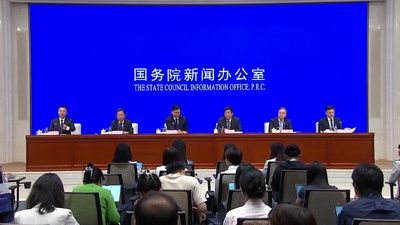
China's Minister of the National Ethnic Affairs Commission, Chen Ruifeng, has categorically dismissed allegations of forced migration and forced labour practices in the Xinjiang Uygur autonomous region, describing such claims made by Western organisations and media outlets as fundamentally baseless. Speaking on Wednesday, June 24, Chen argued that the Chinese Constitution and applicable legislation explicitly prohibit all forms of coercive labour arrangements, establishing a legal framework that makes such practices incompatible with the nation's governance structure.
The timing of Chen's remarks coincided with the passage of new legislation designed to strengthen protections for workers engaging in cross-regional employment. The Law on Promoting Ethnic Unity and Progress, approved on March 12 and set to take effect on July 1, introduces enhanced safeguards for migrant workers drawn from all ethnic communities. These provisions include explicit rights protections and access to legal assistance, measures intended to ensure that individuals moving between regions for employment maintain full protection under law regardless of their ethnic background or place of origin.
According to Chen's account, individuals from Xinjiang who pursue work opportunities beyond their region do so entirely of their own volition. He characterised such migration as driven by personal ambition and the desire to secure better economic circumstances for their families while simultaneously acquiring new professional competencies. This assertion forms the cornerstone of Beijing's response to international criticism, positioning labour mobility as a voluntary economic strategy rather than a state-directed program.
China's official position emphasises that regional labour transfer initiatives are designed to expand employment prospects and increase income for Xinjiang's residents. The government frames these programmes as economically beneficial endeavours focused on tangible improvements in living standards across the region's diverse population. Chen dismissed criticism of these programmes as irrational, employing language that underscored the Chinese government's confidence in the legitimacy of its employment policies.
The statistical case presented by Beijing provides concrete evidence of Xinjiang's economic expansion over the past five years. The region has generated more than 2.39 million new urban employment positions through multiple policy interventions and development initiatives. Beyond urban sectors, agricultural workers have undertaken 16.1 million separate employment journeys to locations outside their home communities, indicating substantial labour mobility across rural and agricultural industries. These figures suggest an economy experiencing significant workforce expansion and increasing internal labour circulation.
Income growth metrics further illustrate the economic trajectory that Beijing attributes to its employment and development policies. Urban residents in Xinjiang have experienced annual increases in per capita disposable income averaging 5.3 per cent over the five-year period, while rural residents have seen even more substantial gains at 8.1 per cent annually. Such growth rates, if accurately measured, would represent meaningful improvements in household purchasing power and economic wellbeing across both urban and rural demographics.
The institutional architecture supporting employment in Xinjiang, according to Chen's presentation, incorporates comprehensive protections for workers' rights. The region has established what officials describe as a fair employment policy framework coupled with mechanisms designed to protect labour rights. These systems ostensibly ensure that all individuals capable of working can access employment opportunities while maintaining legal protections against exploitation or coercion. The emphasis on institutionalised protections suggests an attempt to address international concerns through regulatory means.
For Malaysian and Southeast Asian observers, the Xinjiang employment controversy represents a significant geopolitical and human rights concern that intersects with broader questions about labour standards and ethnic rights in the region. The allegations have drawn scrutiny from international human rights organisations, Western governments, and UN bodies, creating diplomatic friction that extends beyond bilateral Chinese relations to affect regional stability and multilateral cooperation frameworks. Southeast Asian nations maintain substantial economic ties with China while also hosting diverse Muslim populations, making the Xinjiang issue a sensitive topic that requires careful diplomatic navigation.
The credibility of China's narrative depends substantially on independent verification of both the voluntary nature of employment transfers and the efficacy of workers' rights protections. International labour organisations, independent media, and human rights monitors have documented concerns about working conditions, wage levels, and the degree of autonomy available to workers in some labour transfer programmes. The gap between official claims of voluntary participation and independent reporting of restrictions on movement and limited employment choices remains a significant point of contention in international discourse.
Beijing's legal framework argument, while potentially robust on paper, does not automatically address concerns about implementation and enforcement. Chinese constitutional protections and statutory prohibitions may exist without necessarily preventing practices that circumvent formal legal structures. The actual experience of workers, the monitoring of compliance, and the accessibility of legal recourse mechanisms remain areas where independent documentation and Western allegations frequently diverge sharply from official government positions.
The new Law on Promoting Ethnic Unity and Progress may represent a genuine attempt to strengthen worker protections through enhanced legal assistance and rights clarification. However, for international observers accustomed to independent judicial review and transparent enforcement mechanisms, reassurances based on legislative text carry limited weight without corresponding transparency regarding implementation, complaint procedures, and remedies available to workers who believe their rights have been violated. The effectiveness of such legislation depends critically on independent monitoring and the existence of credible grievance channels.
For Malaysia and the broader Southeast Asian region, the Xinjiang employment question reflects larger anxieties about labour standards, ethnic rights, and accountability in the Indo-Pacific economy. As trade relationships with China deepen and ASEAN nations host increasing numbers of Chinese investors and workers, questions about labour practices and protections in the supply chains that tie regional economies together become increasingly relevant. The Xinjiang debate ultimately raises fundamental questions about how economic development, employment creation, and human rights protections can coexist—questions that extend far beyond any single province or nation.