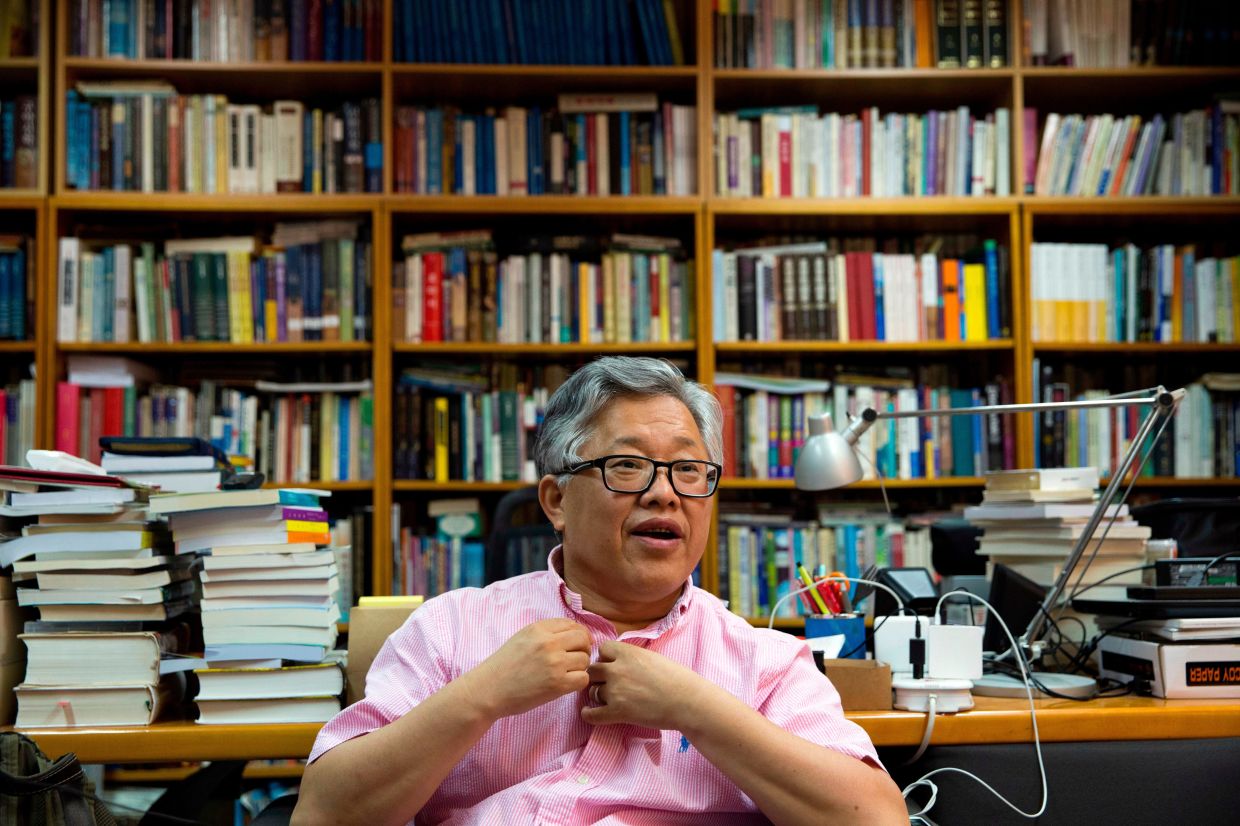
China has released Ezra Jin, the founder of Zion Church, an unregistered Christian congregation that operates outside state control, after nearly nine months in detention. His release marks a rare instance of Chinese authorities freeing a prominent religious figure following high-level diplomatic engagement, with Jin's family and the church confirming to international media on Sunday that he had been freed. The pastor, known by his Chinese name Mingri, had been held since October 10 on suspicion of illegally using information networks—a charge often leveled against those who operate unsanctioned religious or political organisations online.
The timing and nature of Jin's release underscore the intricate diplomatic dance between Washington and Beijing over matters of conscience and religious freedom. US President Donald Trump had personally raised Jin's case during a visit with Chinese President Xi Jinping in May, publicly stating that the Chinese leader would "strongly consider" granting the pastor's release. That intervention appears to have borne fruit, as Chinese officials informed Jin's family that his release constituted a deliberate goodwill gesture timed to coincide with American Independence Day celebrations, further signalling the diplomatic choreography at play.
Zion Church occupies a particular niche within China's complex religious landscape. Founded in Beijing in 2007, the congregation initially grew to approximately 1,500 members before authorities pressured it to shut down in 2018. Rather than disappearing entirely, the church adapted by establishing a robust online presence that proved especially effective during the Covid-19 pandemic, eventually drawing followers across some 40 Chinese cities. This digital resilience—the ability to maintain community and theological teaching through networks authorities struggle to monitor comprehensively—has made it an example of how modern Christianity in China has evolved to operate beyond official channels.
Jin's personal sacrifice reflects the costs imposed on those who lead unregistered congregations. After his family relocated abroad following the 2018 crackdown, he made the deliberate choice to return to mainland China to continue pastoral work, a decision that resulted in authorities imposing a travel ban on him. For more than seven years, Jin has been separated from most of his family, including two young sons, unable to leave the country and reunite with relatives living overseas. His daughter Grace, in a statement shared with international media, expressed profound relief at his liberation, describing his release as "a tremendous miracle" and offering gratitude to Trump and his administration for their "tremendous leadership."
The broader context of Jin's case reveals an intensifying pattern of religious restrictions under Xi Jinping's governance. The Chinese Communist Party has traditionally viewed organised religion with deep suspicion, viewing it as a potential challenge to state authority and party ideology. In recent years, this wariness has crystallised into concrete crackdowns against unregistered churches and Christian groups operating outside government-approved frameworks. Authorities have escalated enforcement actions, conducting raids on congregations and detaining prominent religious leaders.
The Early Rain Covenant Church in southwestern Sichuan province experienced a raid in June, resulting in the detention of two leaders, following earlier arrests of other key members in January. In the same period, authorities in eastern Zhejiang province physically dismantled Yayang church, removing its cross and scaffolding the structure itself—a deliberate symbolic act of obliteration. These actions demonstrate that Jin's predicament, while eventually resolved through diplomatic intervention, reflects a systemic campaign against Christianity operating beyond state supervision.
The detention of Jin's fellow congregants underscores that his release, while significant, represents an incomplete resolution to the challenges facing Zion Church. Eight members detained alongside Jin in October remain in custody, their fate unresolved even as the international spotlight shifted following the pastor's liberation. Their continued detention suggests that diplomatic pressure has limits in China's religious governance, and that securing the freedom of lower-profile believers requires sustained international advocacy.
For Southeast Asian observers, Jin's case illuminates the precarious position of religious minorities in authoritarian systems and the role international diplomacy plays in protecting freedom of conscience. Malaysia's own experience with religious regulation—through mechanisms like Islamic courts, sedition laws, and restrictions on religious conversion—invites reflection on how different societies balance state interests with individual liberty. Unlike China's comprehensive suppression of unregistered Christianity, Malaysia's framework targets specific religions and populations differently, yet the underlying tension between state control and religious autonomy remains relevant.
Jin's journey to Los Angeles and reunion with family members abroad represents not merely a personal victory but potentially a signal of shifting diplomatic priorities. The coordination between Washington and Beijing around a religious freedom case suggests that human rights concerns, though often marginalised in great-power competition, retain sufficient diplomatic currency to occasionally influence outcomes. Chinese officials' explicit acknowledgement that the release resulted from Trump-Xi discussions represents an unusual transparency about how such cases are resolved.
Yet Jin's release must be understood against the continuing vulnerability of unregistered Christianity in China. The eight remaining Zion Church members in detention, the ongoing restrictions on congregation activities, and the pattern of raids against other churches indicate that liberalising pressure remains episodic and dependent on diplomatic leverage rather than systemic reform. For Christians throughout China seeking to worship according to conscience outside state frameworks, Jin's case offers hope tempered by the knowledge that fundamental protections remain contingent on international attention and diplomatic negotiation rather than enshrined legal protections.
Looking forward, Jin's case may establish precedent for future diplomatic interventions on behalf of detained religious figures, particularly if the US continues prioritising such cases in bilateral discussions. However, the broader challenge of securing systematic religious freedom protections in China remains unresolved. The jubilation expressed by Jin's family at his release, while genuine and deeply felt, masks the ongoing restrictions facing millions of Chinese believers navigating a religious landscape increasingly constrained by state ideology and control mechanisms that show no signs of fundamental liberalisation.

