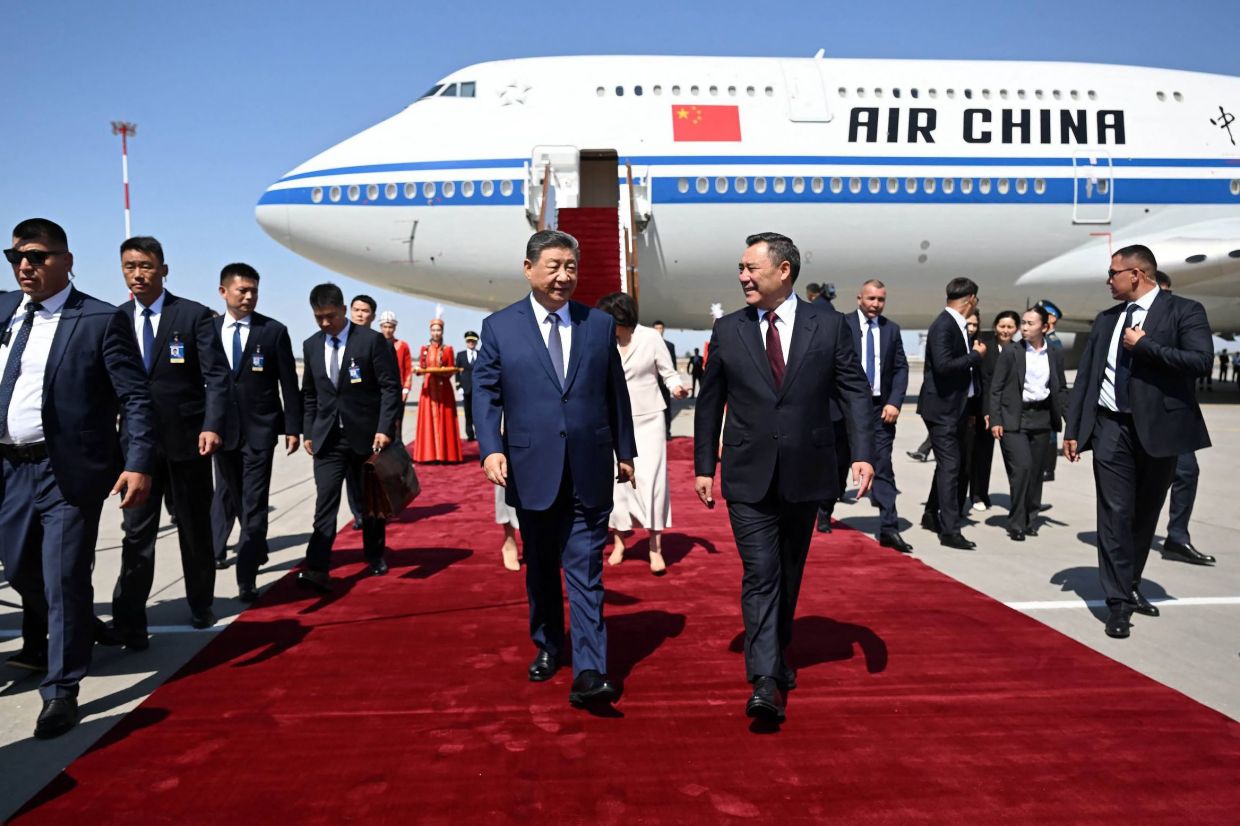
The leadership of China, Russia and India has convened in Bishkek, Kyrgyzstan this week for a pivotal gathering of the Shanghai Cooperation Organisation, a coalition increasingly cast as an institutional alternative to Western-dominated geopolitical structures. The summit brings together heads of state from the organisation's ten member nations and numerous observer countries, with Beijing and Moscow explicitly framing the event as part of a broader strategy to challenge the world order shaped by the United States and its allies. The symbolism carries particular weight given the current international environment, where traditional Western institutions face mounting criticism from rising powers seeking greater voice in global affairs.
The attendance of Chinese President Xi Jinping, Russian President Vladimir Putin and Indian Prime Minister Narendra Modi underscores the summit's importance to each nation's strategic calculus. Scheduled bilateral meetings, including a Putin-Xi meeting on Monday and talks between Putin and Iranian President Masoud Pezeshkian on Tuesday, reveal the intensive diplomatic agenda running alongside formal sessions. These interactions provide crucial opportunities for nations facing varying degrees of international pressure to reinforce partnerships and coordinate positions on contested global issues.
For Russia and Iran, the summit takes on heightened significance. Moscow, now four and a half years into its full-scale military campaign in Ukraine, seeks to leverage the platform to consolidate relationships with nations unwilling to align with Western sanctions and isolation strategies. Tehran, engaged in an ongoing conflict with Israel and the United States, similarly views the gathering as essential for strengthening ties with non-Western capitals and demonstrating that it maintains robust international support despite diplomatic isolation.
The Shanghai Cooperation Organisation itself represents an evolution in regional cooperation structures. Founded in 2001 by China, Russia and four Central Asian republics as a security-focused body, the grouping has expanded substantially over the past quarter-century. Its current membership encompasses Russia, China, India, Iran, Pakistan, Belarus, Kazakhstan, Kyrgyzstan, Tajikistan and Uzbekistan, alongside numerous nations with observer or dialogue partner status. This expansion reflects both the bloc's growing appeal and the diversifying interests of states seeking alternatives to Western institutional frameworks.
Beijing and Moscow have invested considerable diplomatic capital in positioning the SCO as a credible counterweight to Western-aligned organisations such as the Group of Seven. China in particular has championed the organisation's potential, pledging development assistance and financial support while framing it as embodying a new model for regional cooperation. Chinese foreign ministry statements have repeatedly highlighted the SCO's success in charting this alternative pathway, while Beijing continues advancing the concept of a multipolar world order in which power distributes more equitably among regional powers.
Yet the organisation's internal dynamics reveal significant limitations to its cohesiveness. Members harbour distinct interests, pursue competing regional agendas and maintain divergent relationships with external powers. The SCO functions not as a unified political or military alliance comparable to NATO but rather as a forum where disparate nations convene to discuss shared security concerns while protecting their individual strategic interests. This structural reality means that decisions emerge through negotiation rather than consensus, and the organisation's policy positions often reflect compromises rather than coherent strategy.
For India, participation in the summit serves multiple strategic purposes beyond substantive policy outcomes. New Delhi gains access to crucial intelligence regarding regional developments and shifting geopolitical dynamics, while simultaneously projecting an image of reliability and engagement to regional stakeholders. Dinakar Peri, a security fellow at Carnegie India, observes that the SCO provides Delhi with a seat within forums increasingly dominated by great power competition, enabling India to hedge its position while safeguarding its interests. Despite China and Pakistan holding membership alongside India, the platform allows New Delhi to monitor these rivals' activities and maintain diplomatic leverage.
India's balancing act within the SCO mirrors a broader Southeast Asian challenge. Regional states similarly navigate between Western partnerships and engagement with Beijing-led initiatives, seeking to benefit from both relationships while avoiding exclusive alignment. The Indian model of extracting strategic value from multilateral forums without subordinating national interests to bloc discipline reflects lessons applicable across Asia-Pacific capitals grappling with comparable geopolitical pressures.
Turkey's position within the SCO reflects yet another variation on this hedging strategy. Holding dialogue partner status since 2012 under President Recep Tayyip Erdogan's initiative, Ankara seeks to use the forum for strengthening its Eurasian influence while maintaining traditional transatlantic ties through NATO membership. Turkey's aspiration for full SCO membership, combined with its sustained engagement with European markets through longstanding trade arrangements, exemplifies how middle powers attempt to benefit from multiple institutional relationships. However, Ankara's stalled EU membership bid for over two decades complicates this balancing act, making the SCO increasingly valuable as an avenue for regional influence independent of European validation.
The Bishkek summit ultimately reflects broader patterns in contemporary international relations. Established powers and rising nations coexist uneasily within frameworks that nominally promote cooperation while accommodating fundamental strategic divergences. The SCO functions successfully when members pursue narrowly-defined security cooperation in Central Asia but struggles when forced to address broader geopolitical questions where interests clash fundamentally. This limitation ensures that despite rhetorical positioning as a counterweight to Western dominance, the organisation remains primarily a platform for dialogue rather than coordinated action on major international questions.
For Malaysia and other Southeast Asian states observing these developments, the SCO summit illustrates both opportunities and constraints within an increasingly multipolar region. The emergence of alternative institutional frameworks provides additional venues for diplomatic engagement and economic cooperation, reducing dependence on any single power's institutional designs. Simultaneously, the SCO's limited effectiveness as a unified bloc suggests that regional powers must maintain diversified partnerships and resist pressure toward exclusive alignment, ensuring continued autonomy in navigating between competing great power interests.

