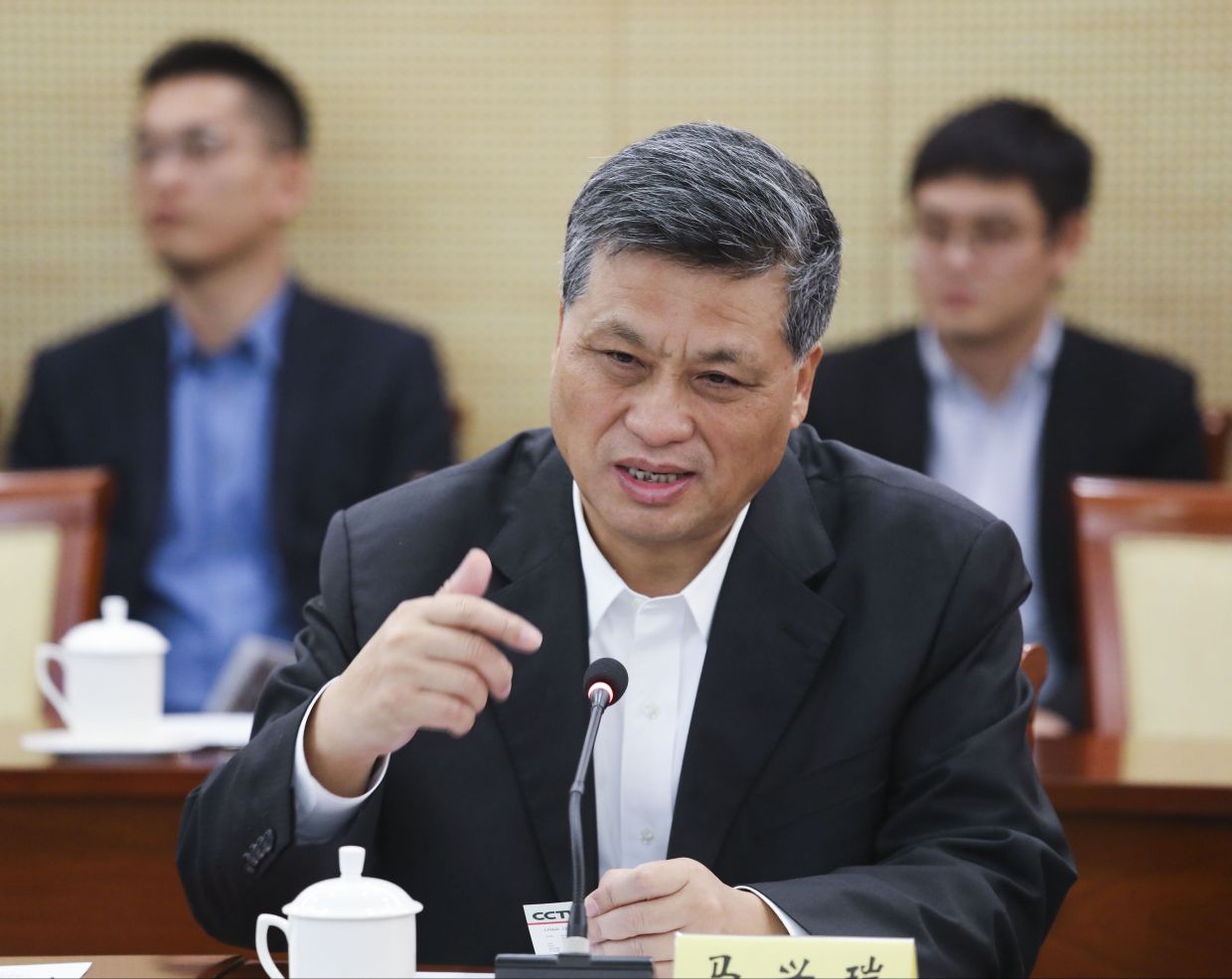
China's Communist Party has formally moved against former Politburo member Ma Xingrui following an extensive anti-corruption investigation, with party authorities approving damning findings about the 67-year-old administrator on June 30. The decision, announced through state media Xinhua on Tuesday, represents a significant escalation in the party's campaign against high-level misconduct and marks an unusual concentration of disciplinary action within its most senior ranks. Ma becomes the third Politburo member to face investigation during the current leadership term that commenced in 2022—a pattern of elite-level purges not witnessed for several decades and signalling intensified scrutiny of the party's hierarchy.
The career trajectory of Ma, who earlier headed China's next-generation carrier rocket programme, carried him through several crucial administrative postings before his eventual downfall. He transitioned from aerospace engineering into provincial politics, serving as deputy party secretary of Guangdong province from 2013 following a period at the Ministry of Industry and Information Technology. His subsequent rise proved meteoric: he became party secretary of Shenzhen, ascended to provincial vice-governor and then governor of Guangdong, before ultimately securing appointment as party chief of Xinjiang Uygur autonomous region in 2021. This posting elevated him to Politburo membership the following year at the 20th party congress, seemingly cementing his position among the nation's political elite.
The Central Commission for Discipline Inspection, the party's preeminent enforcement body responsible for anti-corruption work, conducted the investigation and constructed an indictment encompassing charges far broader than simple financial impropriety. According to the formal report reviewed and endorsed by the full Politburo, Ma had "lost his ideals and beliefs", abandoned fundamental "political conviction", and fundamentally "betrayed the party's principles and original mission." These ideological accusations carry particular weight within the Chinese Communist Party lexicon, suggesting not merely technical violations but a comprehensive rejection of party discipline and foundational commitments. The investigation determined that Ma "seriously violated [the party's] political discipline and rules", establishing grounds for the harshest possible sanctions.
The specific corruption allegations detailed in the CCDI report paint a portrait of systematic abuse of office for personal enrichment and familial benefit. Authorities accused Ma of "improperly accepting gifts and money" and facilitating arrangements whereby his relatives purchased residential properties at substantially discounted prices—a common form of corruption in China where state-controlled enterprises and developers offer connected officials' families preferential terms. Most damaging were findings regarding "power-for-sex and money-for-sex transactions", indicating sexual exploitation linked to official position, alongside evidence that Ma actively enabled relatives to monetise his influence across various sectors.
The investigation uncovered what authorities characterised as "rampant corruption across his family"—a damning phrase indicating that graft permeated his household rather than representing isolated incidents. Ma utilised his governmental authority as "a tool for personal gain", leveraging his position to direct business benefits to associates and allies, controlling major project contracts and influencing cadre promotions. Through family members and business associates, he accumulated "huge amounts of money and property" through illegal channels, demonstrating a comprehensive apparatus for converting official power into private wealth.
Ma's supervisory failures compounded the corruption charges. The CCDI found that he "neglected to supervise and manage the serious violations of [party] discipline and law and suspected crimes committed by his staff", allowing subordinates to engage in misconduct with consequential ramifications. Beyond passive neglect, Ma actively intervened in personnel decisions to benefit allies and relatives, "seeking benefits for others in cadre selection and appointment, and improperly arranging jobs for others" both directly and through family intermediaries. His refusal to truthfully confess during initial interrogations further aggravated his culpability, with authorities noting his misconduct persisted following the 18th party congress when President Xi Jinping inaugurated his signature anti-corruption campaign and promulgated strict conduct regulations for officials.
The timing and scope of Ma's investigation reflects broader anti-corruption pressures affecting Xinjiang officials specifically. Since his removal, investigators have targeted Chen Weijun, former executive vice-chairman of Xinjiang province, whose case became public in December, and Li Xu, former deputy commander of the Xinjiang Production and Construction Corps, whose investigation emerged in January. This clustering of Xinjiang-based corruption probes suggests either heightened scrutiny of the western region or emerging exposures of systemic misconduct within that administration.
Ma's long career in aerospace administration before transitioning to provincial governance appears to have established networks that later attracted scrutiny. He spent decades at the China Aerospace Science and Technology Corporation, ultimately serving as general manager from 2007 to 2013, while simultaneously holding deputy commander-in-chief responsibilities in China's manned space programme and commanding the new-generation carrier rocket project. Several former aerospace subordinates have subsequently been caught in anti-corruption investigations in recent years, suggesting the aerospace sector's vulnerabilities to abuse of procurement and contracting authority may have extended through Ma's subsequent governmental roles.
The Politburo's formal approval of the CCDI's findings establishes legal grounds for confiscating Ma's ill-gotten gains and transferring his case to the judiciary for criminal proceedings. With his removal alongside two recently expelled top military leaders, the Politburo has contracted to 21 members—a notable reduction reflecting the intensity of current discipline mechanisms. This disciplinary intensity, concentrated among the party's highest echelons, signals that no seniority level provides insulation from accountability under Xi Jinping's sustained anti-corruption framework, though critics argue the campaign has selectively targeted potential political rivals whilst overlooking connected elites.
For Malaysian and Southeast Asian observers, Ma's downfall underscores the unpredictability of China's political environment and the risks inherent in maintaining extensive business networks dependent on official relationships. The investigation's focus on family members profiting from official position reflects similar corruption vulnerabilities across Asia, where nepotism and crony capitalism frequently accompany state power. The removal of Xinjiang's political leadership carries implications for economic governance and policy continuity in a strategically important region, potentially affecting Belt and Road Initiative projects and cross-border trade relationships throughout Central Asia and beyond.

