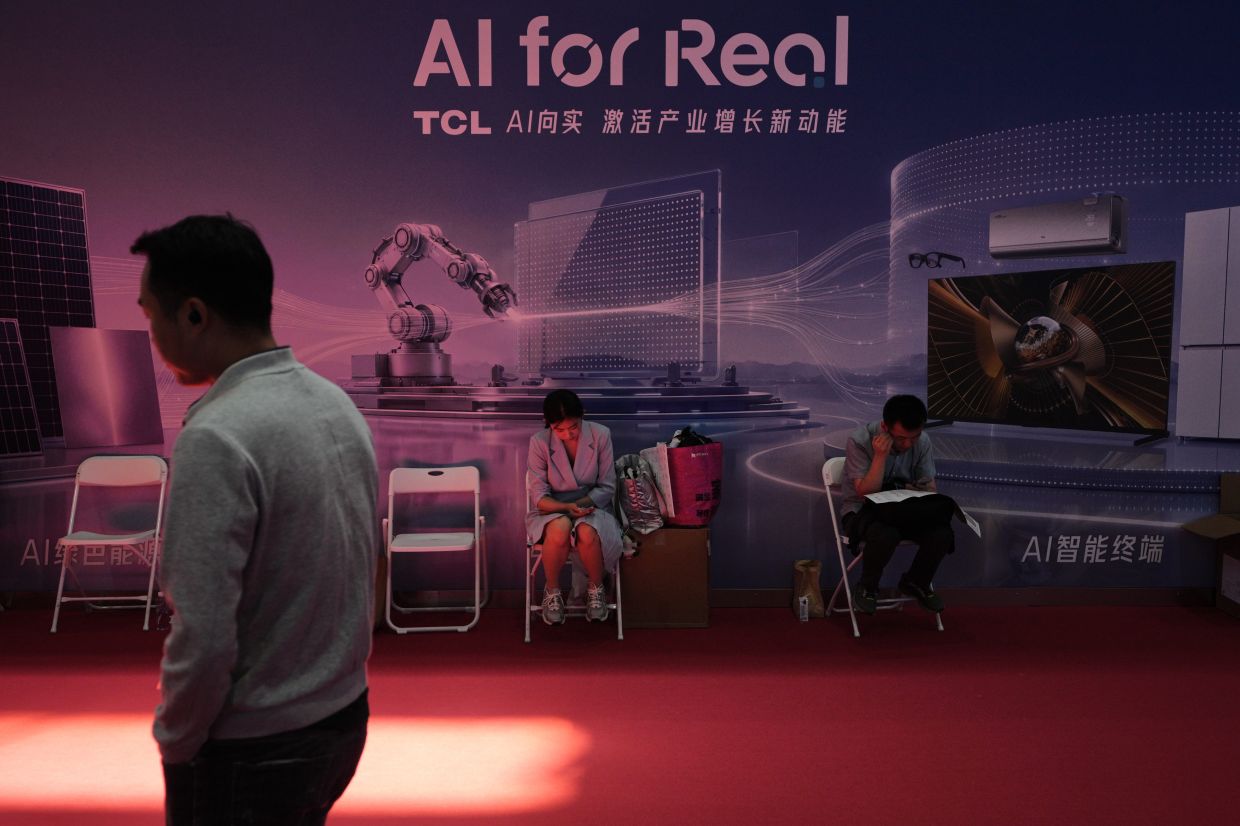
China's employment landscape is undergoing a seismic shift as artificial intelligence reshapes how work gets done. Driven by government policies that actively encourage AI integration across industries, the world's second-largest economy is witnessing unprecedented adoption of automation technologies. This rapid transformation is forcing millions of workers to confront an uncomfortable reality: their skills may no longer be in demand, or their roles might soon be redundant altogether. The scale and speed of this disruption, according to economists, carries troubling implications not just for Chinese workers but for the stability of the entire economy.
The spread of AI across China's job market spans nearly every sector imaginable. Programming teams have shrunk as AI tools handle code generation and debugging tasks that once consumed hours of human effort. Translation services have contracted sharply as machine translation becomes increasingly sophisticated. Content creators face pressure from generative AI systems that can produce scripts, videos, and written material in minutes. Even physical labour is not immune: humanoid robots now sort parcels in postal facilities, direct traffic in some cities, and prepare food for customers. Food delivery robots, once a novelty, are proliferating across urban centres and could eventually threaten the livelihoods of millions of workers in that sector alone.
What distinguishes China's approach to AI adoption is the government's deliberate strategy to accelerate deployment. Under the "AI Plus" initiative and a five-year plan extending through 2030, Beijing is actively pushing businesses and individuals to integrate AI applications into their operations. This state-backed push differs markedly from Western countries, where AI adoption tends to proceed more organically and faces greater public scrutiny. The strategy is designed to strengthen China's competitive position against the United States in the technology race, but the employment consequences are proving complex and far-reaching.
The numbers reveal the scale of this transformation. According to market intelligence firm IDC, the share of Chinese industrial enterprises using AI models and AI "agents" surged to 47.5% last year from just 9.6% in 2024. This dramatic jump suggests we are still in the early stages of automation. The growth trajectory points toward even deeper integration of AI across China's economy in coming years. Meanwhile, entire education sectors are already responding to this shift. Popular university programs in foreign languages have seen enrolment decline sharply as prospective students recognise that AI translation tools are making the profession less attractive.
Interestingly, Chinese workers seem less resistant to AI than their counterparts in Western nations. According to research from advisory firm Plenum, there is "far less anti-AI sentiment in China than elsewhere." Rather than protesting against automation, many displaced or worried workers are attempting to pivot toward AI-related opportunities. Some are experimenting with AI-enabled entrepreneurship, starting their own businesses based on AI tools. Others are seeking roles in AI training, content moderation, or other emerging positions created by the technology boom. This pragmatic acceptance reflects both cultural attitudes toward technological progress and the recognition that resisting AI adoption would be futile when competitors are racing forward.
Yet the individual stories reveal the human cost beneath the statistics. Fei, a 40-year-old programmer, has accepted that AI can now perform mid-level coding tasks well enough to replace human workers in many situations. Rather than resist this reality, he has taken a career break to experiment with creating short-form videos about ordinary life. Du Qinchun, a translator in Chengdu, finds himself training AI systems to do translation work—inadvertently accelerating the technology that threatens his own profession. His earnings have plummeted more than fifty percent compared to previous years. Wang Zhicheng, a scriptwriter for children's educational content, resigned after his company laid off half of its writing staff. He now creates illustrated children's books independently, using AI as a brainstorming tool while acknowledging that the creative output from algorithms often feels formulaic and repetitive.
The disruption extends into creative industries that were once considered safe from automation. China's short drama industry, which produces live-action vertical videos optimised for mobile viewing, has been particularly hard hit. The number of such productions fell approximately 75% in the first quarter of this year compared to the same period last year. Generative AI tools can now handle script writing, production editing, and even some aspects of content distribution, reducing the need for human creative workers. This represents a fundamental shift in how entertainment content gets produced and consumed.
The impact is not distributed equally across the population. International Labour Organization research shows that women face disproportionately higher risks of AI-related job displacement than men. This disparity stems from occupational segregation in the Chinese economy. Women tend to concentrate in roles that are particularly amenable to automation—assembly line work in electronics manufacturing, basic administrative tasks, and similar positions. Simultaneously, women remain underrepresented in science and technology fields where new high-wage employment is being created. This structural inequality means that AI adoption will likely widen the gender employment gap in China.
The economic implications extend far beyond individual job losses. Consumer spending in China has already weakened as households grow anxious about employment stability. People are saving rather than spending, reluctant to make major purchases when job security feels uncertain. This dampening of domestic consumption compounds existing economic challenges, including the prolonged downturn in China's housing market that has eroded household wealth. Cornell University economist Eswar Prasad warns that while AI will boost overall productivity, the employment disruption could be "severe," worsening job growth and potentially threatening social stability—a particular concern for a government that depends on economic growth to maintain legitimacy and fund social programmes.
China's current unemployment statistics mask underlying vulnerabilities. The overall urban unemployment rate stands near five percent, but youth unemployment—those aged 16 to 24, excluding students—hovers around fifteen percent, roughly triple the national average. This youth employment crisis predates the AI boom, reflecting broader labour market shifts, but will likely intensify as AI automation accelerates. Young people entering the job market will encounter workforces already reshaped by automation, with fewer entry-level positions available for workers without specialised skills.
The long-term outlook, however, contains a counterintuitive silver lining. China's population of 1.4 billion is rapidly ageing and shrinking. Demographers project that by 2050, China will have fewer than two working-age adults available to support each retiree, compared with more than 2.5 in the United States. This demographic catastrophe could be partially offset by automation. As the workforce shrinks, AI and robotics could compensate for the declining supply of human workers, effectively softening the impact of population decline. Some experts argue that in this long-term context, AI adoption might ultimately prove beneficial rather than purely disruptive.
Networking events for workers displaced by AI, education programmes for career transition, and government support for displaced workers could help manage this transition. However, such infrastructure remains underdeveloped in China. The government's focus remains on accelerating AI adoption rather than cushioning its employment impact. As China continues pushing AI across every sector through 2030, the social and economic consequences will likely intensify before any long-term demographic benefits materialise. The challenge for policymakers is managing the transition period without triggering widespread unemployment, reduced consumer spending, and social instability that could undermine the economy itself.

