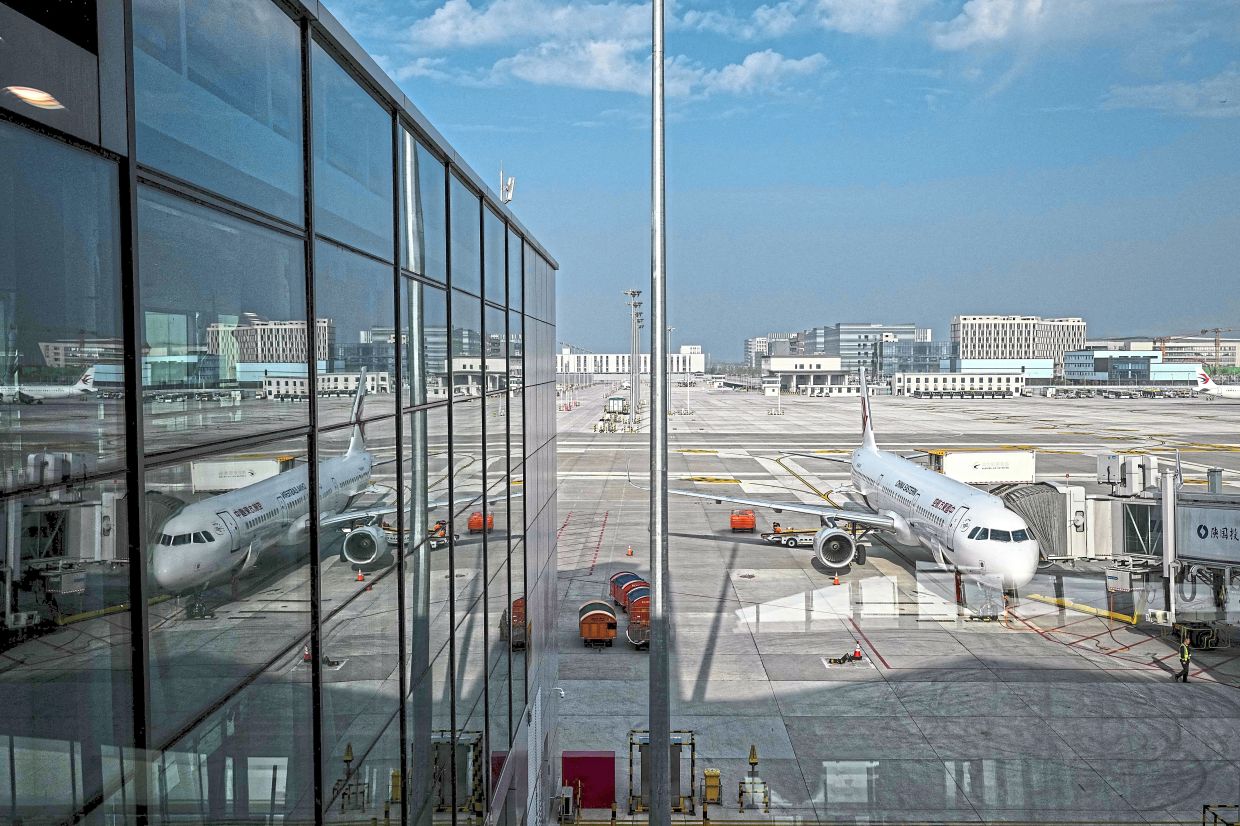
The aviation sector in mainland China faces mounting pressure as Air China, China Eastern Airlines and China Southern Airlines announced first-half losses totalling approximately 8.2 billion yuan (US$1.22 billion), marking their seventh straight year of consecutive losses during this period. The trio, which dominates domestic and international air transport in the country, had previously cautioned that their combined shortfall could climb as high as 9 billion yuan, representing a dramatic turnaround from the 4.82 billion yuan in combined profit they achieved in the opening quarter when strong Lunar New Year demand bolstered passenger traffic and revenue.
The deteriorating financial performance reflects a structural imbalance between rising operational expenses and the carriers' limited pricing power in an increasingly competitive and economically uncertain environment. Air China's net loss widened to 2.3 billion yuan from 1.81 billion yuan in the corresponding period last year, while China Eastern reported a 2.2 billion yuan shortfall against a 1.43 billion yuan loss previously, and China Southern's deficit deepened to 3.7 billion yuan from 1.53 billion yuan. These figures underscore the vulnerability of China's aviation industry even as economic activity nominally recovers from pandemic-related disruptions, revealing how dependent the sector remains on external factors beyond management control.
Fuel costs represent the most visible culprit behind the financial deterioration. Expenses for jet fuel surged between 35 and 38 percent at each carrier during the first six months, a burden intensified by geopolitical tensions in the Middle East that have sustained crude oil prices at elevated levels. Unlike their competitors across Europe and Asia, China's three largest carriers have historically maintained minimal hedging strategies for fuel purchases, leaving them dangerously exposed to commodity price volatility. China Southern explicitly acknowledged in its regulatory filing that there exist currently "no effective means available" to manage this exposure, a statement that reveals both operational vulnerability and the limited financial instruments available in China's market for risk mitigation.
The paradox of China's aviation sector emerges starkly in revenue figures that suggest business vitality masking underlying fragility. Air China increased revenue by 10.5 percent, China Eastern by 11.1 percent, and China Southern by 9.7 percent, largely driven by international demand that proved resilient as some travelers redirected bookings away from disrupted Middle Eastern hub airports toward European destinations. This international strength, however, proved insufficient to offset the combination of elevated fuel costs and constraints on domestic pricing. Chinese carriers cannot simply raise fares on domestic routes as aggressively as their American counterparts without risking passenger defection to alternative transport modes such as high-speed rail networks or private vehicle travel, both of which offer competitive advantages during periods of economic uncertainty.
The operational environment deteriorated further as summer progressed into the traditionally crucial third quarter. An exceptionally active typhoon season has disrupted flight schedules across China's domestic network precisely when the carriers most depend on robust traffic volume to sustain profitability. Meteorological records document the formation of 21 typhoons across the northwestern Pacific Ocean and South China Sea year-to-date, nine more than the historical average for the equivalent timeframe. This unusual weather intensity compressed passenger capacity and forced route cancellations at the worst possible moment, with aviation data firm Flight Master projecting that traffic carried by Chinese airlines would contract 3.6 percent year-on-year during July and August to 142 million passengers, representing the first peak-season decline since 2022 when stringent lockdown policies paralyzed domestic mobility.
Fuel prices, though declining from their second-quarter apex, remain stubbornly elevated at more than 50 percent above pre-conflict levels, meaning relief for airline balance sheets remains incomplete and uncertain. This structural elevation in energy costs, combined with forecasts from HSBC analysts predicting that the three carriers will post combined losses totalling approximately 16.8 billion yuan throughout 2026 against market expectations for a modest 1.3 billion yuan profit, suggests the industry faces extended financial headwinds. The gap between these projections highlights how far analyst sentiment has deteriorated regarding near-term recovery prospects, with few positive catalysts visible on the horizon to reverse the negative trajectory.
Market sentiment has reflected this grim outlook with unforgiving severity. Shares of all three carriers have declined at least 36 percent during 2026, directly mirroring investor skepticism about their ability to restore profitability under current macroeconomic conditions and competitive pressures. The absence of interim dividend declarations by any of the three carriers signals management acknowledgment that available cash must be preserved for operational needs rather than returned to shareholders, a prudent but negative signal that typically accompanies deteriorating financial health. These share price movements reverberate through Hong Kong and Shanghai equity markets, affecting not only direct airline investors but also stakeholders in tourism, related supply chains, and broader economic confidence metrics.
Efforts to modernize fleet composition through adoption of domestically produced aircraft offer modest strategic reassurance but provide no immediate financial relief. China Eastern expanded its fleet of narrow-body COMAC C919 jets to 17 aircraft following three deliveries during the first half, while both Air China and China Southern operated 11 C919s respectively after accepting two and three additional units. These aircraft represent important steps toward reducing dependence on Western manufacturers and supporting China's aeronautical industrial ambitions, yet their gradual integration cannot address the acute profitability crisis unfolding presently. China Eastern's disclosure that it expects to receive 13 fewer C919 deliveries than previously anticipated between 2026 and 2028 suggests that even domestic aircraft production faces constraints, though the company maintained caution in its public statements regarding timing and volume expectations.
For Southeast Asian readers and businesses engaged with China, the prolonged difficulties of the region's dominant carriers carry significant implications. These airlines serve as critical infrastructure for trade, tourism flows, and business connectivity between mainland China and the broader Asia-Pacific region. Their financial stress may eventually translate into reduced capacity on routes serving Malaysia, Singapore, and other regional partners, potentially limiting direct flight options and driving travellers toward alternative carriers or routing patterns. The structural challenges facing these carriers—elevated fuel costs, weather disruptions, pricing constraints, and weak domestic demand—reflect broader vulnerabilities in China's post-pandemic economic recovery that extend well beyond aviation, suggesting that regional partners should anticipate prolonged adjustment periods across multiple sectors before normalization becomes evident.

