China faces a fundamental constraint on its artificial intelligence research capabilities: the country remains heavily dependent on imported precision instruments needed to generate the high-quality experimental data that powers advanced scientific models. This structural vulnerability threatens Beijing's broader strategy to leverage AI across scientific discovery, and has prompted leading researchers to warn of systemic risks that could undermine the nation's competitive position in technology development.
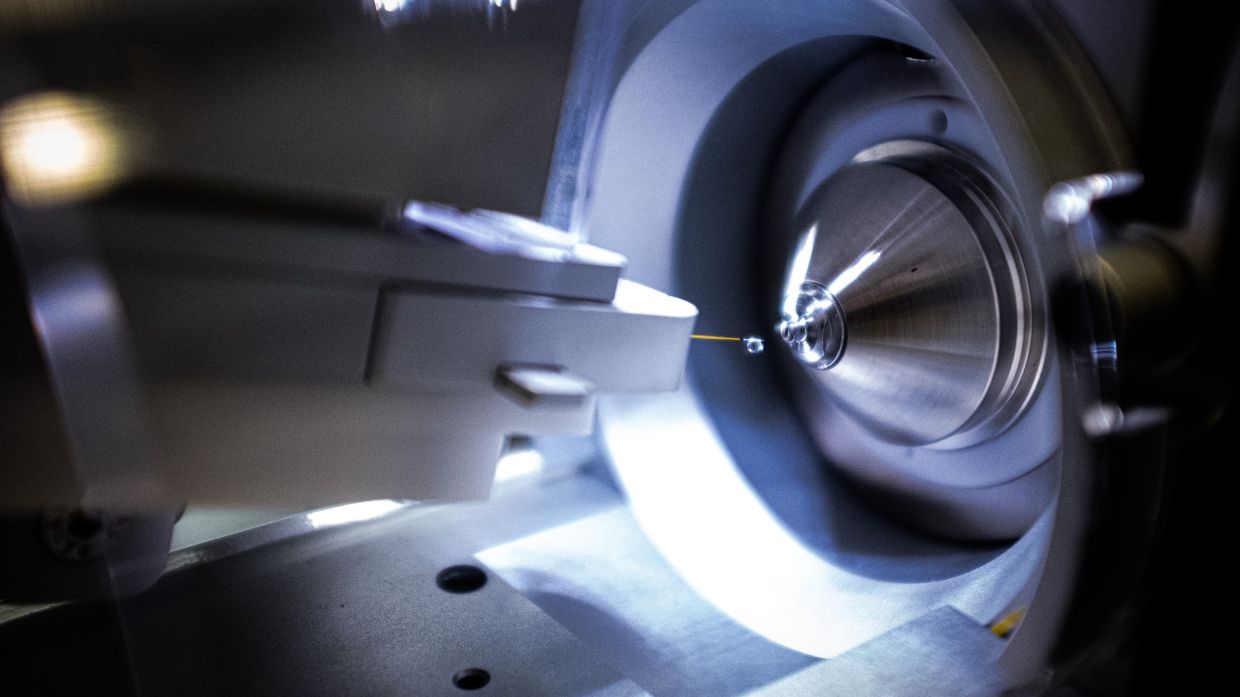
The problem crystallises around essential laboratory equipment. Mass spectrometers, chromatographs, and spectrometers form the backbone of modern scientific research, enabling researchers to identify molecular structures, separate chemical compounds for analysis, and study material properties. Yet according to a December report by Beijing consulting firm Puhua Policy, China imported nearly US$17 billion in scientific equipment during 2024, with more than three-quarters of the major research instruments deployed across the country manufactured overseas. A separate analysis by consultancy LeadLeo found even starker import dependency: 83 per cent of mass spectrometers and chromatographs, and 75 per cent of spectrometers, were foreign-sourced. China also relies almost entirely on imports for optical instruments and biological tissue analysis equipment.
Weinan E, a mathematician at Peking University and member of the Chinese Academy of Sciences, articulated the vulnerability vividly at the "AI for Science" conference in Shanghai last week. Without domestically produced precision instruments, he explained, obtaining first-hand high-quality experimental data becomes extraordinarily difficult, rendering AI efforts "like cooking without rice". E, who proposed the "AI for Science" concept in 2018 as a novel research methodology, understands intimately how dependent scientific progress has become on equipment quality. The import reliance creates cascading problems: elevated equipment costs, prolonged maintenance cycles, and sluggish after-sales support all compound to degrade research efficiency and expose vulnerabilities in supply-chain resilience.
These vulnerabilities have been deliberately weaponised. The United States, viewing advanced scientific instrumentation as potential force multipliers for Chinese military modernisation and weapons design, has progressively tightened export controls. By December 2020, during Donald Trump's first presidency, more than 42 per cent of all China-related entries on the US export control lists involved restrictions on scientific equipment. This restrictive posture has intensified in Trump's second term. Most significantly, the US Department of Commerce announced in January new export controls specifically targeting high-parameter flow cytometers and certain mass spectrometry equipment. Washington justified these controls by noting that such technologies generate high-quality biological data "suitable for use to facilitate the development of AI and biological design tools"—precisely the capabilities China needs to advance its scientific AI agenda.
Beyond equipment shortages, E identified equally troubling conceptual gaps undermining China's scientific AI trajectory. Chinese foundation models—the large-scale AI systems underpinning scientific applications—lag materially behind their international counterparts, representing what E characterised as a "significant gap" that cannot be overlooked and constitutes "a reality that must be confronted". The shortcoming stems not from incremental deficiencies but from fundamentally different architectural approaches between Chinese and Western AI development. E observed that treating foundation models as blank slates for post-training scientific modifications represents a flawed premise; addressing genuinely complex scientific problems requires stronger underlying models rather than superficial capability overlays alone.
The strategic divergence reflects contrasting technological philosophies. The United States has concentrated on enhancing general-purpose foundation models while integrating them with automated research infrastructure—a broad-based approach that strengthens the underlying capacity for any scientific application. China, conversely, has pursued a more application-driven strategy: building scientific AI infrastructure that consolidates data, software, computing resources, and automated equipment, then channelling these capabilities toward specific research domains and tasks. While potentially efficient for targeted objectives, this narrower approach leaves China vulnerable when confronted by unexpected research challenges or competitive leapfrogging in foundational model capabilities.
Addressing these structural constraints requires systemic transformation, not merely incremental improvements. E proposed three critical "breaks" in how China organises scientific research. First, disciplinary boundaries must dissolve to enable genuinely cross-field investigation, breaking down the traditional silos that compartmentalise different scientific domains. Second, the historically sharp divide separating theoretical research from experimental work must be bridged, fostering integration between conceptual innovation and empirical validation. Third, the institutional barrier separating academia from industry requires dismantling, enabling knowledge and personnel to flow more fluidly between universities and commercial enterprises. These interconnections prove especially vital for AI-driven science, where innovation depends on seamlessly combining theoretical sophistication, experimental rigor, and practical implementation capacity.
Equally important is reconceiving how the scientific community evaluates and rewards contributions. Traditional research assessment systems privilege peer-reviewed publications, inadvertently devaluing equally essential work: developing datasets, creating software tools, and building research infrastructure. For AI-driven science to flourish, E argued, evaluation frameworks must explicitly recognise and incentivise these foundational contributions. A researcher who develops data infrastructure enabling thousands of downstream investigations creates multiplicative value that conventional metrics fail to capture. Shifting evaluation paradigms would redirect incentives toward the collaborative, infrastructure-building mindset essential for scientific AI advancement.
For Southeast Asian policymakers and researchers, China's predicament offers cautionary lessons about technology dependency and the long-term costs of import reliance in critical scientific domains. Malaysia, Singapore, and other regional nations pursuing their own AI and advanced research capabilities must ensure they develop indigenous precision instrument manufacturing capacity and avoid the trap of perpetual foreign dependency. The intersection of equipment scarcity, export controls, and foundational model gaps demonstrates how technological vulnerability can compound when multiple critical inputs remain externally controlled. Regional governments might consider whether collaborative scientific instrument manufacturing, shared research infrastructure, or coordinated AI development initiatives could strengthen collective technological autonomy while buffering against geopolitical instrument weaponisation.

