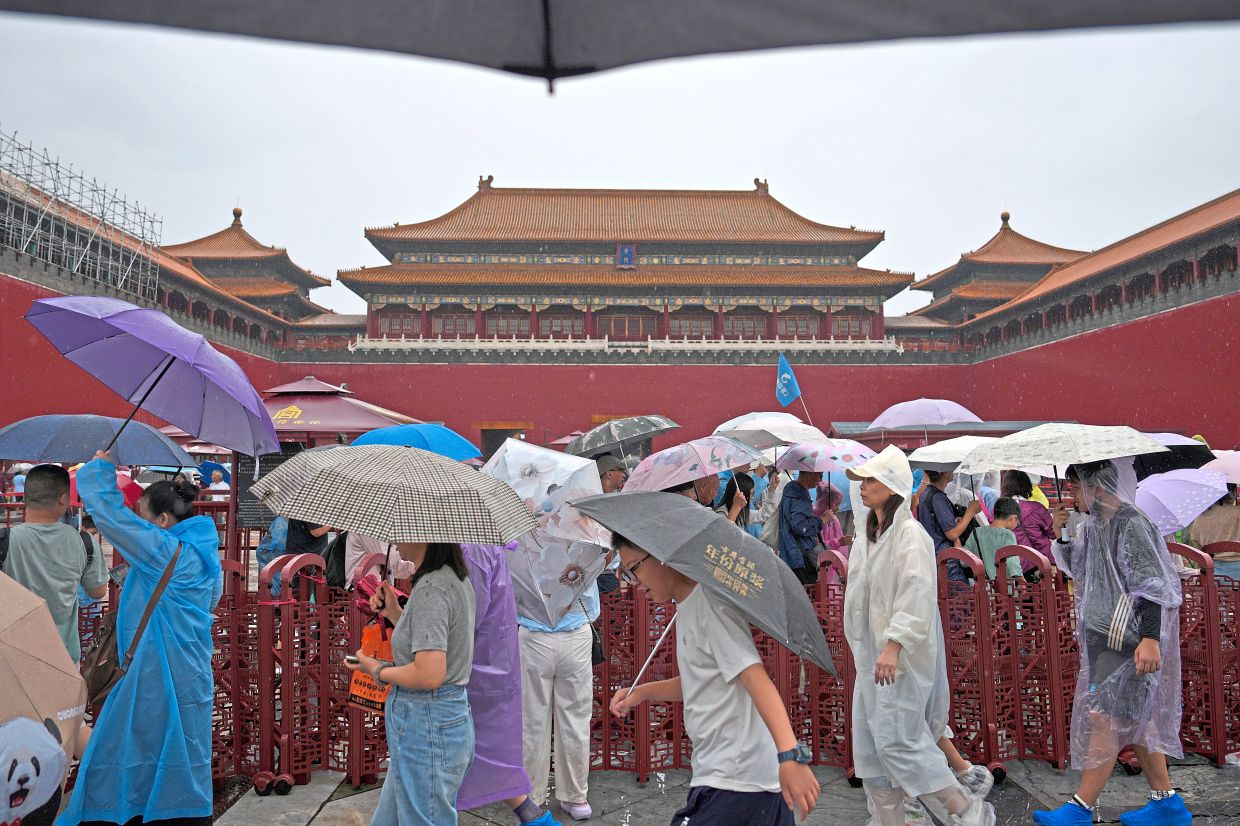
China's tourism industry has crossed a significant threshold. After years of pandemic disruption, the country welcomed 35 million foreign visitors last year—surpassing pre-pandemic visitor numbers for the first time and establishing itself among Asia's most popular destinations. This recovery positions China alongside Thailand in visitor volumes and approaches Japan and Malaysia, fundamentally reshaping the regional tourism landscape in ways that ripple across Southeast Asia's travel economy.
The turnaround represents a calculated shift in Beijing's diplomatic and economic strategy. Beginning in 2023, China introduced visa-free travel for 50 countries, but initial uptake disappointed as the global memory of strict pandemic restrictions lingered. Chinese tourism branding had suffered reputational damage, and international airlines had not restored pre-Covid-19 route capacity. The turning point came through an unexpected vector: social media. Viral content depicting Shanghai's skyline, minimalist forest villas, and Instagram-worthy destinations like the perfumery To Summer convinced a new generation of Western travellers—particularly younger tourists—to reconsider China as a vacation destination. One 28-year-old Singaporean, Claire Thum, exemplifies this shift; she initially knew only of the terracotta warriors before content flooding her social media feed prompted her to book her first China trip, now planning returns to Yunnan, Xinjiang and Harbin.
Government coordination across multiple levels has amplified this organic social media momentum. Chinese officials, navigating around the "Great Firewall," established accounts on platforms including X and TikTok—ironically, services banned within China itself—to reach international audiences directly. Cities like Chongqing assigned tourism officials to pursue internet virality, enlisting influencers and even celebrity endorsements from figures like basketball star Stephen Curry. Simultaneously, local governments allocated significant budgets to tourism promotion; Beijing received an extra 2.64 million yuan in 2026 specifically to manage the incoming surge and launch multilingual publicity initiatives. Shanghai committed at least 1.6 million yuan to campaigns on Expedia and Booking.com. These investments signal how seriously provincial authorities view tourism's economic potential as domestic consumption growth stalls.
Visa-free entry has emerged as the policy lever driving the most dramatic growth, accounting for over 70 percent of arrivals last year and climbing by 50 percent compared with 2024. In the first half of 2026 alone, 18 million travellers from visa-exempt nations entered China, pushing overall foreign arrivals up by 20 percent during that period. This policy deliberately targets countries strategic to China's geopolitical interests; South Korea, Russia, Malaysia and Thailand lead the current surge. Notably, Japanese visitor numbers have declined following diplomatic tensions between Beijing and Tokyo, illustrating how tourism flows become entangled with international relations. Beijing has witnessed particularly strong arrivals from Vietnam and Russia, suggesting the policy successfully converts geographic proximity into visitor volume.
The nature of traveller behaviour has fundamentally changed, driven partly by social media trends that celebrate "Chinamaxxin"—a phenomenon where Western citizens adopt Chinese habits like drinking hot tea and adopting Chinese lifestyle aesthetics. This represents soft power achievement on a scale Beijing has pursued for years. Marketing consultant Olivia Plotnick notes that recent Shanghai visitors frequently declare it "the new Tokyo," a perception reversal that would have seemed inconceivable during the height of pandemic-era travel restrictions. Young international tourists increasingly seek authentic local experiences rather than traditional monument tourism, patronising high-tech retail destinations like Huawei and DJI showrooms, Pop Mart theme-park stores, and dining at restaurants like Haidilao chain establishments. This shift toward experiential and contemporary consumption rather than heritage tourism represents a strategic win for China's modernisation narrative.
Geopolitical upheaval has unexpectedly bolstered China's tourism advantage. The conflict in West Asia elevated airline ticket prices through traditional Middle Eastern transit routes, forcing passengers to reroute through Chinese hubs instead. Simultaneously, China's three state-controlled carriers—China Eastern, Air China and China Southern—offer pricing significantly below foreign competitors whose routes into China remain below pre-pandemic capacity. This cost advantage channels international transit traffic into Chinese cities, extending average stays and generating secondary tourism spending even among passengers not originally targeting China as a destination.
The tourism boom extends benefits throughout China's economy, particularly bolstering the retail sector struggling with weak domestic consumption and a faltering real estate market. Cosmetic dental procedures—priced at one-fifth of American costs—attract American tourists, while Europeans commission bespoke suits at local garment markets. Foreign foot traffic at flagship retailers like Miniso reaches 70 percent of total customers at peak hours, particularly at Shanghai's Nanjing East Road location. This retail exposure creates powerful marketing channels; Miniso reported that social media exposure from international visitors fuelled growing overseas demand, with international sales now exceeding China revenues and expanding 20 percent year-on-year. Beauty brands like Judydoll have achieved more than tenfold growth in two years through overseas exposure, particularly in Vietnam and Japan. Joy Group, Judydoll's parent company, generated over 600 million yuan in overseas retail sales last year, demonstrating how inbound tourism creates export growth for Chinese consumer brands.
However, structural obstacles constrain both the volume and quality of spending. China's near-total cashless urban economy creates friction for tourists without local bank accounts or Chinese phone numbers, making everyday transactions through digital wallets challenging and impossible for some transactions. Simultaneous restrictions on global applications like Google, Instagram and WhatsApp—accessible only through potentially illegal VPNs—alienate international visitors accustomed to seamless digital connectivity. Language support remains inadequate in many contexts. Emerging companies like Kora, an artificial intelligence tourist guide, address these frictions through simplified ride-hailing and restaurant reservation services, plus multilingual chatbots that have assisted tens of thousands of visitors since early 2026. Such innovations may become critical infrastructure for scaling visitor volumes without quality degradation.
China's tourism sector still significantly underperforms global peers on crucial metrics. Inbound tourism receipts total less than one-third of American levels, while per-capita spending averages around 2,240 US dollars—approximately 40 percent of mature tourism economies' rates. International tourism contributed less than 0.5 percent to China's national GDP in 2025, substantially below tourism-dependent economies like Spain and Thailand where the sector represents 8 percent of GDP. These figures reveal substantial upside potential; as visa-free travel expands and visitor experience improves, spending per capita could appreciate significantly, particularly if China successfully repositions itself as a luxury destination rather than simply an affordable alternative.
For Malaysian and Southeast Asian audiences, China's tourism resurgence carries direct competitive implications. Thailand's tourism authority watches as Chinese promotion campaigns draw travellers who might otherwise visit established Southeast Asian destinations. Malaysia's 36 million annual visitors face potential saturation pressures if Chinese infrastructure and marketing investments successfully redirect tourism flows northward. Yet complementarities exist; many visitors discover China through Southeast Asian gateways, and regional travellers exploring China often include Malaysia in broader Asian itineraries. The phenomenon also accelerates Chinese consumer brand expansion across Southeast Asia through international visitors' exposure, potentially reshaping retail competition in the region. Whether China's momentum cannabilises or complements Southeast Asian tourism economies will depend on whether travellers increasingly view a China visit as an alternative to regional travel or as part of expanded regional tourism circuits.

