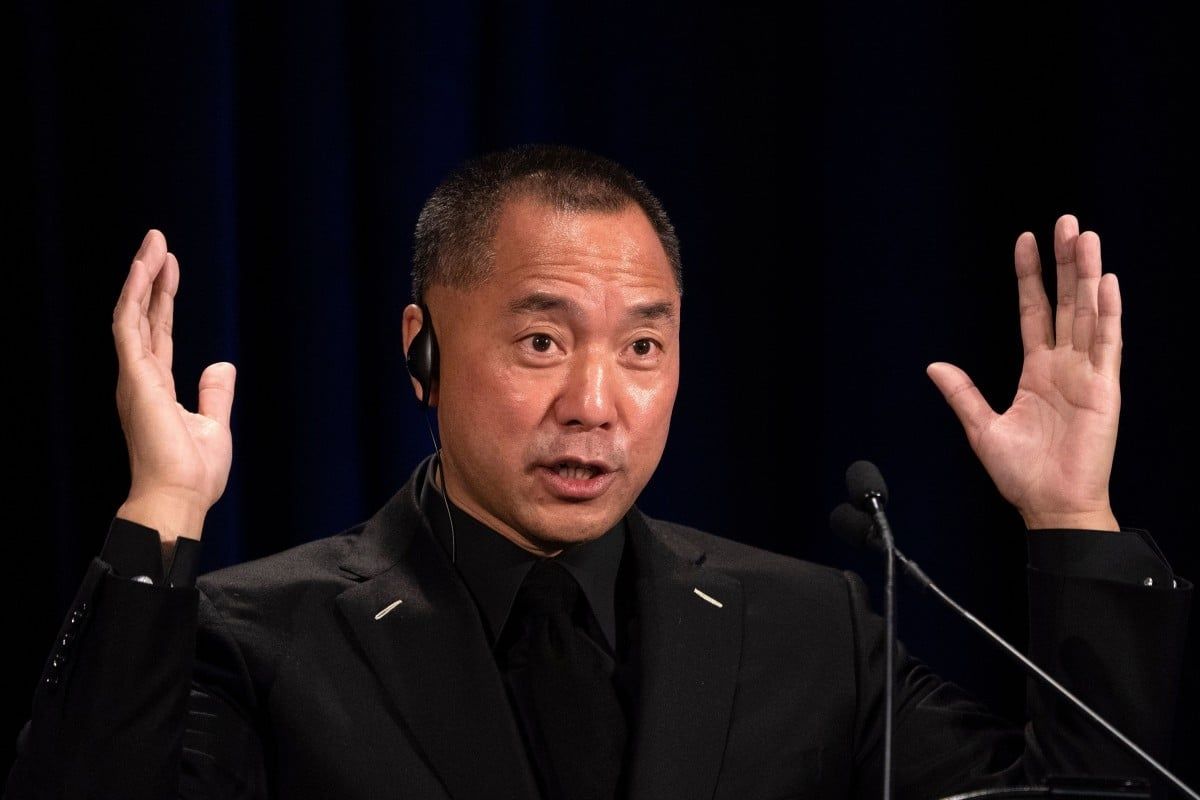
A self-exiled Chinese billionaire once thought to rank among the wealthiest individuals in his home country was handed a 30-year federal prison sentence on Monday (June 30) in Manhattan for perpetrating one of the most ambitious financial frauds in recent US history. Guo Wengui, who abandoned China a decade ago and reestablished himself as a vocal critic of the Chinese Communist Party operating from American soil, was convicted of systematically defrauding over 1,000 investors across multiple continents of hundreds of millions of dollars. Federal Judge Analisa Torres, presiding over a Manhattan courtroom filled with Guo's supporters, described his conduct as particularly egregious because he deliberately preyed upon individuals motivated by ideological commitment to democracy in China, weaponising their political convictions to extract their savings.
Guo's transformation from fugitive businessman to political activist marked a dramatic chapter in the broader saga of Chinese dissidents and critics operating in Western democracies. He had fled China approximately ten years earlier and subsequently reinvented himself as the figurehead of an anti-Communist movement, at one point developing such a close relationship with conservative political strategist Steve Bannon that the two jointly announced an initiative intended to topple the Chinese government in 2020. Before his arrest and detention without bail three years ago, Guo lived luxuriously in a Manhattan apartment commanding views of Central Park and had gained membership at President Donald Trump's Mar-a-Lago golf club in Florida, positioning himself at the intersection of Chinese dissident politics and American conservative circles.
The scale of Guo's deception extended across multiple fraudulent investment vehicles that he controlled, particularly his media enterprise GTV Media Group Inc., along with entities branded as the Himalaya Farm Alliance and the Himalaya Exchange. Prosecutors determined that between 2018 and 2023, Guo convinced hundreds of thousands of people to invest more than one billion dollars total in these schemes, all of which were fundamentally dishonest from inception. The prosecution's evidence demonstrated an extraordinarily calculated pattern wherein Guo exploited the ideological motivations of his victims, many of whom believed their investments would contribute to efforts to undermine Communist Party rule, when in reality their money funded his personal extravagance.
During sentencing proceedings, Judge Torres read excerpts from letters submitted by victims whose accounts painted a devastating portrait of the fraud's human cost. These individuals described losing their entire life savings, experiencing severe psychological distress, and enduring family fractures as relatives blamed them for their investment decisions. One victim, Wei Chen, testified directly to the judge that Guo's fraudulent scheme had fundamentally destroyed her life and that of her family. The cumulative impact reflected in victim statements suggested that Guo's criminal conduct extended far beyond financial deprivation, creating cascading emotional and psychological consequences that reverberated through families and communities across the globe.
Torres's judgment emphasised Guo's complete absence of remorse or accountability regarding his actions. She noted that he maintained an implausible defence claiming his conduct had caused no financial losses and harmed nobody, a position that contradicted overwhelming evidence presented at trial. Furthermore, the judge highlighted testimony indicating that Guo had actively encouraged his supporters to harass and intimidate individuals who dared to speak publicly against him, suggesting an ongoing campaign of intimidation extending beyond the formal fraud itself. This pattern of intimidation and refusal to accept responsibility became central to the judge's rationale for imposing the substantial 30-year sentence.
The evidence presented during the seven-week trial revealed the extraordinary lifestyle that Guo's fraudulent proceeds financed. Prosecutors documented his acquisition of multiple mansions, yachts, high-performance race cars, designer clothing collections, and luxury furnishings, creating what prosecutors described as a gilded existence of almost cartoonish excess and indulgence. This lavish consumption pattern served as visible testimony to the magnitude of criminal proceeds flowing through Guo's enterprises, with each luxury acquisition representing money extracted from defrauded investors who believed they were supporting democratic causes. The contrast between Guo's opulent lifestyle and the financial devastation experienced by his victims underscored the predatory nature of his scheme.
Guo himself presented a defiant posture throughout proceedings, briefly addressing the courtroom on Monday despite his apparent health complaints. He asserted that his primary motivation for emigrating to the United States was to undermine the Communist Party, attempting to reframe his entire presence in America through the lens of political activism rather than criminal enterprise. Earlier in the day, he had protested his treatment in custody, claiming he was taken to hospital early Monday and insisting he suffered genuine medical distress rather than fabricating illness as prosecutors suggested. His repeated references to his mouth and continued tissue use in the courtroom suggested either genuine physical symptoms or a deliberate performance designed to influence sentencing considerations.
Guo's defence team pursued a dramatically different narrative, portraying their client as a victim of systematic persecution by the Chinese government rather than as a fraud perpetrator. His lawyers argued that Guo had become a target of Chinese state officials after exposing their corruption, and that he subsequently fled through Hong Kong and London before arriving in New York in 2017. They referenced a probation officer's report documenting physical scars and disfigurations allegedly resulting from torture endured in China from 1993 onwards, followed by corrective surgeries, framing these injuries as evidence of genuine persecution. The defence maintained that Guo's family had accumulated substantial legitimate wealth when they became the largest shareholder of China's largest publicly traded securities company, before Guo became a government target for his anti-corruption advocacy.
China's authorities had accused Guo of serious crimes including rape, kidnapping, and bribery, allegations he consistently denied as fabricated smears designed to discredit him internationally. On Monday, China's Ministry of Foreign Affairs issued a statement noting his sentencing and reaffirming that Guo remains a wanted fugitive under an Interpol Red Notice, a formal request issued to police forces worldwide to apprehend him pending extradition proceedings. This international legal status underscores the complexity of Guo's position as both a convicted fraudster within the American criminal justice system and a wanted suspect in his home country, raising questions about whether his American conviction might provide him some insulation against Chinese extradition efforts.
The case carries significant implications for Southeast Asian nations grappling with similar questions about how to manage Chinese dissidents and critics operating within their borders. Guo's conviction demonstrates the substantial risks associated with political entrepreneurs who leverage genuine grievances about authoritarian governance to solicit investments, blurring boundaries between legitimate activism and financial predation. For Malaysian and regional policymakers, the case illustrates how transnational fraud networks can exploit both political ideologies and asylum frameworks to operate across borders with devastating consequences for vulnerable investors who believe their capital supports democratic causes.
Judge Torres ordered Guo to forfeit $889 million in restitution, though the practical feasibility of recovering this sum from an imprisoned individual remains unclear. As Guo departed the courtroom following his sentencing, supporters applauded and shouted encouragement toward him, suggesting that his conviction has not entirely extinguished his ability to command devotion among certain constituencies. The sentencing concludes a significant chapter in the story of high-profile Chinese dissidents in America, but it simultaneously raises enduring questions about how democratic societies can effectively distinguish between genuine political persecutes and sophisticated con artists who exploit asylum and free speech protections to perpetrate financial crimes.

