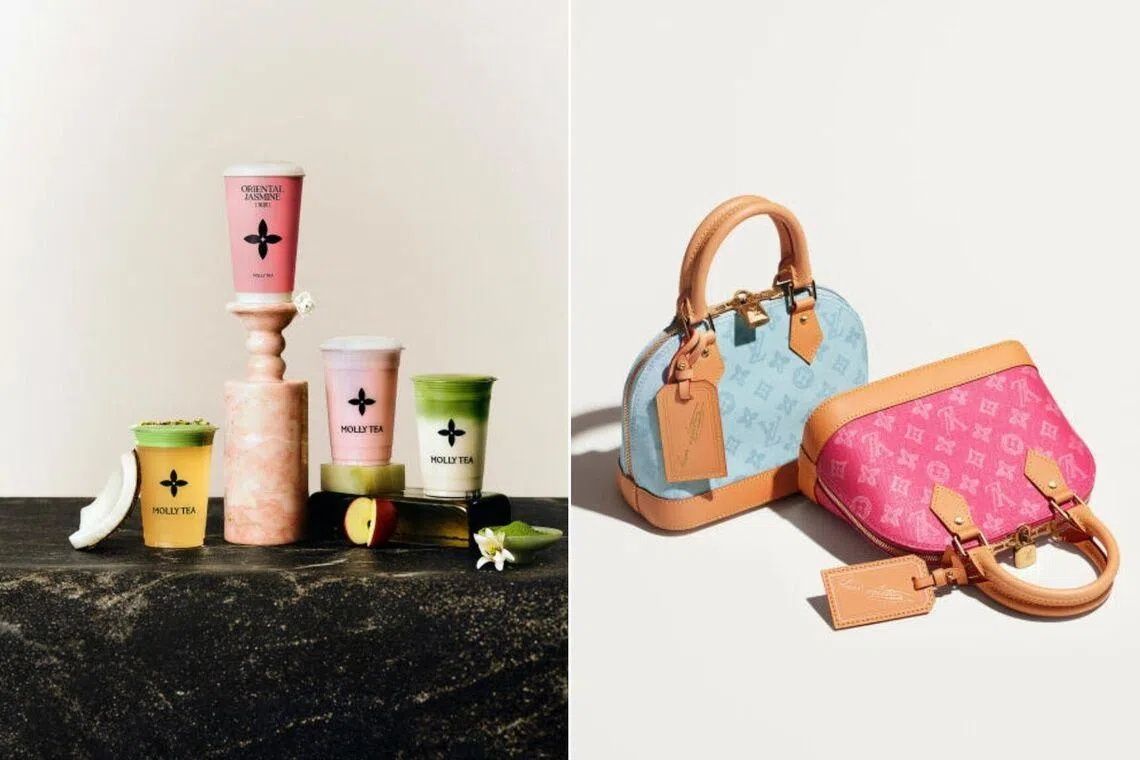
A Chinese court has dealt a significant blow to Molly Tea, a popular Shenzhen-based milk tea chain, by ordering the company to compensate French luxury giant Louis Vuitton with 10.3 million yuan (US$1.5 million) for trademark infringement. The Suzhou Intermediate People's Court in Jiangsu province determined on June 29 that Molly Tea and one of its franchise outlets in Wuzhong district had violated seven of Louis Vuitton's registered four-petal flower graphic trademarks. Beyond the financial penalty, the court has instructed the tea company to cease the infringing use immediately and publish a public apology.
The dispute centres on a fundamental conflict in modern branding: the overlap between leveraging culturally resonant design elements and respecting established intellectual property rights. Molly Tea's brand emblem features a four-petal flower motif, which the court found sufficiently similar to Louis Vuitton's iconic monogram patterns to constitute infringement. Louis Vuitton initiated legal proceedings in May 2025, moving swiftly to protect what it considers its distinctive visual identity. The company's aggressive enforcement reflects a broader strategy by luxury brands to defend their trademark portfolios against what they perceive as market confusion, particularly in competitive sectors like consumer goods where brand recognition directly drives purchasing decisions.
Molly Tea's response has been defiant rather than capitulating. The company has already signalled its intention to appeal the ruling to a higher court, setting the stage for what could become a landmark case in intellectual property jurisprudence across Asia. The appeal process will likely hinge on whether Molly Tea can present compelling evidence demonstrating that its floral design possesses sufficient originality and distinctiveness to warrant independent protection. Legal experts have indicated that appellants bear a substantial evidentiary burden, requiring them to distinguish their mark from the earlier registered design in ways that courts find persuasive.
The timing of this dispute reflects Molly Tea's aggressive trademark expansion strategy. Since March 2024, the company and its affiliated entities have filed numerous trademark applications featuring floral designs with the China National Intellectual Property Administration, covering restaurant services, accommodation, advertising, and convenience foods. However, this application strategy proved largely unsuccessful, with intellectual property officials rejecting most submissions. Only the trademark application containing the Chinese characters for "Molly Tea" itself achieved registration, suggesting that examiners had already begun scrutinising the company's broader visual identity claims.
The ruling has generated extraordinary public engagement across Chinese digital platforms, revealing deep societal divisions about intellectual property philosophy in the region. A hashtag addressing the Louis Vuitton lawsuit accumulated over 360 million views, while a related discussion about the invalidation of Molly Tea's trademark design garnered approximately 18.7 million reads. This unprecedented social media attention indicates that the case resonates beyond commercial circles, touching on questions about cultural ownership and fair access to traditional artistic elements that resonate with Chinese consumers and digital communities throughout Southeast Asia.
Online discourse reflects fundamentally opposing perspectives about the judgment's fairness and logic. Supporters of Louis Vuitton's position argue that Molly Tea's floral emblem demonstrably mimics the luxury brand's signature pattern, creating potential consumer confusion that could misdirect purchasing decisions. Conversely, critics contend that meaningful visual differences distinguish the two designs and that the companies operate in sufficiently separate market segments—luxury fashion versus affordable beverages—to eliminate realistic confusion. This disagreement exposes a philosophical tension between strict trademark doctrine and practical commercial realities.
A particularly provocative strand of online criticism questions the originality of Louis Vuitton's monogram pattern itself. Commentators on social media platforms have suggested that the French house's signature design may derive inspiration from traditional Chinese cultural motifs, raising the uncomfortable possibility that Western luxury brands have appropriated Asian cultural elements and subsequently obtained trademark protection for essentially public cultural property. This argument, while difficult to substantiate legally, reflects growing regional awareness of historical patterns where Western companies have commercialised elements originating from Asian cultural traditions.
Kang Lixia, a partner at Beijing Standzer IP Firm, has provided authoritative guidance on the legal mechanics governing this dispute. She explains that under Chinese intellectual property law, an applicant dissatisfied with the court's judgment possesses clear appellate remedies, with success depending substantially on whether the appellant can demonstrate sufficient design originality and distinctiveness. Critically, Kang emphasises that floral patterns and motifs derived from traditional Chinese culture constitute public cultural domain resources, theoretically available for use by any commercial entity without requiring specific permission. This principle appears elementary yet proves contentious in practice.
However, the interaction between trademark law's "first to file" principle and cross-class protection doctrines complicates this straightforward analysis. Under Chinese Trademark Law, when multiple applicants seek registration of identical or similar marks for identical or similar goods, the earliest applicant acquires exclusive rights while subsequent applications face rejection. Despite Molly Tea and Louis Vuitton technically operating within different trademark classes—luxury goods versus food services—Louis Vuitton's status as an earlier-registered and internationally renowned mark qualifies it for cross-class protection. This legal mechanism means that luxury brand rights can extend into seemingly unrelated product categories, creating substantial obstacles for later commercial applicants seeking to develop distinctive identities through cultural design elements.
Liu Bin, an intellectual property lawyer from Beijing Zhongwen Law Firm, advocates for nuanced reasoning about this commercial dispute, emphasising that figurative trademark protection does not require absolute identity between disputed signs and registered trademarks. Instead, courts assess whether reasonably prudent consumers would likely experience confusion when encountering both marks. Liu identifies the case's deeper significance as illuminating fundamental questions about how traditional Chinese cultural patterns should receive protection while remaining fairly accessible for diverse commercial applications. Since these motifs constitute shared cultural heritage rather than proprietary inventions, widespread public opinion holds that no individual corporation should monopolise their use.
Simultaneously, Liu acknowledges that intellectual property protection properly extends to the brand recognition and consumer associations that companies deliberately construct when incorporating traditional elements into commercial marketing. This distinction proves crucial: while traditional cultural elements themselves should remain within public domain and available for authentic cultural transmission, commercial trademarks must not create market confusion or slavishly replicate earlier registered designs. The challenge involves articulating legal and commercial standards that preserve traditional cultural elements as shared heritage while preventing later market entrants from appropriating the brand equity that earlier companies laboured to establish through sustained commercial use and consumer education.
The Molly Tea judgment carries implications extending well beyond bilateral dispute resolution between a Chinese beverage company and a French luxury house. The case exemplifies the challenging intersection between globalised intellectual property enforcement, regional cultural traditions, and the commercial aspirations of emerging Asian companies seeking international recognition. As regional businesses increasingly compete globally and access international markets, they encounter intellectual property regimes designed during eras when Western brand dominance remained unquestioned. The precedent established through Molly Tea's appellate process could influence how courts throughout East and Southeast Asia balance trademark protection against the legitimate interests of local companies building distinctive identities rooted in culturally significant visual elements.

