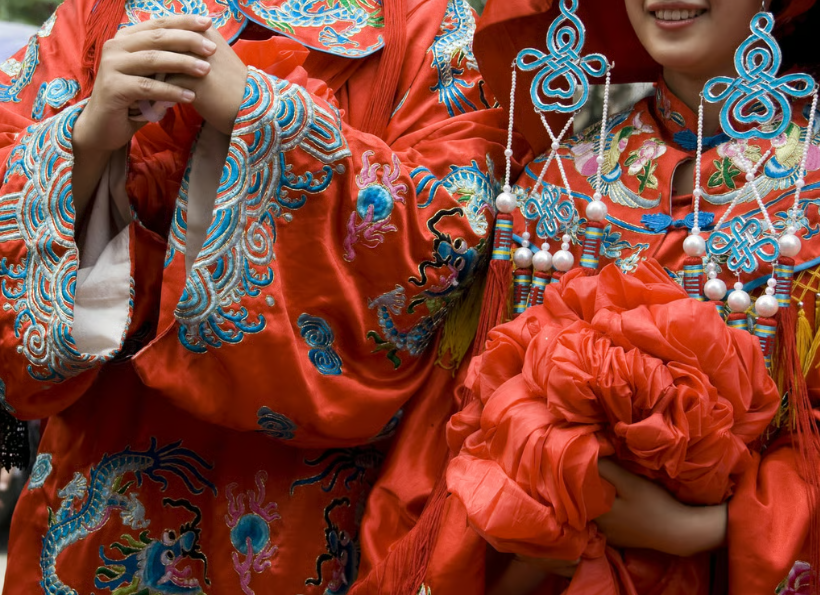
A court in Ruyang county, Henan province, has ordered a wedding party to compensate a bridesmaid with 230,000 yuan (US$34,000) after a traditional nuptial prank resulted in serious injury. The verdict, made public in early July, represents a judicial effort to curb increasingly dangerous wedding customs and underscore their legal consequences. The case underscores how cultural traditions meant to celebrate marriages have become sources of injury and litigation across China.
The incident occurred on October 4, 2023, when Zhang, a bridesmaid for her friend Li, attended the wedding ceremony. During festivities in the wedding room, Zhang initially hid herself in a cabinet. A groomsman named Wang Moubing forcibly removed her and placed her on the bed, then orchestrated what would become the defining moment of the evening—a sheet-tossing prank involving approximately ten men. The first attempt succeeded as the group caught Zhang safely mid-air. During the second throw, however, their coordination failed catastrophically, and Zhang plummeted to the floor, sustaining a lumbar vertebral fracture that would alter the course of her recovery.
The cultural practice underlying this incident, known as hun nao in Chinese, traces its roots back millennia as a ceremonial tradition designed to inject merriment into weddings and ward off malevolent spirits. Contemporary versions persist across numerous regions of China, maintaining popularity among certain demographics despite mounting scrutiny. Yet in recent decades, the ritual has frequently crossed ethical and physical boundaries, transforming from lighthearted celebration into organised humiliation and, increasingly, bodily harm. The newlywed couple and their attendants typically bear the brunt of these pranks, though as Zhang's case demonstrates, even guests invited to participate face vulnerability.
Zhang's injuries proved severe enough to warrant extended hospitalisation. She spent eighteen days receiving medical treatment following her fall, and subsequent forensic assessment in August 2024 classified her disability as ninth grade—a classification indicating substantial and enduring impairment. This medical trajectory prompted her to pursue legal recourse, initiating proceedings against the married couple and nine individuals directly involved in the hazing. Her initial compensation demand stood at 270,000 yuan, reflecting the extent of her suffering and projected lifetime impact.
The court's liability determination distributed responsibility across multiple parties. The newlyweds themselves bore primary culpability, designated responsible for forty percent of compensation costs totalling 90,000 yuan. The court reasoned that as ceremony organisers, they possessed sufficient awareness of impending hazing activities to implement preventive measures yet failed to intervene adequately. A passing relative, the groom's aunt, had actually cautioned participants to exercise restraint, yet her warning went unheeded—a critical failure suggesting the couple should have acted upon this implicit danger signal.
Wang Moubing, identified as the orchestrator of the dangerous prank, received individual liability for approximately 50,000 yuan. His deliberate removal of Zhang from the cabinet and subsequent initiation of the sheet-tossing game established clear causation between his actions and her injuries. The remaining eight participants faced joint and several liability for the combined 90,000 yuan, with the court reasoning that their inability to provide evidence demonstrating non-participation in the hazing essentially established their involvement through default.
The judgment carries significance beyond the immediate parties involved. Chinese courts have increasingly weaponised verdicts in such cases as public awareness tools, deliberately publicising outcomes to deter replication of dangerous wedding customs. This specific verdict's release aimed explicitly at educating the public regarding the hazards and legal consequences of hun nao customs that escalate beyond acceptable boundaries. The court's decision signals judicial intolerance for traditions that prioritise momentary entertainment over participant safety.
Wedding hazing incidents resulting in serious injury or death have proliferated across Chinese news cycles with alarming frequency. In 2018, a bridegroom in Guizhou province suffered multiple trauma injuries after being struck by a car while fleeing his own wedding hazing ritual. More recently, another Guizhou bridegroom fractured his leg attempting escape from similar revelry, subsequently winning a 50,000 yuan court judgment against the perpetrators. These escalating incidents reveal a pattern wherein hun nao customs have progressively shed protective guardrails, becoming increasingly violent and unpredictable.
For Malaysian readers, the case offers instructive parallels regarding how cultural practices require modernisation to prevent harm. While traditional customs deserve respect and preservation, legal systems increasingly recognise that participant safety supersedes ceremonial tradition. The Ruyang decision establishes precedent that organisers bear responsibility for foreseeable dangers arising during celebrations they coordinate. This principle potentially resonates across Southeast Asia, where numerous communities maintain their own celebratory customs requiring ongoing calibration between cultural continuity and contemporary safety standards.
The financial penalty, while substantial, likely proves secondary to the broader judicial message: tradition cannot justify injury, and financial compensation cannot adequately remedy physical trauma. Zhang's ninth-grade disability classification indicates lifelong consequences from a momentary lapse in judgment by multiple individuals. Her case demonstrates how ostensibly harmless pranks, when executed carelessly and without adequate safeguards, create permanent disability, psychological trauma, and fractured relationships.
China's approach through publicised verdicts represents one mechanism for reforming dangerous customs. By treating wedding hazing injuries as civil matters subject to compensation rather than normalised risks, courts incentivise cultural evolution. Couples and their families now face direct financial consequences for permitting unsafe practices. This legal framework potentially encourages substitution of hazardous traditions with safer alternatives that preserve celebratory spirit without endangering participants.
The implications extend to corporate and institutional contexts where hazing similarly persists. Schools, military organisations, and fraternal groups across Asia maintain initiation practices that parallel hun nao's trajectory from benign to dangerous. The Ruyang verdict's reasoning—that organisers bear responsibility for foreseeable harm during activities under their purview—provides legal architecture applicable to these broader hazing contexts. As cultural norms gradually prioritise safety over tradition, similar verdicts may catalyse systematic reform across multiple institutional sectors throughout the region.

