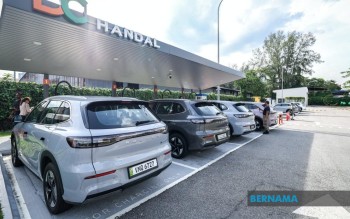
Malaysia's rapid adoption of electric vehicles over the coming three to five years hinges critically on developing charging infrastructure that meets the country's unique environmental and operational demands. This reality has prompted Chinese smart charging solutions provider Xi'an LINCHR New Energy Technology Co Ltd to emphasise the importance of localisation rather than wholesale technology replication, as the company expands its regional footprint through partnerships with local manufacturers and standards bodies.
Chairman Yuan Qingmin articulated a central paradox facing the nation's EV ecosystem: the symbiotic relationship between vehicle uptake and charging infrastructure means that bottlenecks in one domain automatically constrain growth in the other. China's experience as an early adopter of both EVs and comprehensive charging networks might offer valuable lessons, yet Yuan cautioned against treating those lessons as a simple blueprint. Instead, he advocates for rigorous contextualisation through localised research and development tailored to Malaysian conditions. This nuanced approach reflects growing recognition within the global EV industry that technology transfer demands far more than installing foreign equipment; it requires fundamental redesign and testing to ensure viability within distinct climatic, regulatory, and operational contexts.
LINCHR's participation in the Global Automotive and Technology Expo (GATE 2026) at the Malaysia International Trade and Exhibition Centre from August 26-28 provided the company with a strategic platform to engage stakeholders across Malaysia's nascent charging infrastructure ecosystem. The exposition brought together government agencies, energy providers, grid operators, and industry participants whose collective decisions will shape how the nation's EV charging network develops over the next decade. For LINCHR, the event offered crucial opportunities to present its technological capabilities and, more importantly, to establish working relationships with the local partners and regulators whose buy-in remains essential for successful market entry.
The company's collaboration with Swift Bridge Technologies Sdn Bhd demonstrates this partnership-first approach in concrete terms. Rather than imposing Chinese solutions wholesale, LINCHR and its local manufacturer partner are jointly developing infrastructure specifications, product designs, technological standards, and engineering frameworks specific to the Malaysian market. This collaborative model extends beyond commercial partnership into the realm of technical standardisation, a critical step given Malaysia's need for interoperable, safe charging systems that comply with national and international benchmarks.
Yuan highlighted a telling example of necessary adaptation: LINCHR has modified the printed circuit boards in its charging stations to incorporate oil-immersed insulation technology, a design choice specifically engineered to combat salt spray corrosion in Malaysia's hot, humid tropical climate. Such seemingly technical adjustments carry substantial implications for infrastructure longevity and maintenance costs. A charging network plagued by corrosion-related failures would undermine consumer confidence in EV adoption and inflate operational expenses for grid operators and charging service providers. This detail underscores how genuine technology transfer requires deep understanding of local environmental stressors and the foresight to engineer solutions before problems emerge at scale.
Standardisation has emerged as a critical collaboration domain for LINCHR, Swift Bridge, and the Standards and Industrial Research Institute of Malaysia (SIRIM). The three parties formalised a tripartite cooperation agreement in March of the previous year, committing themselves to developing shared testing and certification standards for Malaysia's charging infrastructure while upgrading laboratory capacity. This institutional framework addresses a fundamental gap in Malaysia's EV ecosystem: the absence of robust, locally-grounded technical standards that can guide infrastructure development and ensure consumer safety. By investing in laboratory upgrades and collaborative standard-setting, the partnership is building foundational capacity that will benefit the entire sector, not merely individual market participants.
Yuan's assertion that LINCHR's testing technology commands more than 70 percent of China's market share lends credibility to the company's technical expertise, yet it also illustrates why overseas expansion demands far more than exporting proven Chinese solutions. Market dominance in one regulatory environment does not automatically translate to efficacy or acceptability in another. The vast differences between China's regulatory frameworks, climatic zones, grid infrastructure, and consumer preferences mean that technological leadership at home provides only a starting point for international operations. Successful expansion requires sustained investment in local research and development partnerships that can interrogate, modify, and validate technologies within their intended operating context.
The evolving nature of EV charging technology itself adds another layer of complexity to localisation efforts. Yuan projected that charging technology will continue advancing as vehicles become increasingly connected and intelligent. Future charging ecosystems may transcend the simple model of vehicles drawing power from the grid, instead enabling homes, workplaces, and public spaces to deploy parked EVs as distributed energy storage and supply systems. Such vehicle-to-grid integration would fundamentally alter how charging infrastructure interacts with Malaysia's electrical grid, grid balancing requirements, and energy market dynamics. Anticipating these transitions now and building flexibility into today's standards and infrastructure design could position Malaysia to integrate advanced charging technologies more rapidly than competitors.
The implications of LINCHR's localisation strategy extend beyond the company's commercial interests to shape Malaysia's broader industrial development trajectory. When international technology partners commit to local research and development, standardisation bodies, and equipment upgrades, they help build domestic technical capacity that outlasts any single commercial relationship. Malaysian engineers, researchers, and standards specialists gain exposure to advanced EV charging technology through these collaborations, while domestic manufacturers like Swift Bridge acquire capabilities and knowledge that enhance their long-term competitiveness. Conversely, premature standardisation on imported solutions without adequate local adaptation risks locking Malaysia into suboptimal infrastructure that proves costly to maintain and difficult to upgrade.
The emergence of smart charging solutions as a critical component of EV adoption reflects a broader global shift toward treating vehicles not as isolated machines but as integrated nodes within smart grids and energy systems. Malaysia's capacity to participate in this transition depends substantially on whether its charging infrastructure is designed and deployed with local intelligence and oversight. LINCHR's emphasis on localisation therefore aligns with Malaysia's strategic interests in developing not merely an EV market, but an EV ecosystem anchored in locally-developed technical standards, manufacturing capabilities, and expertise. As the nation's EV market accelerates over the next three to five years, the quality of decisions made now regarding technology adaptation, standardisation, and local partnership will determine whether Malaysia emerges as a capable participant in the global EV transition or remains a consumer of imported solutions.

