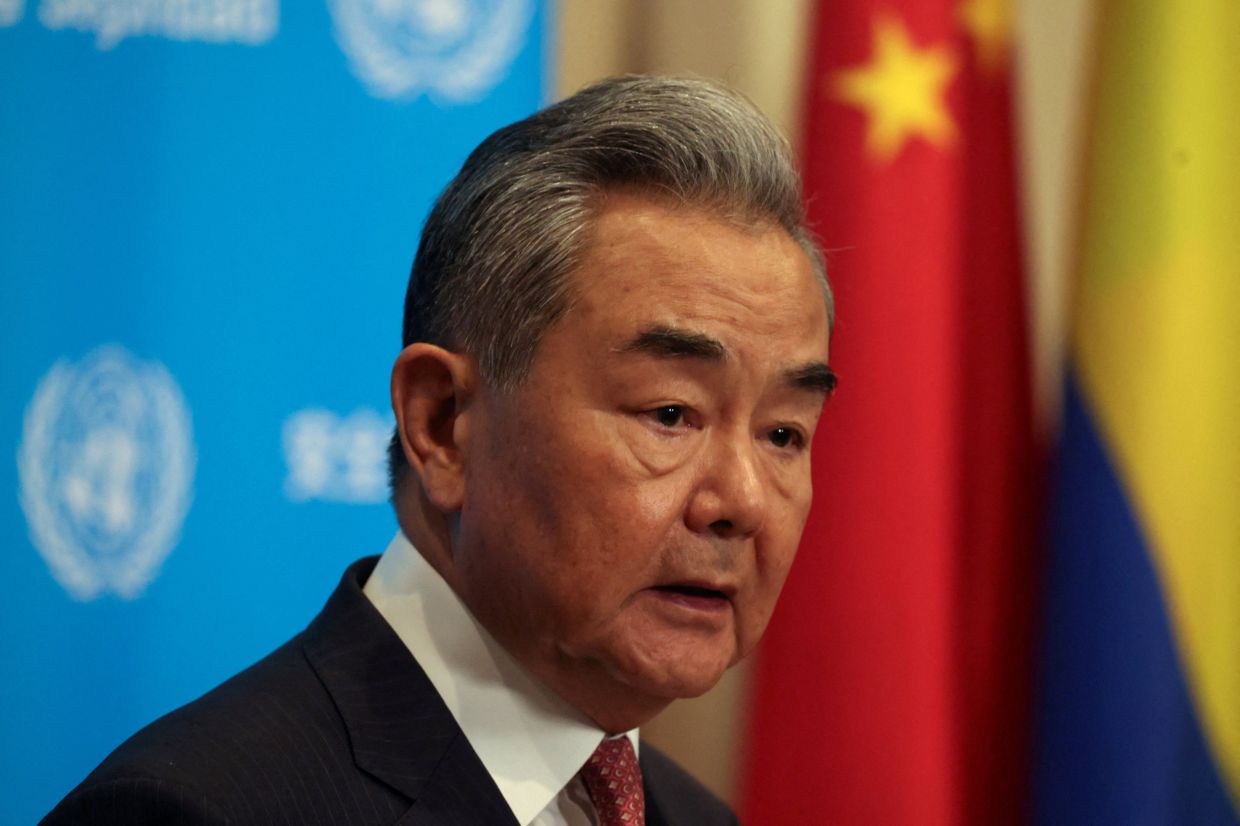
China's Foreign Minister Wang Yi has delivered a cautionary message to US Secretary of State Marco Rubio regarding America's approach to Taiwan, underscoring Beijing's sensitivity toward the island dispute and its determination to keep the issue from derailing broader diplomatic efforts. The warning came during a Tuesday conversation between the two senior officials, signalling that despite recent signs of stabilisation in the world's most consequential bilateral relationship, fundamental disagreements over Taiwan remain a potential flashpoint that could unravel carefully negotiated agreements.
Wang emphasised that fostering a constructive and strategically stable relationship between the United States and China serves the interests of both nations and the wider international community. His comments reflected a broader Chinese strategy to frame cooperation as mutually beneficial while simultaneously reinforcing non-negotiable red lines on sovereignty issues. The Foreign Minister stressed that achieving such a relationship demands tangible commitment beyond rhetoric, requiring both countries to actively work toward reconciliation and demonstrate sustained dedication to improving ties.
The framework for managing bilateral relations, according to Wang, rests on a dual approach that mirrors strategic diplomacy: expanding areas of cooperation while simultaneously containing areas of friction. He advocated for lengthening what he termed the "list of cooperation," envisioning more collaborative initiatives that bind the two powers together through shared interests. Simultaneously, Wang called for shortening the "list of problems" and implementing robust risk management mechanisms to prevent disagreements from escalating into confrontations.
Beijing's position on Taiwan reflects a position it has maintained consistently: the island constitutes an integral part of Chinese territory. This foundational claim shapes every interaction between Chinese and American officials regarding the sensitive region, making Wang's emphasis on "utmost caution" a clear signal that missteps in Washington's Taiwan policy could have serious consequences for the bilateral relationship. For Malaysian policymakers and regional observers, this dynamic underscores how great power competition over East Asia continues to create strategic uncertainties that affect smaller nations dependent on stability in the region.
The timing of Wang's message carries particular significance, arriving weeks after President Trump's landmark summit with Chinese President Xi Jinping. During that meeting, the two leaders publicly committed to pursuing a "new vision" of constructive engagement, generating optimism that the two powers might chart a more cooperative course after years of escalating tensions. However, Xi used that very platform to address Taiwan explicitly, warning Trump that any mishandling of the issue risked triggering conflict and pushing the relationship into an "extremely dangerous situation." This dual messaging—constructive engagement alongside warnings—reflects China's complex approach to managing relations with Washington.
The May summit between Trump and Xi produced tangible outcomes that the American administration publicised as victories, including commitments from Beijing to address longstanding US concerns about critical supply chain vulnerabilities. Washington distributed a detailed fact sheet highlighting these agreements, framing the summit as a diplomatic success that delivered concrete benefits for American interests. Such achievements, however hard-won, create political incentives for both sides to maintain momentum, even as underlying tensions simmer.
Yet signs of strain have emerged even as the bilateral relationship has largely stabilised following the Trump-Xi meeting. These fissures reveal the precarious nature of the current rapprochement and suggest that the diplomatic gains remain fragile. Any careless handling of Taiwan—whether through arms sales, official diplomatic recognition, or rhetoric suggesting support for the island's independence—could rapidly unravel the progress achieved at the May summit and reignite the confrontational dynamics that characterised the previous period.
For Southeast Asia, these developments carry direct implications. The region has long sought to benefit from great power stability while avoiding entanglement in US-China rivalry. Taiwan's status and the degree of tension surrounding it fundamentally shape whether major powers can maintain constructive engagement or whether they slide toward confrontation. Malaysia and other ASEAN members have consistently advocated for peaceful resolution of all disputes and maintenance of the rules-based international order, yet their influence over Taiwan policy remains limited. Regional states therefore depend heavily on great powers managing their differences responsibly.
Wang Yi's carefully calibrated message to Rubio represents an attempt to establish boundaries for American conduct while simultaneously keeping diplomatic channels open. By emphasising the need for construction collaboration and mutual interest, Wang seeks to anchor the bilateral relationship in positive outcomes even as he clearly delineates red lines that Washington should not cross. This balancing act reflects China's recognition that complete isolation of the United States is not feasible or desirable, yet comprehensive alignment remains impossible given structural differences in their systems and strategic interests.
The forthcoming potential visit by Xi to the United States adds another layer to these dynamics, with both governments reportedly preparing for this high-profile engagement. Such a visit would represent a significant commitment from Beijing to the relationship and would presumably require some assurances about how sensitive issues, particularly Taiwan, will be managed. The success or failure of this diplomatic engagement could substantially influence regional stability and the calculations of smaller powers about their own strategic positioning.
For observers in Malaysia and across Southeast Asia, Wang's warning to Rubio serves as a reminder that while great power relations may appear to be stabilising at the declaratory level, profound disagreements persist beneath the surface. The Taiwan question remains fundamentally unresolved and continues to carry the potential to destabilise arrangements that both the United States and China might otherwise wish to maintain. This reality demands careful attention from regional governments seeking to navigate between competing great powers while protecting their own interests and the stability upon which their prosperity depends.

