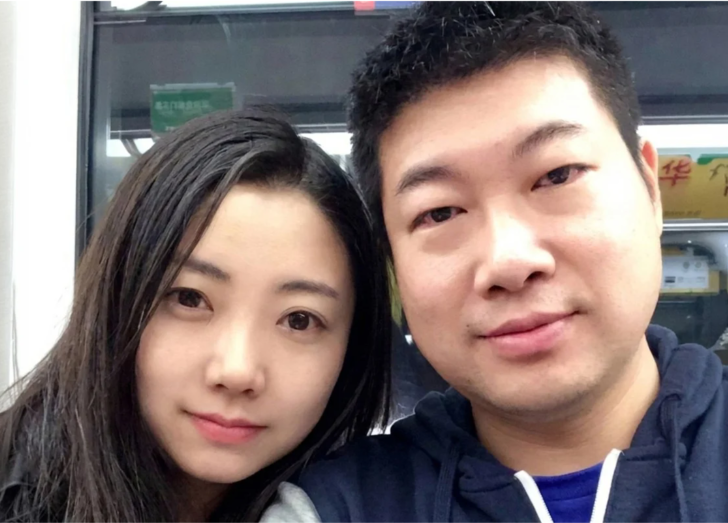
Li Ping, a 52-year-old investment professional based in Shenzhen, has captured widespread attention on social media by documenting a remarkable nine-year battle to secure justice against the woman he once married. A 15-minute video posted on June 30 detailing his ordeal accumulated 69,000 likes and 9,000 comments, reflecting public fascination with a story that combines financial fraud, attempted homicide, and international legal proceedings. His disclosure of spending 13 million yuan—approximately US$1.9 million—to pursue this case highlights both the personal toll of financial crime and the lengths to which victims will sometimes go to achieve accountability.
The narrative begins during China's boom years in the early 2010s, when Li had successfully accumulated considerable wealth through stock market investments, totalling over 70 million yuan between 1996 and 2014. His financial success and apparent stability made him a target. At a professional forum in mid-2014, he encountered Zhang Shudan, who worked as an account manager at a major state-owned bank. Both shared ties to Hanzhong in Shaanxi province, a detail that would later prove significant in establishing how thoroughly Zhang had researched her target before initiating contact. The account manager presented herself as a sympathetic figure—an orphan raised by elderly relatives who had overcome hardship through education and determination. Li's subsequent analysis suggested Zhang must have deliberately learned about his background before orchestrating their meeting, raising troubling questions about the premeditated nature of her scheme.
The pattern of exploitation developed gradually but methodically. After Li deposited 20 million yuan at Zhang's employer, she began making periodic requests for funds, typically claiming the money was needed for medical treatment for her adoptive elderly parents. These requests came across as reasonable appeals to compassion, exploiting Li's apparent willingness to help. By early 2015, Zhang shifted tactics, confessing romantic feelings and suggesting that accepting a romantic relationship represented her only means of repaying his generosity. She added persuasive emotional elements to her pitch, promising not only personal companionship but also assistance with Li's eight-year-old daughter's education—a particularly effective appeal to a divorced father.
What followed was a rapid escalation of commitment and financial exposure. When Zhang announced her pregnancy in March 2015, Li responded by purchasing a 7.5 million yuan apartment in Shenzhen registered entirely under her name—a decision that transferred substantial assets into her control. The couple married shortly thereafter in their shared hometown of Hanzhong. The vulnerability of Li's position became apparent almost immediately. During the return journey to Shenzhen following their wedding, Li and a companion were involved in a serious car accident caused by brake failure. Days later, Li would discover that Zhang and an accomplice had deliberately tampered with the vehicle's braking system, suggesting that the marriage itself may have been designed as a precursor to his death and the transfer of his wealth through inheritance.
Before disappearing, Zhang made one final significant extraction of funds. She requested that Li deposit 10 million yuan into her bank account, claiming the money would support her performance evaluation at her workplace with a promise of rapid repayment. When Li indicated he could not access that full amount, he transferred 2.74 million yuan instead. Within days, Zhang vanished. Police determined she had fled to Los Angeles via Hong Kong, taking with her not only the cash but also ownership certificates for four apartments—all purchased by Li but registered under her name—along with her identification documents. The logistics of the disappearance revealed careful planning; she had managed to extract maximum value from the relationship while maintaining plausible deniability about her intentions.
The attempted murder revelation transformed Li's perception of the crime from financial exploitation to something far more sinister. He later learned that the brake tampering was not a random accident but a calculated effort to eliminate him and facilitate the inheritance of his remaining assets. In his viral video, Li expressed that while fraudulent financial extraction alone might have prompted him to move on, the deliberate attempt on his life crossed a threshold of criminality that demanded pursuit. This distinction—between ordinary white-collar crime and attempted homicide disguised as personal misfortune—became his driving motivation for the costly international legal campaign that followed.
Li's approach to locating Zhang demonstrated both the resources available to determined victims in China and the challenges of pursuing cases across international borders. He offered a substantial reward of US$1 million for information regarding Zhang's whereabouts and systematically contacted Chinese communities, churches, and postpartum care centres throughout the United States. These community-based investigative efforts were supplemented by professional legal and detective services engaged in both China and the United States. The cumulative expenses reached 13 million yuan, representing a substantial commitment of capital that exceeded the value of some individual assets involved in the case. This willingness to spend significant resources reflected either deep conviction about accountability or perhaps a determination to prevent Zhang from enjoying the fruits of her scheme without consequence.
The investigation eventually bore results. Los Angeles police located Zhang and her child, though a DNA test revealed the infant was not Li's biological offspring—an additional element suggesting deception layered upon deception in the relationship. Legal complications emerged from Zhang's marital status; Chinese courts initially found prosecution difficult partly because she remained, technically, Li's wife. However, in 2020 a Shenzhen court took decisive action by annulling the marriage and ordering the transfer of the four apartments from Zhang to Li. This judicial decision, while establishing clarity about property ownership, came five years after Zhang's departure and did not address the more serious criminal allegations related to fraud and attempted homicide.
Resolution eventually arrived through the American legal system. In 2024, a California court sentenced Zhang to 65 years imprisonment following convictions on 23 separate charges encompassing fraud, illegal immigration, unlawful overstay, child kidnapping, and human trafficking offences. The breadth of charges suggests that prosecutors in Los Angeles discovered Zhang's criminal activity extended well beyond her deception of Li, indicating a pattern of sophisticated and repeated exploitation potentially involving other victims. The substantial prison sentence—though limited by judicial conventions in the American system—provides at least formal acknowledgment of the severity of her actions, even if it cannot restore Li's lost years or compensate for his substantial investigative expenses.
Li's case resonates powerfully within China partly because it illustrates vulnerabilities that successful, affluent individuals may face when their assets and social standing become targets for sophisticated fraudsters. The case also highlights the increasing willingness of Chinese victims to pursue justice across international boundaries and the role that social media can play in bringing attention to such cases. For Southeast Asian readers and investors, the narrative offers cautionary lessons about due diligence in romantic relationships with individuals who present compelling backstories and emotional appeals, particularly when those relationships rapidly accelerate toward substantial financial commitments. The case demonstrates that elaborate cons often combine emotional manipulation with careful research and planning, making them difficult to distinguish from genuine relationships until significant damage has occurred.

