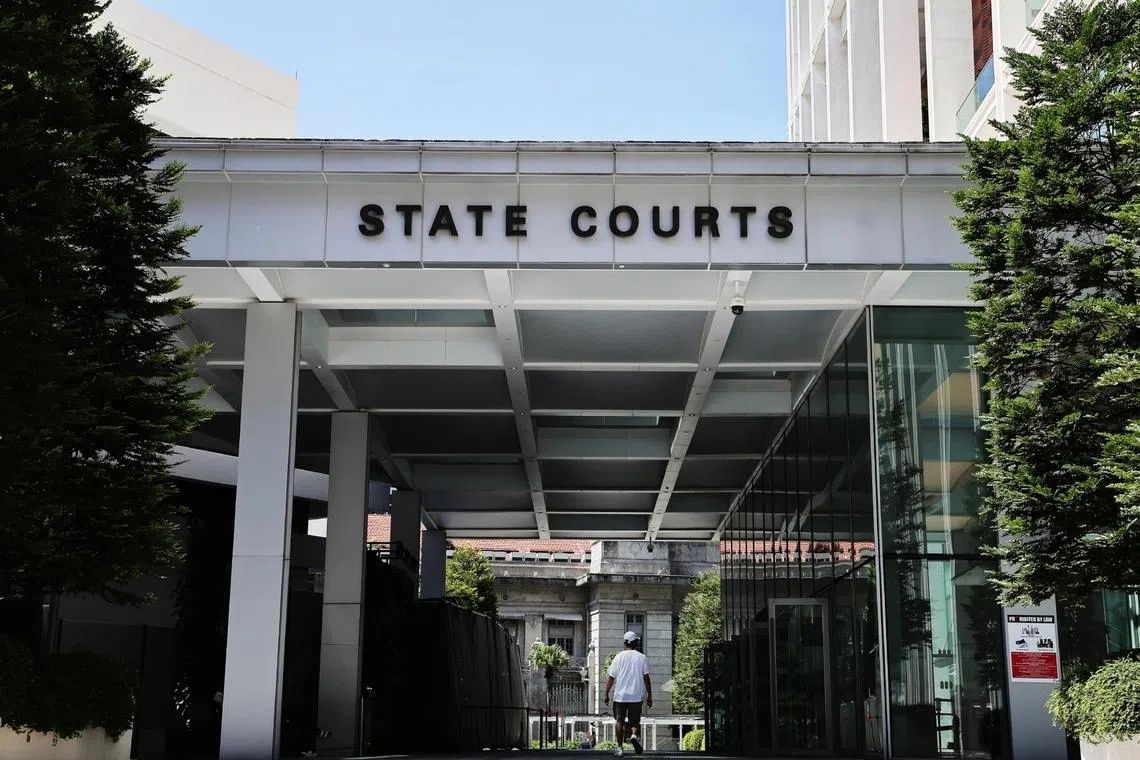
A 41-year-old Chinese national has pleaded guilty to two counts of housebreaking after embarking on a crime spree during his inaugural visit to Singapore, stealing valuables totalling S$105,000 from luxury residences. Huang Xiaozong arrived at Changi Airport on December 5, 2025, and within days had identified and targeted affluent neighbourhoods, demonstrating how quickly criminal intent can translate into action in a foreign jurisdiction.
Huang's criminal calculations began almost immediately upon arrival. After checking into a hotel in Little India, he spent his first full day conducting reconnaissance, specifically researching which areas of Singapore housed the wealthiest residents. His methodology was deliberate: he identified Sentosa and Serangoon Gardens as prime targets, then scouted specific properties that appeared unoccupied, waiting for the moment when he felt confident entering them would go undetected. This planning phase reveals a concerning pattern of premeditation that challenges assumptions about opportunistic crime.
On December 6, 2025, Huang made his way to Sentosa, where he discovered a suite in a luxury hotel. Court documents indicated the occupant maintained the property but was absent at that time, travelling overseas. Huang observed through windows and doors that no one appeared to be present, emboldening him to force entry. He approached via the rear balcony, prying open the sliding door with deliberate force, then systematically moved through the unit removing high-value items. A Chanel watch valued at S$30,000, five rings collectively worth S$25,000, and a gold necklace valued at S$3,000 were stuffed into bags and carried back to his hotel room.
The Sentosa theft remained undetected for two days. When a housekeeper entered the unit on December 8, the absence of the owner had concealed the crime long enough for Huang to plan his next operation. However, forensic evidence—footprints and missing items—immediately signalled to staff that a break-in had occurred, triggering a police investigation that would ultimately lead to his arrest.
Before law enforcement could respond to the Sentosa incident, Huang had already moved on to Serangoon Gardens, one of Singapore's most exclusive residential enclaves. Arriving between 7 and 8 p.m. on December 7, he identified a house with no visible activity—no lights illuminated, no signs of habitation. He climbed over the gate and forced his way inside, this time targeting jewellery and precious metals. He absconded with over S$47,000 worth of items including multiple rings, gold necklaces, a diamond necklace, diamond earrings, and a pair of wedding rings. The sheer volume of stolen goods—more than double the Sentosa haul—suggests he had become emboldened by his initial success.
Still in the Serangoon Gardens area that evening, Huang spotted a second residence matching his profile: dark, quiet, apparently empty. He scaled another fence and began searching, but his luck ran out. A domestic helper working in the home spotted him moving through the property and confronted him, asking what he was doing there. Faced with immediate exposure, Huang abandoned his search, fled back to his hotel with his accumulated plunder, and lay low as he calculated his next moves.
The second residence's owner returned home that evening and, discovering signs of intrusion, immediately contacted the Police Coast Guard. Investigators, now alert to a pattern of burglaries in affluent areas, traced Huang's movements through hotel records and security footage. By December 8, 2025—just three days after his arrival in Singapore—authorities had located him at his Little India hotel and placed him under arrest. The combined value of stolen goods across both locations totalled S$105,000, representing a haul equivalent to several months' wages for many Southeast Asian workers.
Huang's rapid apprehension underscores Singapore's sophisticated law enforcement capabilities and the extensive surveillance infrastructure deployed across residential and commercial precincts. His arrest also highlights a persistent vulnerability: motivated offenders targeting high-value items in specific neighbourhoods can cause significant losses before detection, particularly when properties sit empty for extended periods or when security protocols are inconsistent. For Malaysia's own law enforcement and residential security sectors, the case serves as a cautionary illustration of how cross-border criminal mobility remains a challenge despite enhanced immigration screening.
The sentencing hearing scheduled for August 14 will determine whether Huang receives a custodial sentence commensurate with the severity of his crimes. Singapore's courts typically impose prison terms measured in years for housebreaking offences involving multiple properties and high-value stolen goods. Beyond the sentence, questions will linger about how a first-time visitor conducted such effective reconnaissance and identified targets so precisely, pointing to potential gaps in how security information circulates among residential communities and whether homeowners in wealthy areas adequately cross-reference occupancy information with security protocols.
The case also carries broader implications for Southeast Asian tourism and security. As travel and cross-border movement increase throughout the region, law enforcement agencies must grapple with criminal actors who treat jurisdictions as targets of opportunity. Huang's case demonstrates that arrival in a new country no longer necessarily entails a learning curve for offenders; connectivity and available intelligence mean that motivated criminals can compress their planning and execution phases dramatically. For Malaysian residents of affluent areas and expatriates returning from extended trips, the incident reinforces the importance of comprehensive home security measures, including active monitoring systems, trusted neighbours coordinated through neighbourhood watch programmes, and security services that verify occupancy status with property owners directly rather than relying on passive visual indicators.

