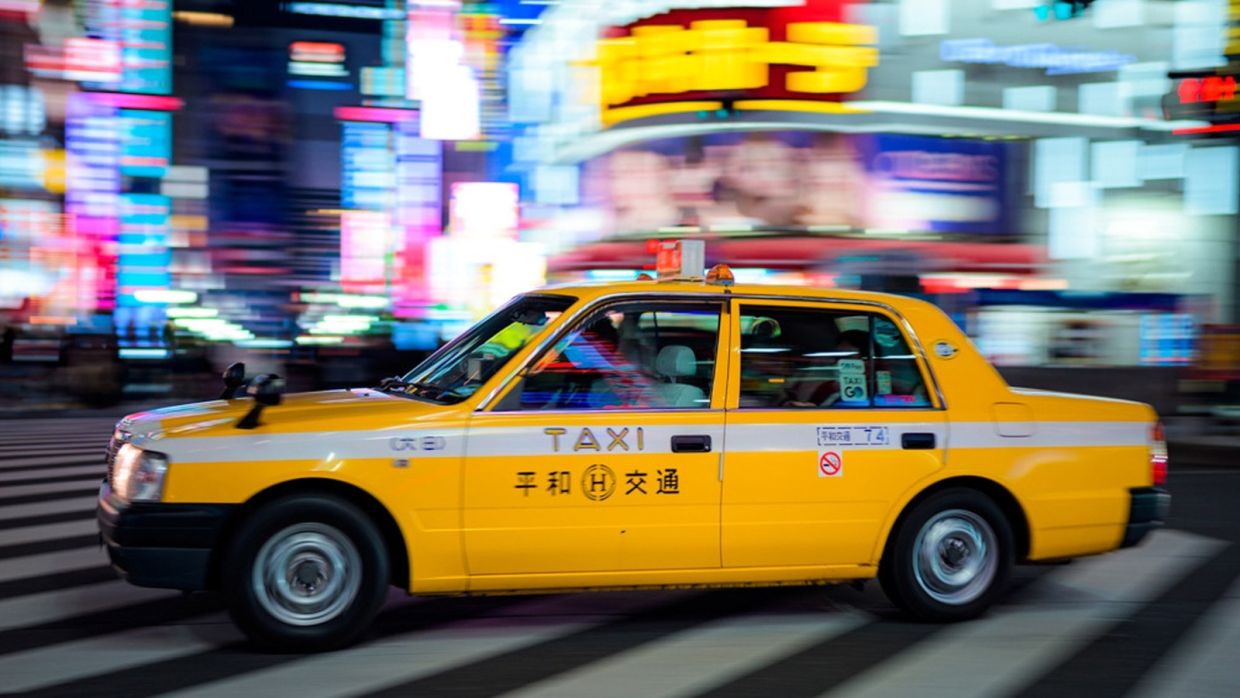
A 41-year-old Chinese national has been arrested in Tokyo on suspicion of masterminding an illegal taxi operation that exploited regulatory loopholes to ferry tourists between the city's major transport hubs. Wang Xiaoyu was detained on Sunday after police investigators uncovered a sophisticated scheme that channelled foreign visitors through unlicensed drivers operating under the guise of legitimate transportation services. The case represents a growing challenge for Japanese authorities attempting to regulate a burgeoning rideshare sector that has expanded dramatically alongside surging international visitor numbers across Asia's major tourism markets.
According to investigative reports, Wang operated the scheme by managing Phoenix Kokusai, a chauffeur service company, and systematically leased its registered vehicles to drivers who were not employed by the organisation. These non-employees then used the vehicles to offer taxi-like services to customers, predominantly targeting Chinese tourists seeking transport between central Tokyo and Haneda Airport. Operating between February and April of this year, the scheme reportedly transported numerous passengers who would normally have used licensed taxis or official rideshare platforms. The Tokyo Metropolitan Police Department has determined that this operation generated substantial revenue, with authorities estimating Wang collected approximately 38 million yen—roughly 233,000 US dollars—from eighteen different drivers who paid fees for the privilege of using the company's registered name.
The vehicles at the centre of the operation carried green licence plates, which in Japan identify commercial transportation vehicles authorised under the "urban hire" category. This classification was established in 2014 as an alternative transportation model intended to complement traditional taxi services. Legitimate urban hire operators must require customers to book services in advance and sign charter agreements with minimum two-hour commitments. However, law enforcement agencies have repeatedly flagged the green plate system as vulnerable to abuse. The difficulty in visually distinguishing between compliant and non-compliant vehicles using these plates creates an enforcement problem, allowing unscrupulous operators to solicit passengers at tourist hotspots without raising immediate suspicion.
The illegal operation came to light after legitimate taxi drivers filed formal complaints with Tokyo authorities regarding suspicious activity at Haneda Airport, one of Asia's busiest international gateways. Officers discovered that vehicles registered under Phoenix Kokusai's name were actively soliciting passengers—a practice entirely inconsistent with the advance-booking requirements mandated for urban hire services. This solicitation occurred despite the company having no legitimate basis for such activity. Subsequent police investigation traced the network to Wang, who controlled operational decisions and collected payments from participating drivers. Wang has partially contested the charges against him, though the evidence gathered by investigators appears substantial.
Beyond the principal suspect, Tokyo police have also apprehended three additional individuals—all identified as Chinese nationals—on charges of violating the Road Transportation Act. These drivers are believed to have been instrumental in executing the day-to-day taxi operations, directly transporting passengers and handling customer interactions. Their involvement underscores the transnational nature of the scheme, which capitalised on language skills and cultural networks within Tokyo's growing Chinese communities to market services to Chinese-speaking visitors. The international dimension of the operation reflects broader patterns of regulatory arbitrage in Southeast Asian tourism hubs, where operators sometimes exploit differences in enforcement capacity or regulatory clarity.
The scale of urban hire vehicle growth across Japan provides crucial context for understanding how such schemes have become feasible. According to Japan's Ministry of Land, Infrastructure, Transport and Tourism, registered urban hire vehicles expanded from just 3,868 in fiscal 2013 to 8,850 by fiscal 2024. This tenfold expansion corresponds directly with Japan's tourism surge, particularly the influx of visitors from China, Southeast Asia, and other Asian regions. Malaysia and other Southeast Asian nations have observed similar regulatory challenges as rideshare and alternative transportation models proliferate faster than compliance frameworks can effectively address. The Tokyo case demonstrates how rapid category expansion creates transitional regulatory spaces where determined entrepreneurs exploit ambiguities before authorities establish enforcement protocols.
The implications for Malaysian stakeholders extend beyond academic interest in Japanese law enforcement. As Malaysia positions itself as a premier tourist destination and transportation hub, the Bangkok-Kuala Lumpur corridor experiences comparable pressures from informal ride services and unlicensed operators. The Tokyo case illustrates how international tourism volume can overwhelm traditional taxi industries and create opportunities for informal competitors who operate in legal grey zones. Malaysian transport authorities, which have grappled with Uber, Grab, and various unlicensed services, can extract lessons regarding the importance of clear regulatory categories and robust monitoring systems. The rapid category expansion seen in Japan mirrors Malaysia's own experience with ride-hailing platform proliferation across Peninsular Malaysia, the Klang Valley, and major interstate corridors.
Wang's scheme also highlights vulnerabilities in using corporate registration systems to legitimise individual operator activities. By operating through an established company name, the ring created a veneer of legitimacy that made detection more challenging than networks relying on individual operators. This structural approach—using corporate entities as fronts—appears increasingly common across Southeast Asia, where similar schemes have targeted tourists in Thailand, Vietnam, and Cambodia. Regulatory bodies across the region have begun implementing stricter requirements regarding beneficial ownership disclosure and operational control verification to prevent precisely this type of abuse.
The investigation's timeline reveals an important enforcement pattern. The operation accumulated approximately seven months of unrestricted activity—from November 2024 through May 2026 as projected by police estimates—before receiving sufficient attention from both taxi industry complainants and authorities. This lag reflects the challenge facing regulators when confronted with sophisticated operations that maintain surface-level compliance while engaging in substantive violations. For Malaysian authorities managing similar pressures within the transport sector, the Tokyo case underscores the necessity of establishing comprehensive monitoring mechanisms that can identify regulatory violations even when operators maintain appropriate documentation.
Looking forward, the Tokyo Metropolitan Police Department's successful investigation may encourage similar enforcement operations across Asian tourism cities. The case demonstrates that detailed financial tracking of payment flows between operators and drivers provides an evidentiary foundation for prosecution even when individual violations appear minor. Malaysian transport authorities, particularly those overseeing activities within Kuala Lumpur International Airport, Kuala Lumpur Sentral, and major hotel districts, may consider analogous approaches to identify and prosecute informal operators using corporate structures as cover. The prosecution's focus on the principal operator rather than individual drivers also signals that jurisdictions increasingly view network organisers as primary enforcement targets, a shift that may discourage would-be entrepreneurs from attempting similar ventures.

