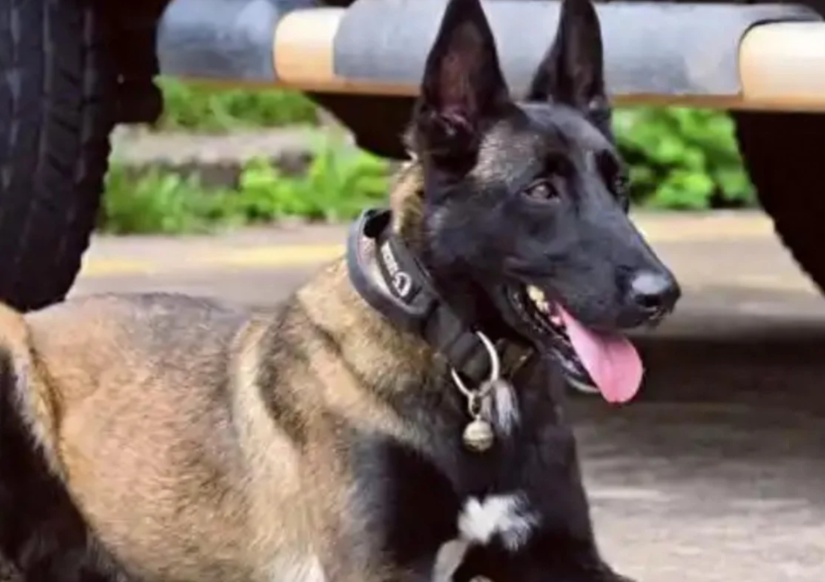
The bond between a police handler and his four-year-old German shepherd partner has touched the conscience of millions across China, igniting a broader conversation about animal loyalty and the human-canine relationships that underpin law enforcement operations throughout Asia. Bulu, a narcotics detection specialist, became a household name across Chinese social media platforms after surveillance footage and reunion videos showed the dog's unwavering devotion during the six-month absence of his handler, a police officer identified by the alias Awei from Chuxiong in southwestern Yunnan province.
The incident unfolded in November when the pair were deployed together to an abandoned building as part of a multi-unit operation targeting suspected drug trafficking networks. Bulu's expertise in detecting concealed narcotics and identifying suspects made him invaluable to the investigation, and the dog performed his role with characteristic precision by alerting officers to the presence of fleeing suspects deep within the structure. As Awei pursued the dog through the debris-strewn corridors, navigating the challenging terrain of an abandoned industrial facility, he lost his footing in the darkness and tumbled from the second storey, sustaining catastrophic injuries that would leave him hospitalized for weeks.
First responders arriving at the scene encountered a tragic tableau: Awei lay convulsing and vomiting blood, his consciousness fragmentary and unreliable, while Bulu remained positioned directly beside him, circling anxiously and attempting to rouse his handler through nuzzling and physical contact. Bodycam footage captured an officer's encouragement to the injured man: "Hold on. We still have battles to fight together"—a phrase that would later resonate deeply with millions who encountered the story online. The severity of Awei's condition became apparent only after hospital assessment revealed multiple fractures across his head and chest, injuries sufficient to place him in a medically induced coma lasting five days before gradual consciousness returned.
While Awei underwent rehabilitation and recovery at the medical facility, Bulu was transferred to a police training base where handlers attempted to maintain his welfare and operational readiness. The dog's response to this separation revealed the depth of his emotional attachment and the genuine distress that separation from his working partner inflicted. Over the subsequent months, Bulu's behaviour deteriorated noticeably: he ceased participating in regular training activities, exhibited restlessness throughout the day and night, and most tellingly, consumed minimal quantities of food and water despite handlers' consistent efforts to encourage normal eating and drinking patterns.
Surveillance systems monitoring the training facility documented Bulu's repeated journeys to locations where he anticipated his handler's return—the dormitory quarters, the base entrance gates, and familiar training routes that he and Awei had traversed together during their partnership. In one particularly poignant moment captured on video, the dog rushed toward a police vehicle entering the base, only to turn away in apparent disappointment when handlers indicated that Awei was not aboard the vehicle. This pattern repeated numerous times throughout the six-month separation, creating a visual record of a working animal's psychological response to loss and the anticipation of reunion.
The operation that had precipitated Awei's injury did eventually reach successful conclusion through the determination of his colleagues, who continued pursuing leads and suspects despite the traumatic incident. Police ultimately arrested eleven individuals connected to the drug trafficking network and recovered 4.4 kilograms of narcotics along with more than 500,000 yuan in illicit financial assets—a significant seizure that demonstrated the stakes of the operation and validated the risks that both Awei and Bulu had undertaken. This professional success, however, remained secondary to the personal story developing in parallel: the question of whether the partnership between handler and dog would be restored.
When Awei finally completed his recovery and cleared medical authorization to return to active duty, the Yunnan police department orchestrated an intentional reunion between the officer and his canine partner. The moment, captured on video and subsequently uploaded to mainland Chinese social media platforms, generated extraordinary engagement: more than ten million views and over 580,000 likes accumulated as audiences responded emotionally to the imagery of Bulu barking frantically and sprinting toward his handler while Awei abandoned his luggage, knelt to the ground, and embraced the dog in evident relief and joy.
The viral success of this reunion story illuminated broader public interest in China's police canine programs and the vital roles these animals occupy within law enforcement infrastructure. According to CCTV News data, the People's Republic of China maintains operational control of more than 29,000 police dogs as of 2024, representing a substantial investment in animal-based detection and patrol capabilities across provincial and municipal jurisdictions. These specialized working dogs typically sustain active operational careers spanning approximately eight years, though the cumulative physical demands of high-intensity deployment frequently result in degenerative joint conditions and spinal injuries that curtail their service longevity.
Online commentary accompanying the story demonstrated how the narrative had transcended simple human interest appeal and touched upon philosophical questions about the nature of loyalty and interdependence between species. One widely shared comment articulated this sentiment: "What Bulu was waiting for was not just its handler, but a comrade-in-arms. I am deeply moved by the bond between humans and animals." This framing—positioning the police dog not as a tool or asset but as a fellow professional and partner—reflects evolving cultural attitudes toward working animals and their contributions to institutional functioning across East Asia.
The story carries particular relevance for Southeast Asian audiences considering regional approaches to law enforcement modernization and animal welfare standards. Many countries throughout the region maintain comparable police canine units, yet public discourse surrounding these programs often remains limited and technocratic rather than emotionally engaged. The Chinese case demonstrates how authentic storytelling about working animals can generate public investment in their welfare, leading to improved standards, retirement provisions, and post-service care. Most retired Chinese police dogs, like Bulu will eventually be, remain with their original units under their handlers' permanent care, while some become available for public adoption—a progressive approach that acknowledges the psychological and physical sacrifices these animals make throughout their service years.

