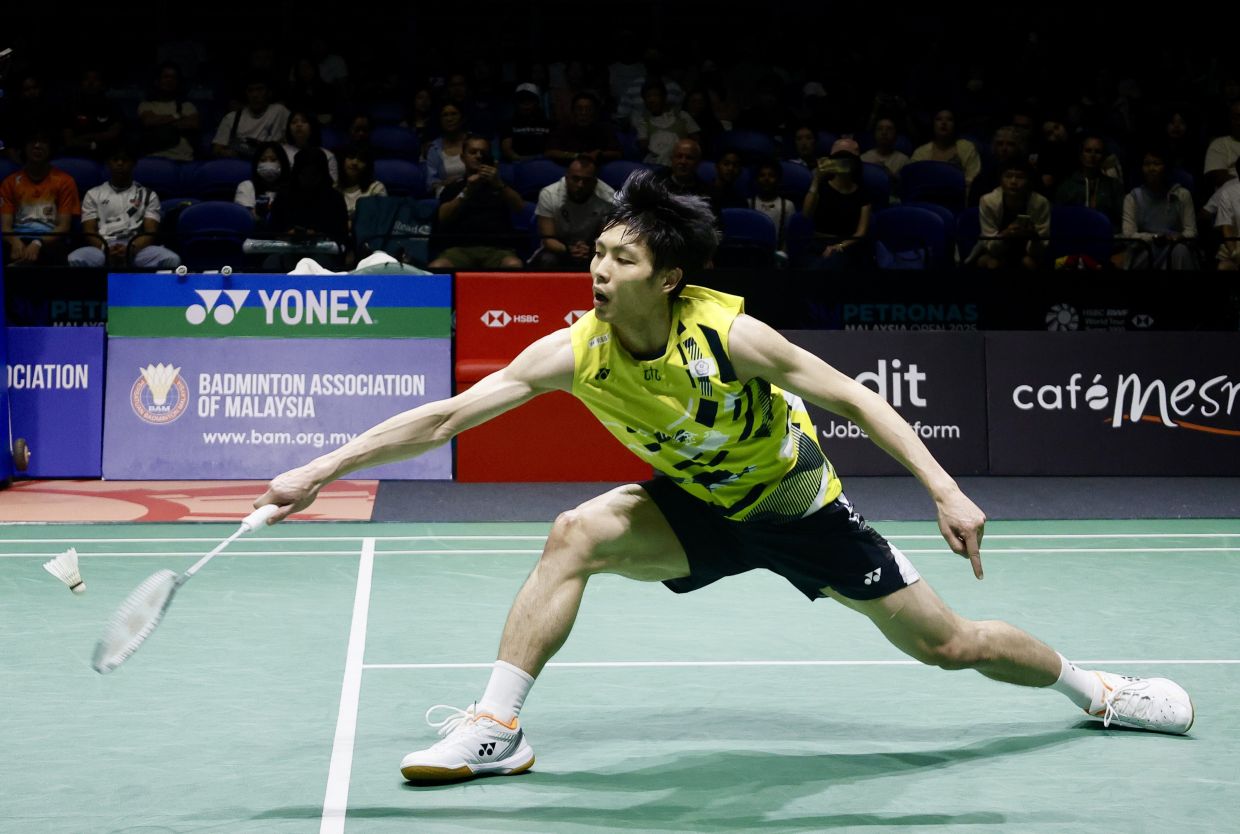
Taiwan's Chou Tien-chen has defied conventional wisdom about athletic decline, capturing the China Open Super 1000 badminton championship at 36 years old in a commanding display at the Changzhou Olympic Sports Centre. The Taiwanese shuttler overcame France's Toma Junior Popov, a player a full decade his junior, with a scoreline of 21-15, 7-21, 21-13 in the men's singles final, completing a 64-minute contest that showcased his tactical maturity and physical conditioning.
This milestone victory carries profound significance for Taiwanese badminton, as it represents the nation's first men's singles triumph at the China Open since Fung Permadi's reign in 1996. The three-decade gap underscores the competitive intensity of the tournament and the rarity of Taiwanese success at one of badminton's premier Super 1000 events. For a badminton programme like Taiwan's, which operates with considerably fewer resources and government support compared to powerhouses like China, Indonesia, and Japan, a breakthrough of this magnitude signals the potential for future competitiveness at the sport's highest levels.
Chou's achievement carries additional weight as it establishes him as the oldest player ever to claim a BWF World Tour Super 1000 title. This record shatters prevailing assumptions within professional badminton that peak performance occurs in athletes' late twenties and early thirties. The accomplishment becomes even more remarkable when contextualized against the physical toll of professional badminton, where explosive movements, rapid court coverage, and sustained rallies demand exceptional cardiovascular fitness and joint stability. His success raises legitimate questions about how athletes can extend their competitive windows through sophisticated training methodologies and medical support.
The road to Changzhou proved unexpectedly turbulent for the veteran competitor. Just seven days before claiming the China Open crown, Chou experienced a disappointing first-round elimination at the Japan Open, defeated by Canada's Victor Lai in a three-set encounter. This recent setback lends particular credibility to his recovery narrative, as it demonstrates his capacity to process disappointment, identify tactical shortcomings, and implement corrections within a compressed timeframe. The contrast between consecutive weeks—failure followed by triumph—illustrates the psychological resilience required for sustained excellence in professional sport.
In his post-match reflections, Chou attributed his continued competitiveness to meticulous attention to training methodology and physiological support systems. He emphasized the collaborative effort with his physiotherapist Victoria Kao, alongside specialized nutrition and conditioning protocols, as instrumental to his ability to perform at championship level despite advancing age. This emphasis on marginal gains and systematic preparation aligns with contemporary sports science approaches increasingly adopted across elite badminton, where the difference between victory and defeat often hinges on optimized recovery and prevention of cumulative injuries rather than raw talent alone.
Chou's philosophical approach to athletic longevity centers on psychological consistency and incremental improvement. He articulated that maintaining performance requires sustained effort and positive mental orientation even in the aftermath of disappointing results, a perspective that carries broader application within Malaysian badminton and regional talent development. The willingness to return to training immediately following defeat, coupled with an analytical mindset focused on identifying specific performance gaps, establishes a template for how mature athletes can compete effectively against younger, ostensibly more physically gifted rivals.
The tournament results demonstrate China's continued dominance across multiple badminton disciplines. Chinese pairings secured victories in women's singles through Akane Yamaguchi's defeat of Chen Yufei, women's doubles via Liu Shengshu and Tan Ning's triumph, and mixed doubles through Guo Xinwa and Chen Fanghui's narrow victory. Meanwhile, Indonesia's Fajar Alfian and Shohibul Fikri captured the men's doubles crown, defeating South Korea's Kim Won-ho and Seo Seung-jae in a tightly contested final featuring two consecutive 21-19 set victories.
For Malaysian badminton observers, Chou's breakthrough carries pertinent implications regarding competitiveness strategies in a landscape increasingly dominated by well-resourced Chinese and Indonesian programmes. The demonstration that systematic training, injury prevention, and mental resilience can enable relatively late-career success suggests that smaller badminton nations might exploit strategic advantages through specialized athlete development and retention of experienced players rather than wholesale reliance on youthful prospect acquisition.
Chou's trajectory also illuminates questions about career longevity within professional badminton, traditionally a sport where athletes transition to retirement or coaching roles by their mid-thirties. His sustained excellence suggests that with appropriate support infrastructure and strategic tournament selection, elite players can extend their competitive windows beyond conventional timelines. This has implications for badminton federation planning across Southeast Asia, as it implies investment in experienced player development and retention may yield returns competitive with youth-focused strategies.
The psychological dimension of Chou's accomplishment extends beyond individual sporting achievement. His narrative of perseverance following acute disappointment resonates within Malaysian sporting culture, where recovery from setback and sustained commitment despite adversity constitute valued qualities. His candid acknowledgment of gratitude toward supporters and recognition of collaborative success, rather than individual heroics, reflects values broadly consistent with regional sporting ethos.
Moving forward, Chou's China Open victory will likely intensify scrutiny regarding age-related performance decline across professional badminton. Sports scientists will undoubtedly examine his training methodologies, physiological markers, and tactical adaptations to identify transferable principles applicable to other ageing elite athletes. For badminton programmes across Southeast Asia, his success demonstrates that strategic investment in player welfare, including physiotherapy and nutrition, represents not merely ethical commitment but also pragmatic talent retention strategy.
The broader context of Chinese badminton's continued Super 1000 dominance, tempered by Chou's Taiwan breakthrough and Indonesia's men's doubles success, suggests the regional competitive landscape remains dynamic despite China's structural advantages. Chou's triumph indicates that strategic excellence in specific areas—in his case, men's singles technique and match psychology—can overcome resource asymmetries, offering optimism to smaller badminton programmes pursuing competitive success at sport's highest echelons.

