Malaysia's push to digitalize government administration has yielded tangible financial returns, with the civil service reporting savings of RM1.99 million through its paperless initiative. The scheme, which began phased implementation in February, has already eliminated the need for 116,405 reams of paper across government departments and agencies. Chief Secretary to the Government Tan Sri Shamsul Azri Abu Bakar disclosed the achievement during discussions at the Digital Economy and Fourth Industrial Revolution Council meeting chaired by Prime Minister Datuk Seri Anwar Ibrahim on June 29.
The paperless programme represents a strategic component of Malaysia's broader digital modernization agenda. When the initiative was first announced in early February, government officials indicated that the transition would commence with straightforward administrative transactions, establishing a foundation for wider adoption across the public sector. This measured approach allowed government agencies to test digital workflows, address technical challenges, and train staff before expanding to more complex processes. The resulting savings underscore the economic case for digital transformation beyond its operational and environmental benefits.
The financial gains from reduced paper consumption point to secondary advantages that extend throughout government operations. Procurement costs for office supplies decline, storage requirements for archived documents shrink, and printing infrastructure expenses fall. These cumulative benefits demonstrate how modernization initiatives can deliver concrete value to taxpayers while simultaneously improving administrative efficiency. The RM1.99 million saving, though significant, likely represents only a fraction of the total operational benefits generated by streamlined digital processes.
Tan Sri Shamsul Azri highlighted that the paperless initiative operates within a comprehensive digital strategy framework. The discussions during the MED4IR council meeting prioritized several interconnected initiatives, including the rollout of MyDigital ID and MyGov platforms, both central to the government's digital citizen services architecture. Expansion of digital infrastructure across higher education institutions featured prominently, recognizing that universities represent crucial nodes in the broader digital economy ecosystem. These initiatives collectively aim to create seamless digital interactions between citizens and government agencies while building digital capability across society.
A critical pillar emerging from the council's deliberations involves artificial intelligence development and deployment. Malaysia's aspiration to establish itself as an AI Nation by 2030 gained concrete momentum through the MyMAHIR National AI Council for Industry, which focuses on cultivating comprehensive digital talent. This initiative addresses a persistent challenge across Southeast Asia: the shortage of skilled professionals capable of developing, implementing, and managing advanced digital systems. By institutionalizing AI talent development through dedicated governance structures, Malaysia positions itself to capture opportunities in an increasingly AI-driven global economy.
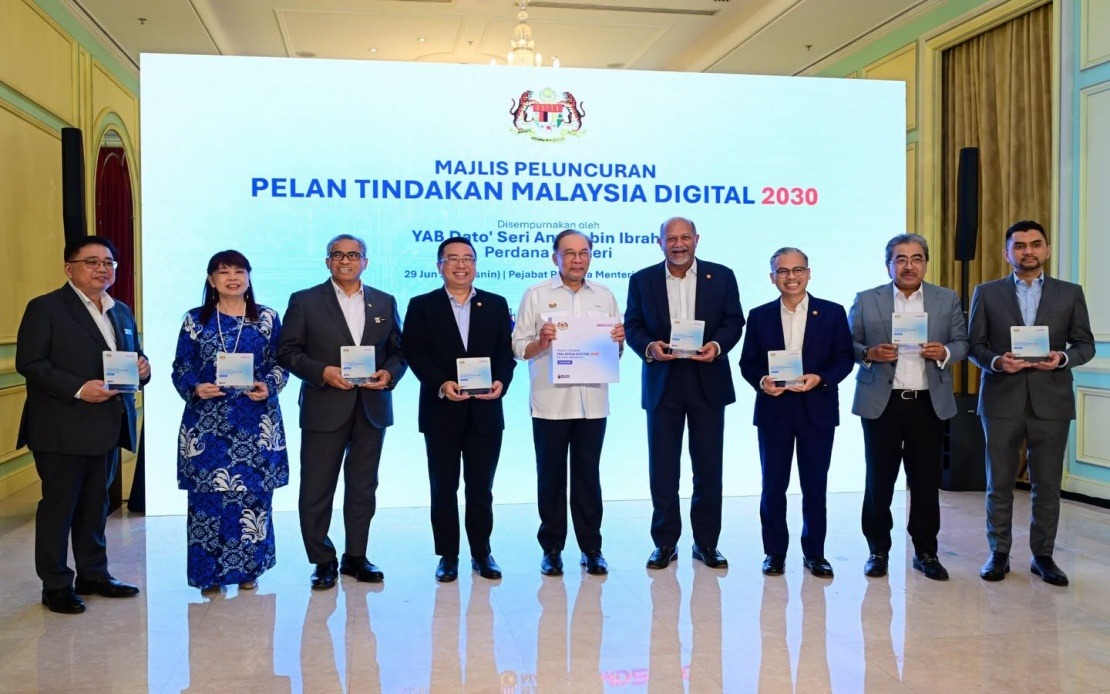
The Malaysia Digital 2030 framework, launched during the council meeting, provides the overarching strategic roadmap integrating these various digital initiatives. Rather than treating paperless administration, digital identity systems, and AI development as separate programmes, the framework connects them as interdependent elements of a cohesive digital transformation vision. This integrated approach increases the likelihood of sustainable implementation, as different initiatives reinforce each other rather than competing for resources or creating conflicting operational requirements.
For Malaysian readers and the broader Southeast Asian business community, these developments carry significant implications. Government modernization efforts create ripple effects throughout the economy, establishing digital standards and expectations that private sector organizations increasingly must match. As government services migrate online, businesses that interact with the public sector face pressure to adopt compatible digital systems. Simultaneously, the government's emphasis on digital talent development addresses a regional constraint that has limited economic growth and competitiveness.
The paperless initiative also demonstrates government commitment to environmental sustainability alongside economic efficiency. Paper production consumes substantial water and energy resources, and reduction in consumption carries environmental benefits that extend beyond financial savings. As Malaysia competes for foreign investment and international partnerships, demonstrating environmental responsibility through tangible programmes like paperless administration enhances the country's profile as a responsible, forward-thinking jurisdiction.
Implementing paperless systems across diverse government agencies presents substantial technical and organizational challenges that the relatively early stage of this initiative suggests remain ongoing. Different departments operate with legacy systems, varying levels of digital maturity, and distinct operational requirements. The February start date for basic transactions provided time to troubleshoot processes and build institutional experience before expanding to complex transactions. Monitoring implementation outcomes across agencies will prove essential for identifying bottlenecks and scaling solutions effectively.
The success of these digital initiatives depends significantly on public participation and digital literacy. MyDigital ID and MyGov platforms require citizens to engage with online systems, necessitating accessible design and adequate public communication to ensure inclusive adoption. Government agencies must balance the efficiency gains from digitalization with the service needs of populations with limited digital access or competency. Educational institutions' role in building digital capacity becomes crucial, as does ongoing investment in digital infrastructure across urban and rural areas.
For Malaysia's regional positioning, the Digital 2030 framework and associated initiatives signal serious engagement with the digital economy and technological advancement. Singapore and other advanced regional economies have emphasized similar transformations, and Malaysia's progress in this arena contributes to broader Southeast Asian digital ecosystem development. Success in implementing these programmes could position Malaysia as a model for digital government transformation across developing Asian economies, with potential benefits for diplomatic relationships and economic cooperation.
As government agencies navigate the ongoing transition to paperless operations and digital service delivery, tracking and communicating progress becomes essential for maintaining momentum and public confidence. Regular disclosure of cost savings, efficiency improvements, and service quality metrics helps justify continued investment and builds constituent support for digital transformation. The RM1.99 million achievement, while impressive, represents only the beginning of a multi-year transformation journey that will reshape how Malaysian government conducts business and serves citizens.

