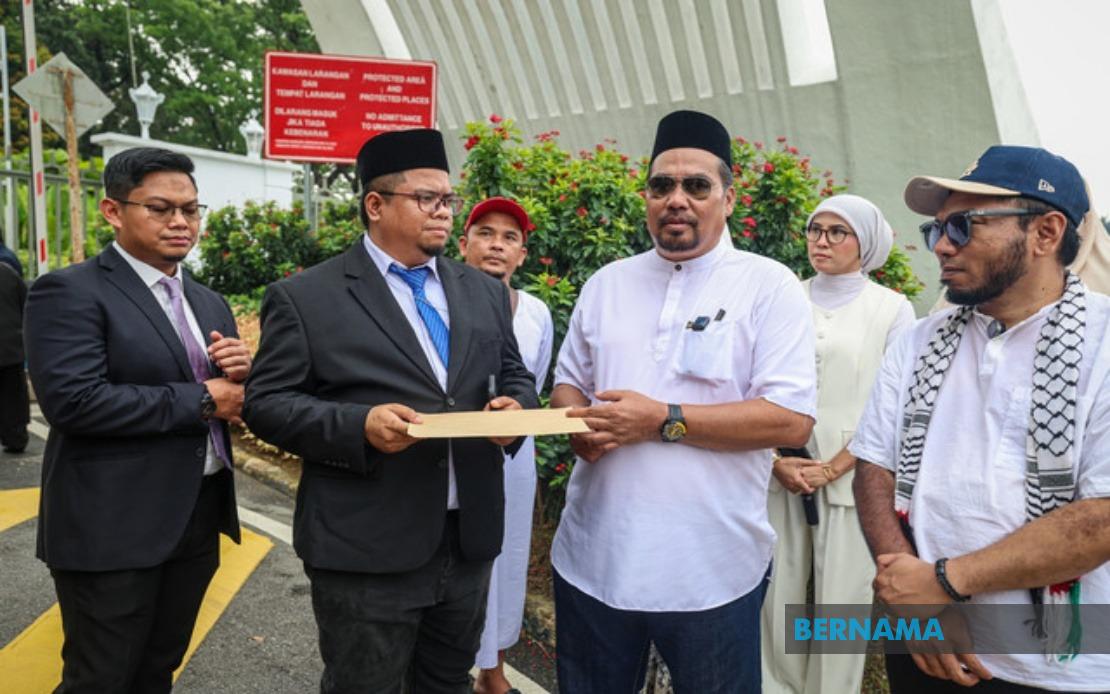
A prominent social media activist collective has escalated calls for the government to pursue criminal and administrative action against those accountable for widespread mismanagement at Tabung Haji, Malaysia's pilgrimage savings institution. Sekretariat Gerak Gempur Media Sosial Rakyat Malaysia, commonly known as SEKPUR, delivered the demand through a formal memorandum presented at Parliament on August 11, underscoring mounting public pressure to enforce accountability in the aftermath of a damaging Royal Commission of Inquiry investigation.
The memorandum submission occurred during a peaceful gathering outside Parliament's main entrance, coinciding with a special parliamentary sitting devoted to reviewing the RCI's findings on the troubled institution. SEKPUR secretary Mohd Yani Alias handed the document to Zairudin Hashim, press secretary to the Minister in the Prime Minister's Department overseeing religious affairs, requesting its transmission to Minister Senator Dr Zulkifli Hasan. The timing underscores civil society's determination to keep the Tabung Haji crisis firmly on the government's agenda as political attention inevitably shifts.
The RCI report, released publicly on July 29, represented a comprehensive examination of governance and operational failures spanning the 2014 to 2020 period. Comprising 211 pages of detailed analysis, the document exposed systemic weaknesses across Tabung Haji's management structure and identified 25 distinct areas requiring corrective action. By late July, the institution had already implemented approximately 75 per cent of the recommended improvements, signalling initial responsiveness to the commission's findings though concerns persist regarding the pace and adequacy of deeper reforms.
Mohd Yani's statement adopted a notably non-partisan posture, insisting that accountability must transcend political allegiances and organisational loyalties. He articulated that the group's focus centred exclusively on justice and institutional rehabilitation rather than partisan advantage, framing the issue as one affecting the broader Muslim and Malay community whose savings and trust had been compromised. This rhetorical positioning aimed to shield the campaign from accusations of political opportunism while maintaining moral authority in demanding consequences for wrongdoing.
Beyond immediate accountability, SEKPUR articulated broader systemic concerns threatening Tabung Haji's long-term viability and public utility. The group emphasised that financial sustainability represents a prerequisite for the institution to fulfil its core mandate of serving Malaysia's Muslim population. Critically, SEKPUR flagged the institution's capacity to deliver competitive hibah distributions to depositors—the returns generated on savings accumulated for pilgrimage purposes—as increasingly strained. These dividends constitute a significant component of depositors' investment returns and serve as a trust-building mechanism essential to maintaining public confidence in the savings scheme.
A secondary dimension of SEKPUR's concerns addressed the escalating financial burden imposed on prospective pilgrims. The activist group contended that rising costs associated with haj performance now constitute a significant economic barrier for ordinary Malaysians, potentially excluding lower-income households from fulfilling this religious obligation. This concern resonates particularly in a climate of persistent inflation and economic uncertainty affecting household purchasing power across the nation. The memorandum implicitly suggested that institutional mismanagement had exacerbated these affordability challenges by compromising Tabung Haji's operational efficiency and cost management.
Transparency in haj quota administration emerged as a third priority outlined in SEKPUR's submission. The group advocated for enhanced disclosure regarding how the institution manages its allocation of pilgrimage slots and associated administrative processes. Haj quota allocation has historically generated public controversy in Malaysia, with periodic allegations of preferential treatment, bureaucratic opacity, and unequal access. SEKPUR's emphasis on this dimension suggested that the RCI process had illuminated deficiencies in governance standards that extended beyond financial mismanagement into procedural accountability.
The Yang di-Pertuan Agong's formal decree, referenced prominently in SEKPUR's memorandum, carried constitutional and moral weight that elevated the accountability demand beyond ordinary political advocacy. The monarch's directive that those responsible for Tabung Haji's troubles be brought to justice and pursued comprehensively established a royal imperative that political leaders found difficult to dismiss or downgrade. SEKPUR strategically deployed this constitutional authority as leverage, framing their campaign as advancing the Agong's will rather than pursuing partisan interests.
For Malaysian civil society, the SEKPUR mobilisation reflects evolved patterns of political participation extending beyond voting and formal institutional channels. The Tabung Haji controversy has galvanised engagement from social media-connected constituencies traditionally sceptical of conventional politics, demonstrating how institutional failures affecting everyday financial security can motivate broader civic activism. The institution's particular cultural and religious significance amplified this mobilising effect, as the crisis affected not merely abstract financial instruments but mechanisms central to fulfilling Islamic obligations.
The broader policy implications extend across multiple dimensions of Malaysian governance. The Tabung Haji scandal highlights vulnerabilities in institutional oversight affecting government-linked companies and religious endowments managing significant public assets. Regulatory frameworks governing such entities may require strengthening, particularly regarding internal controls, auditing standards, and transparency mechanisms. The RCI process itself, while generating valuable forensic analysis, raises questions about preventive institutional architecture that might forestall similar crises.
Regionally, Malaysia's Tabung Haji experience carries relevance for other Muslim-majority nations operating similar pilgrimage savings schemes and religious financial institutions. The intersection of institutional governance, religious significance, and public trust creates particular complexities that standard corporate oversight frameworks may inadequately address. How Malaysia's government responds to SEKPUR's demands and implements the RCI recommendations will likely influence international assessments of Southeast Asian institutional capacity.
The political trajectory from the RCI report through accountability enforcement remains uncertain. SEKPUR's memorandum represents sustained civil pressure maintaining the issue's salience, yet translating investigation findings into meaningful prosecutions and systemic reform requires sustained political will and bureaucratic commitment. The coming months will reveal whether parliamentary and executive branch responses to these activist demands produce substantive changes or merely rhetorical acknowledgment, fundamentally shaping public confidence in institutional accountability mechanisms.

