The Malaysian government has initiated an intensive cloud seeding programme targeting areas gripped by hazardous air quality and facing the dual challenge of falling water reserves. Deputy Prime Minister Datuk Seri Dr Ahmad Zahid Hamidi announced the strategy during an event at the 2026 Malaysia Agriculture, Horticulture and Agrotourism Show in Serdang on August 30, emphasizing that cloud seeding efforts focus particularly on regions where the Air Pollutant Index (API) exceeds 150—a threshold that signals unhealthy air conditions. The approach represents a coordinated response to compounding environmental pressures that threaten both public health and essential services across multiple states.
The initiative operates as a collaborative undertaking between the Malaysian Meteorological Department and the Royal Malaysian Air Force, pooling technical expertise and aerial resources to maximize operational effectiveness. This inter-agency coordination reflects the complexity of cloud seeding as a weather modification technique, which demands precise timing, favorable atmospheric conditions, and real-time meteorological monitoring. According to Dr Ahmad Zahid, the first operations were conducted in Putrajaya, with subsequent phases scheduled for Sarawak, Kedah, and Perlis between September 3 and 5. The staggered geographic approach allows authorities to concentrate resources where conditions are most critical and weather patterns are most conducive to successful precipitation.
Water security emerges as a primary driver for the cloud seeding campaign. Malaysia's reservoir levels have been declining visibly, raising concerns about sustained supply reliability during the protracted hot weather pattern affecting the region. By inducing rainfall through cloud seeding, authorities aim to replenish dams and aquifers that typically support domestic consumption, agricultural irrigation, and industrial requirements across urban and rural communities. This preventative measure proves particularly vital in a nation where water demand fluctuates seasonally and infrastructure capacity faces mounting strain from population growth and economic development.
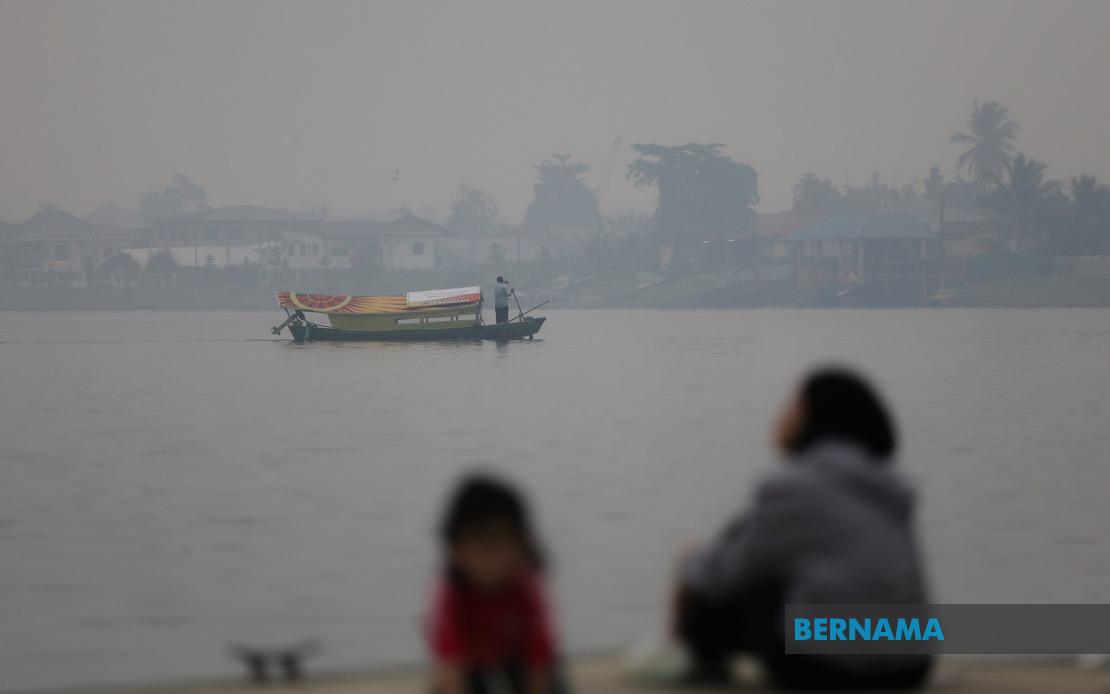
The haze situation affecting Sarawak underscores the urgency of the intervention. Three monitoring stations in the state recorded hazardous air quality readings on the day of the announcement. The Serian Police headquarters station registered the most severe pollution at 412 API, far exceeding the hazardous threshold of 300. Samarahan followed at 332, while Kuching—the state capital—measured 304. Meanwhile, Sri Aman recorded 228, classified as very unhealthy. These readings reflect transboundary pollution patterns typical of the August-September period, when agricultural burning and forest clearance activities intensify across Southeast Asia, particularly in neighboring Indonesia.
Cloud seeding success hinges on atmospheric prerequisites that extend beyond the presence of pollution or water deficit. Dr Ahmad Zahid's remarks highlighted a crucial operational reality: clouds must be present and positioned appropriately for seeding agents to prove effective. Even when cloud cover exists, meteorological monitoring systems must track movement patterns to ensure clouds drift toward targeted areas rather than away from them. This dependency on natural weather dynamics means cloud seeding functions as a supplementary tool rather than a guaranteed solution, requiring adaptive management and realistic expectations from policymakers and the public alike.
The timing of these operations reflects Malaysia's seasonal vulnerability to transboundary haze—a recurring phenomenon rooted in the climate patterns and agricultural practices of the broader region. The August-to-October window consistently witnesses elevated API readings, particularly in Peninsular Malaysia and the Malaysian states on Borneo. Historical experience has demonstrated that robust government intervention during peak periods can mitigate the worst impacts on air quality, respiratory health outcomes, and visibility-dependent economic activities. The cloud seeding decision therefore represents institutional learning from past years when inadequate response contributed to public health crises.
For Malaysian readers, the implications extend to practical disruptions in daily life. High API readings correlate with respiratory illnesses, school closures, outdoor activity restrictions, and reduced worker productivity. The simultaneous threat to water supplies compounds the crisis, as residents and businesses brace for potential rationing if dam levels fall critically. Cloud seeding offers a potential partial solution, though its effectiveness remains variable and weather-dependent. Citizens in Sarawak, Kedah, and Perlis should monitor official air quality updates and prepare for possible water conservation measures even as seeding operations commence.
The broader Southeast Asian context amplifies the challenge facing Malaysian authorities. Regional haze stems predominantly from agricultural burning and land clearing in Indonesia, particularly in Sumatra and Kalimantan. Malaysia's unilateral cloud seeding effort addresses symptoms rather than root causes, as the primary pollution sources remain beyond Malaysian jurisdiction. Diplomatic and regional cooperation mechanisms, including the Association of Southeast Asian Nations framework, have attempted to coordinate transboundary air quality management, yet enforcement remains inconsistent. Cloud seeding thus represents Malaysia's pragmatic attempt to safeguard its population while longer-term regional solutions develop.
Water security considerations carry equal weight in this policy choice. Malaysia's dam infrastructure supports millions of residents and serves as critical lifeline for industries ranging from agriculture to semiconductor manufacturing. Declining water levels trigger cascading consequences: rationing in urban areas, reduced irrigation availability for farmers, and potential constraints on hydroelectric generation. Cloud seeding potentially averts these complications by maintaining reservoir replenishment, particularly if coordinated with conventional water management strategies including demand-side conservation, supply-side efficiency, and strategic reservoir operations.
The selection of specific regions for cloud seeding reflects vulnerability mapping conducted by environmental and water resource agencies. Sarawak's inclusion acknowledges both its severe current haze conditions and its significant water security challenges. Kedah and Perlis, located in Malaysia's agricultural heartland, face competing pressures from rice cultivation, tourism, and domestic supply. These states typically experience pronounced dry seasons, making cloud seeding interventions temporally critical during monsoon transitions and drought periods.
Government agencies have emphasized that cloud seeding deployment follows established protocols regarding weather conditions, API thresholds, and dam status monitoring. This systematic approach aims to optimize resource allocation and demonstrate evidence-based decision-making to skeptical observers. Nevertheless, the inherent uncertainty in weather modification—combined with public expectations for visible improvement—creates communication challenges. Authorities must manage narratives carefully, explaining what cloud seeding can realistically achieve while maintaining preparedness for scenarios where atmospheric conditions preclude successful precipitation.
Looking forward, the success of this initiative will likely inform future haze and water shortage responses. If cloud seeding operations substantially improve conditions in Sarawak, Kedah, and Perlis during the critical September-October window, the government may expand the program to other vulnerable regions. Conversely, if results prove disappointing, policymakers must accelerate investments in alternative interventions, from air filtration infrastructure to advanced weather forecasting capabilities and long-term water infrastructure resilience. Either way, the current campaign represents an acknowledgment that Malaysia faces increasingly acute environmental pressures requiring innovative, multi-faceted governmental responses.

