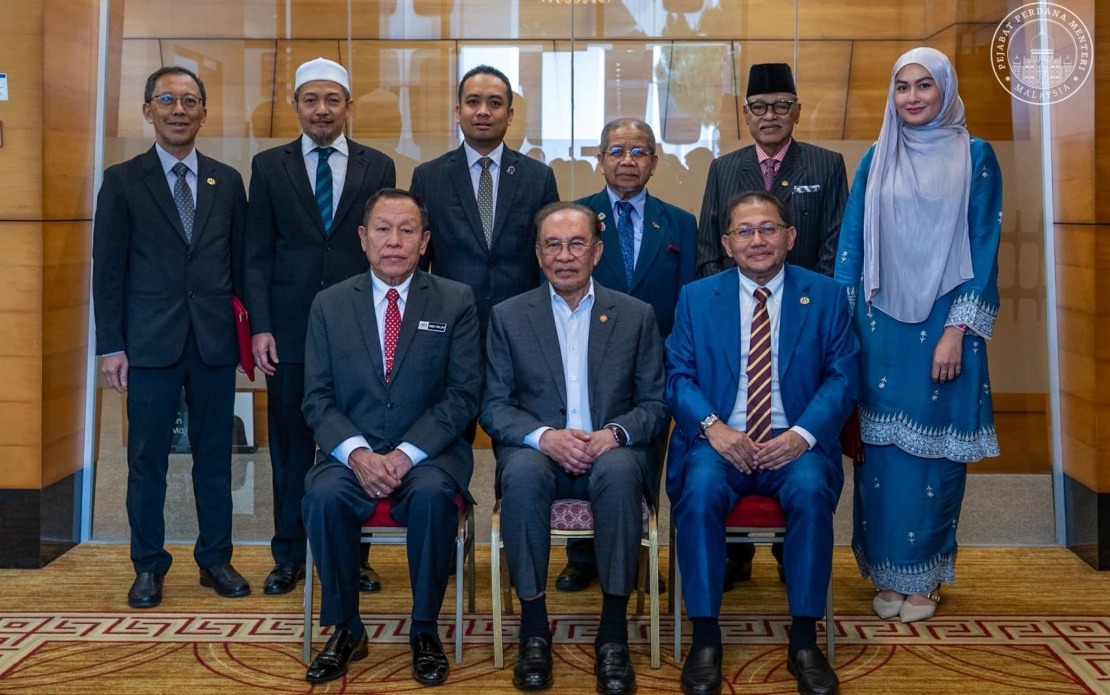
Prime Minister Datuk Seri Anwar Ibrahim has underscored the necessity of a whole-of-nation approach to combating corruption, rejecting the notion that any single agency can tackle the problem in isolation. Speaking in Parliament on June 30, he emphasised that meaningful progress against graft demands coordinated action spanning enforcement bodies, legislative chambers, government ministries, businesses, and community organisations. This multifaceted strategy reflects recognition that corruption operates through multiple channels and requires simultaneous pressure from diverse institutional actors.
The Prime Minister highlighted the critical role of two key oversight mechanisms in Malaysia's anti-corruption architecture. The Special Committee on Corruption, known as JKMR, and the Anti-Corruption Advisory Board, designated as LPPR, function as independent checks within the system by offering balanced perspectives that enhance the effectiveness of corruption-fighting initiatives. These bodies serve to prevent the concentration of power and ensure that anti-corruption strategies benefit from diverse viewpoints and rigorous scrutiny. By presenting fresh instruments of appointment to newly appointed members following the consent of the Yang di-Pertuan Agong, Anwar signalled the continued importance of these institutions in Malaysia's governance framework.
In his parliamentary address and subsequent Facebook statement, the Prime Minister conveyed expectations to the newly appointed committee members regarding their responsibilities. He urged them to strengthen their commitment to the anti-corruption agenda, recognising that their individual resolve would collectively shape Malaysia's capacity to address this persistent challenge. The message carried particular weight given the backgrounds represented among the appointees, who come from varying professional, sectoral, and political contexts. Despite these differences, Anwar stressed that all members share a unified obligation to fortify the nation's defences against graft and malfeasance.
The JKMR operates as a constitutionally anchored body established under Section 14 of the Malaysian Anti-Corruption Commission Act 2009 (Act 694). Its membership reflects a deliberate balance, with the Yang di-Pertuan Agong making appointments from among members of both the Senate and Dewan Rakyat. Importantly, the committee includes representatives from both government and opposition parties, ensuring that anti-corruption oversight transcends partisan divisions. This institutional design acknowledges that fighting corruption demands bipartisan commitment and cannot be reduced to a single political faction's priorities.
Paralleling this structure, the LPPR operates under Section 13 of the same legislative framework. Rather than drawing exclusively from Parliament, the Advisory Board comprises individuals selected by the Yang di-Pertuan Agong based on their demonstrated integrity and achievement in public service or professional excellence. This approach broadens the talent pool beyond elected officials, incorporating seasoned practitioners and respected figures from diverse sectors. The composition strategy reflects confidence that anti-corruption progress benefits from insights generated outside traditional political structures, drawing on expertise accumulated through decades of professional experience.
The emphasis on institutional cooperation reflects lessons from global anti-corruption efforts, where isolated enforcement actions often prove insufficient. When the Malaysian Anti-Corruption Commission operates without support from Parliament, the civil service, and business leaders, its investigations may encounter obstruction or lack the legislative backing necessary to implement systemic reforms. Conversely, when Parliament and advisory bodies provide consistent scrutiny and the private sector demonstrates commitment to ethical practices, enforcement becomes more potent and corruption becomes progressively riskier for potential offenders.
For Malaysian readers and businesses, this call for collective action carries practical implications. Private sector compliance and corporate governance practices directly influence whether corruption can take root within Malaysian companies and investment ecosystems. When businesses embrace transparency standards and internal controls, they reduce opportunities for bribery and illicit payments. Simultaneously, civil society organisations and community watchdogs amplify pressure by monitoring public procurement, investigating suspicious transactions, and publicising findings through media and social platforms.
Regionally, Malaysia's emphasis on multi-institutional anti-corruption strategies aligns with approaches advocated by international bodies including the United Nations Convention Against Corruption and regional organisations focused on governance improvement. Several Southeast Asian nations have observed that countries combining legal enforcement with parliamentary oversight, business participation, and civic engagement achieve more sustainable reductions in corruption indices than those relying solely on specialised agencies.
The appointment of new JKMR and LPPR members under royal auspice signals continuity in Malaysia's anti-corruption institutional framework despite broader political transitions. The involvement of both government and opposition representatives in oversight bodies provides some insulation from political volatility, allowing anti-corruption work to proceed across election cycles and coalition changes. This institutional resilience proves essential for long-term progress, as corruption cannot be defeated through short-term political campaigns but requires sustained, coordinated effort maintained across multiple government administrations.
Anwar's framing suggests recognition that corruption persists not through institutional failure alone but through deficiencies in collective commitment. When enforcement agencies lack parliamentary support, public sector workers ignore regulations, businesses engage in bribery, and citizens tolerate or participate in corrupt transactions, no single body can reverse these dynamics. Conversely, when society broadly embraces anti-corruption norms, enforcement becomes more effective because people report violations, witnesses testify reliably, and compliance becomes a competitive advantage rather than a burden.
The structural inclusion of representatives from government and opposition within the JKMR warrants particular attention for Malaysian observers. This arrangement institutionalises scrutiny that crosses political boundaries, creating mechanisms through which opposition members can investigate and question government anti-corruption efforts. Such arrangements, while sometimes contentious, ultimately strengthen accountability by ensuring that no single political faction controls the narrative around corruption investigations or determines which officials face scrutiny.

