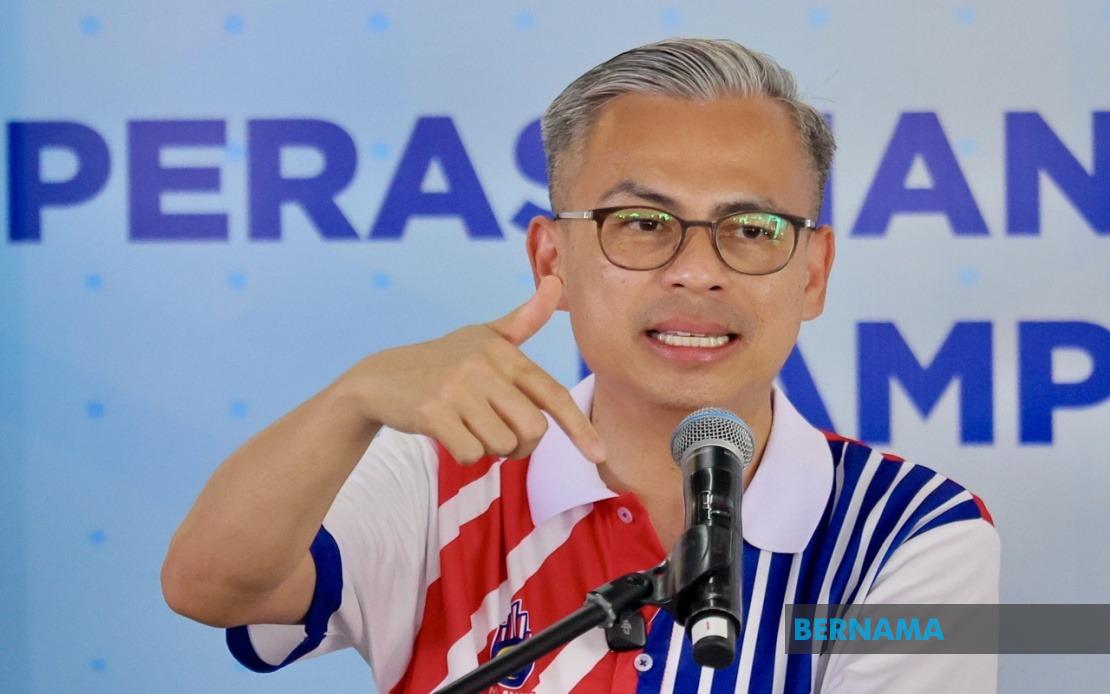
Datuk Fahmi Fadzil, Malaysia's Communications Minister, has launched a sharp rebuke against those responsible for operating a fraudulent WhatsApp account that falsely claims to represent Pakatan Harapan candidate Saiful Nizam Samat in the Endau state constituency race. The minister characterised the deceptive campaign tactic as emblematic of desperation in electoral competition, suggesting that certain actors are willing to disregard ethical boundaries to secure victory in the ongoing Johor state election.
Saiful Nizam categorically denied any connection to the imposter account, clarifying in a Facebook statement that the WhatsApp profile bearing his name and image operates entirely without his knowledge or approval. The fake account, which displayed his photograph and introduced itself as "Saiful Samad, the future Endau assemblyman," has been actively engaging members of the public under the guise of campaign communications. This distinction between the candidate's actual identity and the fraudulent persona highlights an evolving dimension of election interference in Malaysia, where digital impersonation has become an increasingly sophisticated tool for spreading misinformation.
The campaign team known as Team SS, which represents Saiful Nizam's official electoral machinery, has no involvement with the suspicious WhatsApp account whatsoever. The candidate's official campaign infrastructure operates through legitimate channels that are publicly verifiable and transparent. By making this distinction explicit, Saiful Nizam sought to immunise his campaign against any reputational damage arising from communications made by unknown individuals claiming to represent him.
Public warnings issued by the candidate's camp underscore the importance of digital literacy during election periods. Voters have been advised to exercise heightened caution when receiving messages from accounts claiming to represent candidates, and to refrain from sharing sensitive personal information through unverified channels. The explicit recommendation to contact Team SS through its official, established communication platforms for verification purposes reflects a broader acknowledgment that election-related fraud has become sufficiently prevalent to warrant protective guidance.
The incident's visibility was amplified when Saiful Nizam publicly shared screenshots demonstrating the deceptive nature of the fake account's communications. These visual proofs served as documentary evidence of the impersonation and provided concrete examples of the fraudulent messaging being conducted. By presenting these screenshots alongside his denial, the candidate equipped voters with tangible reference points to distinguish between legitimate and spurious campaign information.
The Endau state constituency represents a significant electoral battleground featuring a competitive four-way contest. Candidates from Barisan Nasional, Pakatan Harapan, Perikatan Nasional, and Parti Orang Asli Malaysia are contending for the seat, creating an unusually fragmented political landscape. The multiplicity of competing interests in this particular race may explain why such aggressive tactics are being employed, as narrowly-divided contests often incentivise campaigns to adopt more unorthodox and morally questionable strategies.
Fahmi Fadzil's public condemnation carries considerable weight given his ministerial portfolio. As the government official responsible for communications matters, his intervention signals official concern regarding digital manipulation during electoral processes. His pointed observation that perpetrators "will do anything to win" suggests a systematic pattern rather than an isolated incident, implying that election authorities and regulatory bodies should anticipate further attempts at digital deception throughout the campaign period.
The emergence of such fake accounts during election season raises substantial questions about digital platform governance and candidate verification systems. WhatsApp's infrastructure, while generally secure for peer-to-peer communication, lacks robust mechanisms for authenticating public figures or preventing impersonation at scale. This structural vulnerability creates opportunities for bad actors to exploit unsuspecting voters, particularly among demographics less familiar with digital security practices or verification procedures.
From a broader electoral integrity perspective, the incident underscores vulnerabilities in Malaysia's democratic processes that extend beyond traditional campaign finance regulation or media ownership rules. Digital-age electoral interference operates in a regulatory grey zone, where current legislation and enforcement mechanisms have not yet caught pace with technological innovation. Addressing these challenges will require coordinated effort among platform providers, election authorities, law enforcement agencies, and political actors themselves.
Voters in Endau and other constituencies should recognise that fraudulent campaign communications represent a form of electoral manipulation that undermines informed decision-making. When voters cannot confidently distinguish between authentic candidate messages and imposter accounts, the quality of democratic deliberation deteriorates. This particular incident serves as a concrete reminder that election participation requires not just voting action itself, but also ongoing vigilance about information sources and communication authenticity throughout the campaign period.

