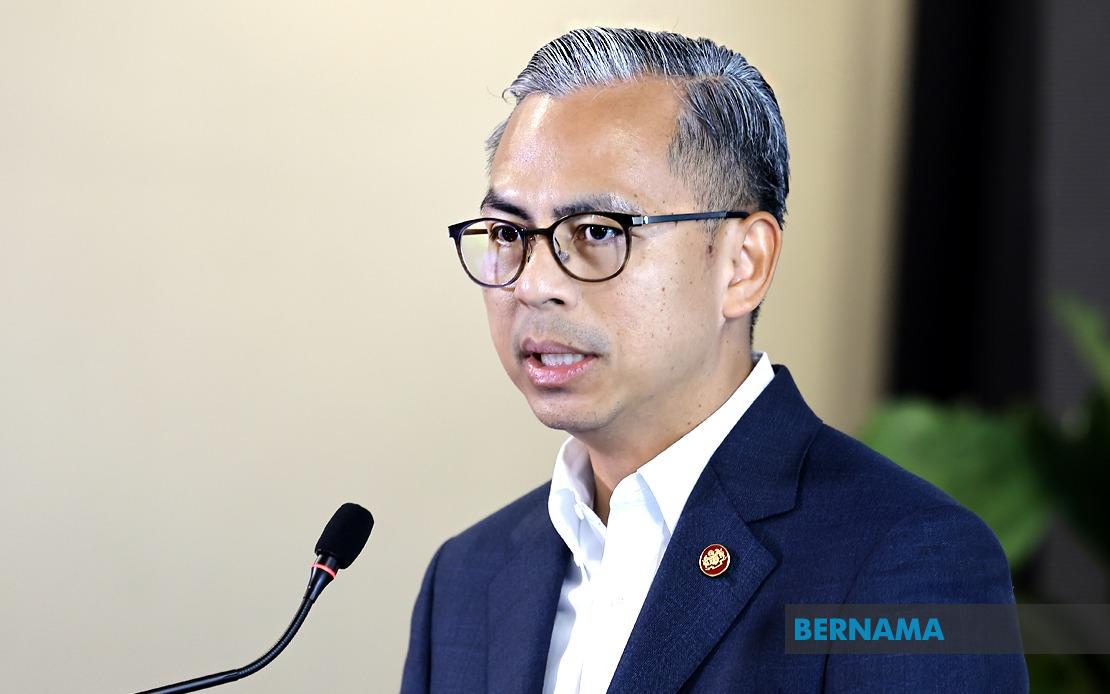
Communications Minister Datuk Fahmi Fadzil, who also serves as the Unity Government's official spokesperson, will receive the prestigious Darjah Panglima Pangkuan Negeri (DPPN) award in conjunction with celebrations of Penang Governor Tun Ramli Ngah Talib's 85th birthday. The distinction makes Fahmi the sole recipient of this particular honour, which carries the Datuk Seri title, an elevation recognising his contributions to both the federal government and national communications affairs.
Fahmi's conferment will headline a broader recognition exercise encompassing 1,221 recipients of state honours, awards and medals across multiple categories. The scale of this year's ceremony underscores Penang's commitment to acknowledging contributions from diverse sectors of society, from civil servants to business leaders and community volunteers. The investiture proceedings will unfold across four consecutive days beginning July 11, with ceremonies continuing through July 13, 14 and 15, allowing the state to properly honour each recipient.
Beyond Fahmi's singular elevation, a further 19 individuals will receive the Darjah Gemilang Pangkuan Negeri (DGPN), which also confers the Datuk Seri designation. This group includes Chief Judge of Malaya Datuk Seri Hashim Hamzah, whose recognition reflects the judiciary's central role in national governance, alongside MARA Incorporated Sdn Bhd chairman Datuk Abdul Halim Mohammad and Invest Penang chief executive officer Datuk Loo Lee Lian. The inclusion of business and investment sector representatives within this tier demonstrates how Penang honours contributions spanning both public administration and economic development.
The DGPN cohort extends to corporate figures including Pelita Samudra Pertama (M) Sdn Bhd managing director Tan Sri D. Murugan, Menara Rezeki Sdn Bhd managing director Datuk Saiful Nizam Mohd Yusoff and M Summit Group chairman Datuk Moh See Eng. These appointments signal official recognition of the private sector's role in driving regional economic progress and corporate governance standards. The diversity of industries represented—from maritime and real estate to manufacturing and commerce—reflects Penang's multifaceted economy and the state's desire to acknowledge leadership across different business domains.
A further nine individuals will be appointed to the Darjah Yang Mulia Pangkuan Negeri (DMPN), carrying the Datuk title, whilst 72 others advance to the Darjah Setia Pangkuan Negeri (DSPN) category. The DMPN tier includes former Penang police chief Datuk Azizee Ismail and UEM Group Bhd managing director Datuk Amran Hafiz Affifudin, acknowledging careers in law enforcement and infrastructure respectively. These appointments recognise individuals whose professional trajectories have materially shaped institutional performance and public safety within the state.
Among DSPN recipients are the late renowned film actor, director and scriptwriter associated with Cathay-Keris Film Productions, Nordin Ahmad, whose contribution to Malaysian cinema constitutes an intangible cultural asset transcending commercial metrics. Also honoured at this level is National Disaster Management Agency (NADMA) director-general Datuk Meor Ismail Meor Akim, whose portfolio encompasses emergency preparedness and response—particularly relevant given Southeast Asia's exposure to natural disasters and climate-related hazards. This inclusion highlights how state honours extend recognition to those managing existential risks to public welfare.
The DSPN roster additionally comprises Bank Rakyat chairman Datuk Mohd Irwan Mohd Mubarak, whose institution serves Malaysia's cooperative banking sector and grassroots financial inclusion, alongside Penang Development Corporation (PDC) CEO Abdul Latiff Abd Aziz. Adil Putra Ahmad, project director of SRS Projek Transit Aliran Ringan (LRT) Sdn Bhd, represents recognition of those constructing Penang's transportation infrastructure, whilst Mohamed Abdul Rahman, Deputy State Secretary (Development), exemplifies administrative continuity underpinning state operations. Together, these selections illustrate how honours reward both established expertise and emerging institutional leadership.
The broader ceremonial framework encompasses 92 additional recipients of the Darjah Johan Negeri, followed by progressively populated lower-order categories: 31 recipients of the Bintang Cemerlang Negeri, 194 recipients of the Pingat Kelakuan Terpuji, 328 recipients of the Pingat Jasa Kebaktian, 463 recipients of the Pingat Jasa Masyarakat and 12 recipients of the Pingat Bakti Setia. This cascading structure accommodates contributors across different experience levels and domains, ensuring recognition remains accessible to those whose impact, whilst significant, may not warrant higher-tier appointments.
According to Penang State Legislative Assembly Speaker and State Government Official Ceremonies Committee chairman Datuk Seri Law Choo Kiang, the four-day ceremony will formally recognise 101 individuals receiving state honours, whilst a separate cohort of 1,120 recipients will obtain awards and medals of merit. This bifurcation reflects a distinction between ceremonial honours—which typically denote prolonged, transformative contribution—and operational awards recognising specific achievements or sustained conduct. The breadth of representation spans state and federal civil service personnel, elected politicians, corporate executives, non-governmental organisation members, local entrepreneurs and volunteers, underscoring Penang's commitment to acknowledging contributions from every organisational stratum.
For Malaysian observers and Southeast Asian stakeholders, this recognition exercise illustrates how state honours function as instruments of legitimacy and institutional continuity. By publicly acknowledging contributions from law enforcement, judiciary, finance, infrastructure, cinema and disaster management, Penang affirms its commitment to holistic development and recognition across sectors often overlooked in purely economic narratives. The ceremony further signals to federal counterparts—exemplified by Fahmi's inclusion—Penang's capacity to honour national leaders whose policy domains affect the state's strategic positioning. This year's investiture thus operates simultaneously as celebration of past achievement and implicit statement of institutional priorities guiding future governance and public resource allocation.

