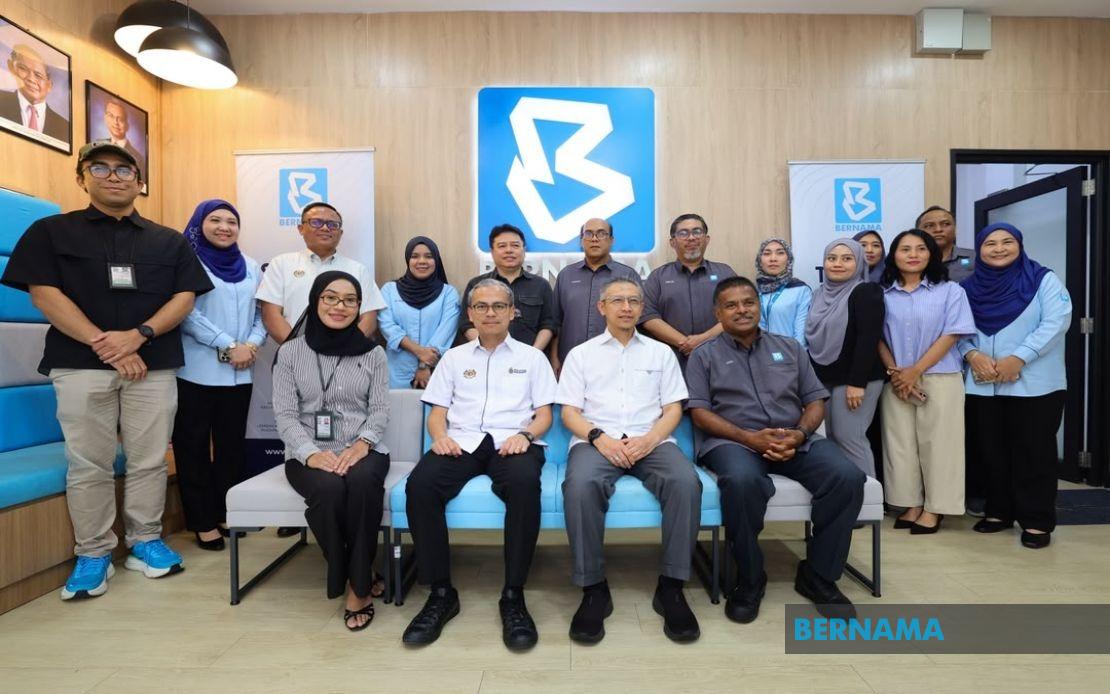
Communications Minister Datuk Seri Fahmi Fadzil made an unannounced inspection of the Malaysian National News Agency's Negeri Sembilan bureau on Monday afternoon, underscoring the government's focus on media operations during the critical election period. The visit, which commenced at 2.20 pm, reflected the ministry's broader interest in ensuring that citizens receive reliable information as the state prepares for a significant electoral contest. Fahmi was received by a senior delegation including Communications Ministry secretary-general Datuk Abdul Halim Hamzah and Bernama editor-in-chief Arul Rajoo Durar Raj, signalling the official nature of the engagement.
The Seremban facility serves as Bernama's central hub for coordinating news coverage across all developments related to the 16th Negeri Sembilan State Election, scheduled for the coming Saturday. As Malaysia's national news agency, Bernama holds particular responsibility during electoral cycles to maintain journalistic standards and deliver factual reporting to the public. The minister's presence at the operations room sends a clear message about the government's expectations regarding media conduct during sensitive political periods, when misinformation and unverified claims can spread rapidly through competing news channels and social media platforms.
During the tour, Fahmi examined the agency's Disaster Recovery Centre, which has been retrofitted to accommodate both traditional newsroom operations and modern broadcast facilities. The facility houses newsroom infrastructure, a dedicated studio for Bernama's television programming, and radio production capabilities, reflecting the multi-platform nature of contemporary news gathering and dissemination. These physical assets represent substantial investment in maintaining news infrastructure across Malaysian states, ensuring that even regional elections receive professional coverage rather than relying solely on national newsroom operations.
Fahmi was provided a comprehensive briefing by Negeri Sembilan polls coverage coordinating editor Mohd Hisham Abdul Rafar on the agency's editorial strategy and logistical arrangements for election reporting. The minister observed newsroom staff engaged in real-time news production, witnessing firsthand the workflow and decision-making processes that determine which stories receive prominence and how information flows to the public. This hands-on familiarisation allowed Fahmi to appreciate the operational pressures and technical requirements of maintaining continuous coverage across multiple news cycles during a contested electoral period.
The minister was also afforded the opportunity to interact with Bernama's editorial system, gaining practical insight into how stories are processed, verified, and distributed across the agency's various publication channels. Such direct engagement with institutional infrastructure demonstrates a governing party's investment in understanding how news organisations function operationally, though it may also raise questions in journalistic circles about the boundaries between political oversight and editorial independence. The visit reflects an ongoing tension in Malaysian media governance between political interest in accurate reporting and concerns about potential influence over editorial decisions.
Fahmi's remarks during the visit acknowledged Bernama's contributions to public information, specifically praising the conditions and preparedness evident at the Negeri Sembilan bureau. He expressed appreciation for the efforts of media personnel in ensuring that citizens receive timely and accurate information throughout the election period, reflecting the government's rhetorical commitment to transparent electoral processes. These statements align with broader Malaysian governance narratives that frame professional media coverage as essential to democratic functioning, even as actual media independence remains contested terrain politically.
The timing of this inspection reflects the heightened attention state elections receive from federal-level political actors. With polling day merely three days away at the time of Fahmi's visit, the state election represented a significant test of the Pakatan Harapan-led administration's political fortunes in one of Malaysia's traditionally competitive states. Media coverage during this period substantially influences voter perceptions and participation levels, making the operations room an important venue for federal officials to demonstrate engagement with information dissemination processes.
Negeri Sembilan presents a particularly complex electoral landscape, with 867,151 registered voters preparing to choose among 103 candidates contesting for 36 seats in the State Legislative Assembly. The state's political composition has historically reflected broader national trends while maintaining distinctive local dynamics, making its elections barometers of shifting political sentiment. Media organisations like Bernama face the challenge of covering competitive races in which multiple political coalitions contest vigorously while maintaining credibility with audiences across the political spectrum.
The scale of this electoral exercise underscores why news infrastructure matters practically and symbolically. Covering 36 separate races simultaneously across a geographically dispersed state requires coordination between multiple reporters, editors, and technical staff, all working under deadline pressure to deliver results and analysis to competing audiences. Bernama's operations centre must synthesise information from polling stations, candidate campaigns, and political party headquarters while producing content suitable for different platforms and audience demographics.
Fahmi's engagement with the newsroom staff and editorial systems reflects the Communications Ministry's broader portfolio responsibilities during elections. Beyond overseeing Bernama directly, the ministry holds responsibility for regulating broadcast media conduct, managing government information services, and ensuring that election-related communications comply with statutory requirements. The minister's presence at the operational level demonstrates ministerial interest in the practical execution of these responsibilities rather than merely setting policy from federal headquarters.
The visit also highlighted the infrastructure investments that enable Malaysia's national news agency to maintain operations across all states simultaneously. The Disaster Recovery Centre concept ensures that critical newsroom functions can continue even during technical disruptions, reflecting lessons learned from previous technical crises that disrupted news services. Such resilience measures have become increasingly important as news operations become more technology-dependent and as news consumption patterns shift toward continuous online updates rather than scheduled broadcast times.
Looking ahead, the Negeri Sembilan election results will partly reflect how effectively Bernama and other media outlets conveyed campaign messages and candidate positions to voters. The agency's coverage during this critical period will establish institutional credibility judgments that influence its standing throughout the remainder of the electoral cycle. Fahmi's ministerial blessing, implicit in his positive remarks about facility conditions, suggests political confidence in Bernama's capacity to deliver coverage meeting government expectations for professionalism and accuracy.

