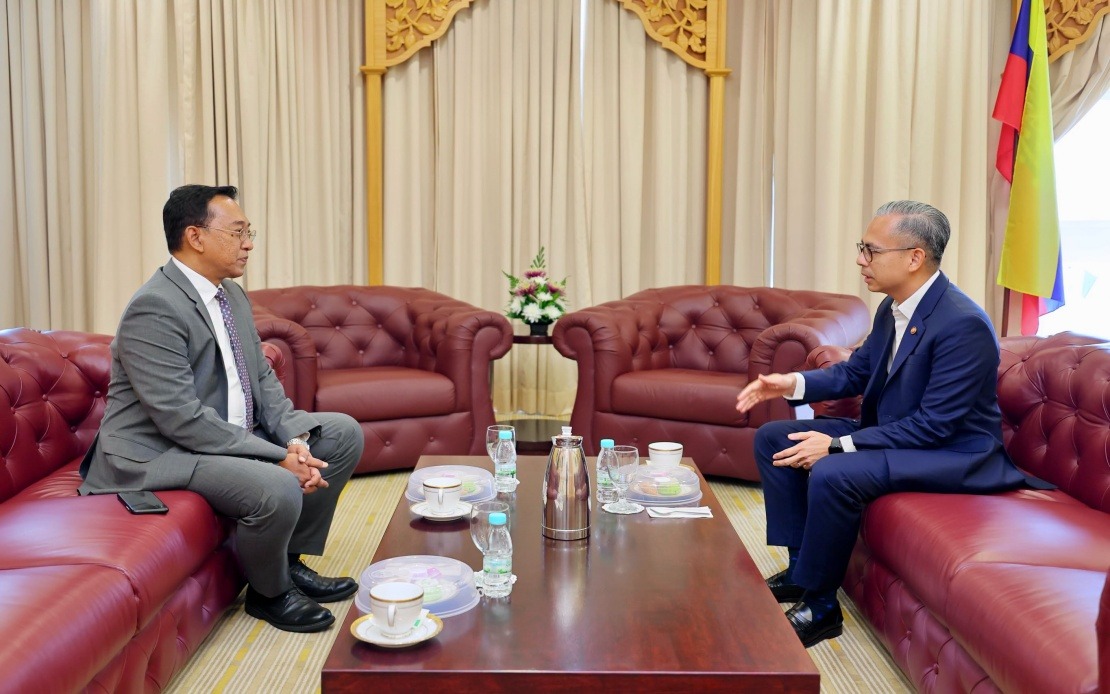
Malaysia's Communications Minister Datuk Fahmi Fadzil has welcomed Anwar Udzir, the nation's newly appointed Ambassador to Lebanon, in a courtesy call aimed at reinforcing institutional cooperation and reviewing matters of mutual diplomatic concern. The meeting underscores the ministry's ongoing commitment to coordinating with Malaysian missions abroad on issues affecting the country's international standing and regional interests.
Anwar Udzir officially received his letter of appointment as Malaysia's Ambassador to Lebanon directly from His Majesty Sultan Ibrahim, King of Malaysia, on May 18, 2026. The formal presentation of credentials marks a significant milestone in Udzir's diplomatic career and represents Malaysia's continued commitment to strengthening its presence in the Levantine region. His appointment comes at a time when Malaysia maintains important political, economic, and cultural engagement throughout the Middle East.
Fahmi, sharing details of the engagement on social media, emphasised that the discussion served as an important opportunity to deepen institutional ties and facilitate the exchange of perspectives on emerging global developments with implications for Malaysia. Such courtesy calls between government ministers and newly posted ambassadors form a standard part of Malaysia's diplomatic protocol, allowing senior leadership to convey national priorities and expectations to representatives operating in crucial foreign postings.
The Communications Minister expressed his optimism regarding Udzir's tenure, offering best wishes for his success in the demanding role of representing Malaysian interests in Lebanon. Fahmi's public acknowledgement of the appointment signals the government's confidence in the ambassador's capability to navigate the complexities of Lebanon's political landscape while advancing Malaysia's diplomatic agenda in the country.
Fahmi and Udzir's professional relationship predates this recent encounter. The minister noted that his previous acquaintance with the ambassador stems from collaborative efforts organising the Asia-Pacific Telecommunity Ministerial Meeting, which took place in Tokyo, Japan, during the preceding year. That earlier engagement provided both officials with practical experience working together on matters of international technological cooperation and regional telecommunications policy, laying groundwork for a productive working relationship at the ministerial level.
Lebanon represents a strategically important posting for Malaysian diplomacy in the Middle East, given the country's historical, cultural, and religious significance to the broader Muslim-majority world. Malaysia's diplomatic mission in Beirut serves not only to manage bilateral relations with the Lebanese government but also to represent Malaysian interests across a complex geopolitical region where multiple regional and international powers maintain significant influence.
The timing of this courtesy call, occurring shortly after Udzir's formal appointment, reflects standard diplomatic practice whereby incoming ambassadors establish rapport with relevant ministry officials before departing for their postings. Such meetings allow ambassadors to receive guidance on current policy priorities and to ensure alignment between the ministry and the mission regarding Malaysia's international objectives.
Communications matters increasingly feature in diplomatic exchanges, given the critical role that digital infrastructure, broadcasting standards, and information governance play in modern international relations. The Communications Ministry's direct engagement with ambassadors suggests that Fahmi and his team view technological and communications cooperation as integral to Malaysia's broader diplomatic strategy across different regions.
Anwar Udzir's appointment reflects Malaysia's broader approach to staffing its diplomatic network with experienced professionals capable of managing complex bilateral relationships and contributing to Malaysia's standing within regional forums. The careful selection and deployment of ambassadors to key posts demonstrates the government's strategic thinking regarding where to concentrate diplomatic resources and attention.
For Malaysian readers and observers of foreign policy, this ministerial engagement illustrates how Malaysia's government structure ensures coordination between domestic administrative functions and overseas diplomatic operations. The Communications Ministry's involvement highlights the integrated nature of contemporary foreign relations, where traditional political concerns intersect with telecommunications policy, digital governance, and information management.
The courtesy call also reinforces Malaysia's commitment to maintaining active diplomatic presence throughout the Middle East and beyond. By publicly acknowledging ambassadorial appointments and meeting with newly posted representatives, the government demonstrates the importance it attaches to overseas missions and the individuals tasked with advancing national interests abroad.

