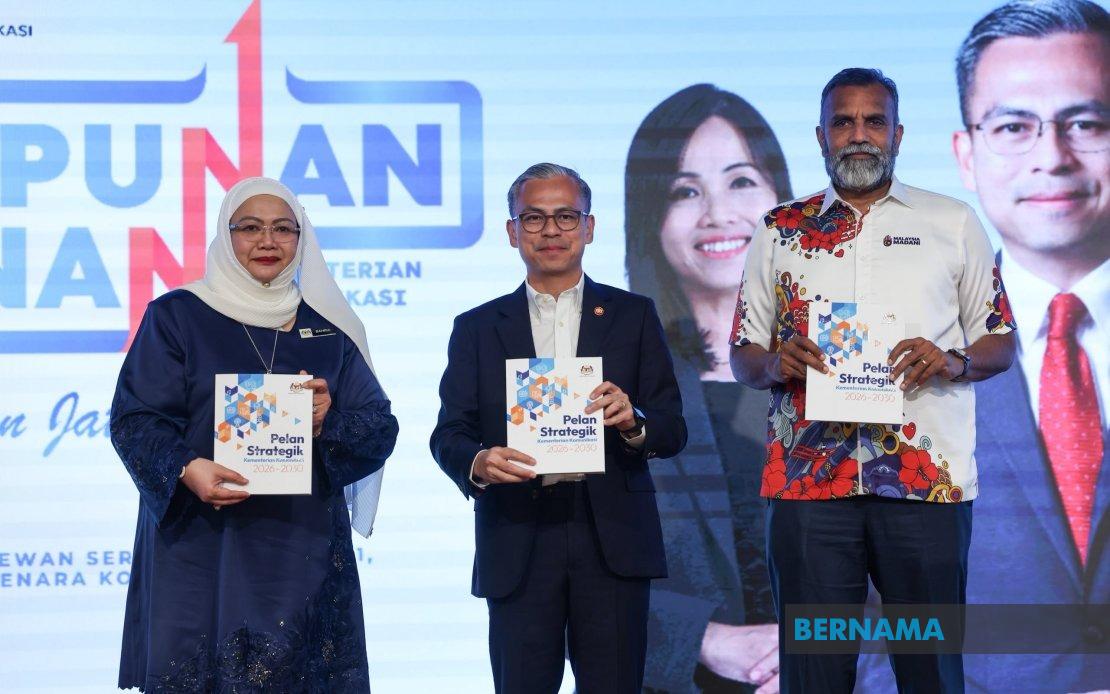
Datuk Seri Fahmi Fadzil, the Communications Minister, has unveiled an ambitious five-year strategic roadmap designed to reshape Malaysia's digital and creative landscape. Launched at the ministry's headquarters in Putrajaya on July 20, the Communications Ministry Strategic Plan (PSKK) 2026-2030 establishes a comprehensive framework aligning government communications policy with the objectives of both the 13th Malaysia Plan and the overarching Malaysia MADANI development agenda. The plan represents an effort to consolidate disparate initiatives under the ministry's jurisdiction into a cohesive vision, addressing persistent public concerns about connectivity, media quality, and information integrity.
At its core, the strategic plan identifies three pillars that will guide the ministry's work over the coming five years: expanding and improving internet access across Malaysia, nurturing the production of high-quality creative content, and combating misinformation through the promotion of accurate and trustworthy information. These priorities emerge from feedback collected from citizens and stakeholders regarding the most pressing challenges facing Malaysia's communications ecosystem. Rather than presenting abstract goals, the minister framed these priorities as direct responses to issues regularly brought before the ministry and its subordinate agencies, suggesting the plan builds on accumulated public consultation and institutional knowledge.
The strategic vision articulated within the plan—a "Connected, Informed and Creative Malaysia"—serves as the overarching aspiration guiding 94 distinct strategic programmes organised across four major thrusts. This proliferation of initiatives reflects the breadth of the communications portfolio, which encompasses digital infrastructure, broadcast media regulation, creative industry development, and government information services. The sheer number of programmes indicates that implementation will require sustained coordination across multiple agencies and departments, from the Malaysian Communications and Multimedia Authority to the Ministry's own internal divisions.
The first strategic thrust focuses on building a robust national communications infrastructure capable of delivering connectivity that is both inclusive and secure. This pillar directly addresses one of Malaysia's persistent development challenges: ensuring that digital access extends to rural and underserved urban areas, not merely to affluent metropolitan zones. Given Southeast Asia's rapid digital transformation and the critical importance of broadband access to economic participation, educational opportunity, and social services delivery, this emphasis on universal connectivity carries particular significance for Malaysian policymakers. The inclusion of security as a design principle acknowledges growing concerns about cyber threats and data protection in an increasingly networked society.
The second strategic thrust centres on enhancing the global competitiveness of Malaysia's film and music industries. This reflects recognition that creative content represents both a cultural asset and an economic opportunity in the digital age. As streaming platforms and social media reshape global media consumption, countries that can develop distinctive, high-quality creative offerings gain competitive advantages in attracting investment, talent, and international audiences. For Malaysia, which has produced successful films and musicians with regional reach, this thrust represents an opportunity to systematise support for the creative sector and position it as a genuine pillar of the knowledge economy.
Transforming integrated information delivery constitutes the third strategic thrust, addressing government communications and media governance. This pillar encompasses both the modernisation of how government agencies communicate with citizens and the regulation of the information environment more broadly. In a context where misinformation and disinformation pose genuine threats to public discourse and democratic processes, the ministry's focus on ensuring information flows are authentic, inclusive, and accessible reflects contemporary governance challenges. The emphasis on integration suggests efforts to break down silos between different government communicators and create more coherent, citizen-facing information systems.
The fourth strategic thrust targets service delivery reform, positioning the ministry and its agencies as customer-oriented institutions responsive to government priorities. This reflects broader public sector modernisation efforts across Malaysia and signals the ministry's commitment to efficiency and accessibility in its regulatory and administrative functions. Such internal reforms often precede visible improvements in policy outcomes, as streamlined processes and better-trained personnel are prerequisites for effective implementation of larger strategic goals.
The Communications Ministry's strategic plan operates within a broader context of digital transformation affecting Southeast Asia. Malaysia's position as a regional economic leader creates both expectations and responsibilities regarding technological progress. Neighbouring countries including Singapore and Thailand have pursued aggressive digital economy strategies, and Malaysia must maintain competitive momentum to avoid falling behind in critical infrastructure development and creative industry capacity. The strategic plan implicitly acknowledges this regional competition by emphasizing competitiveness and sustainability as key values.
Implementation success will hinge on several factors beyond plan formulation. Adequate resource allocation, sustained political support across electoral cycles, effective interagency coordination, and genuine responsiveness to monitoring and evaluation will determine whether the 94 strategic programmes translate into tangible improvements in connectivity, content quality, and information integrity. The minister's assertion that programmes are already being implemented in accordance with the plan's priorities suggests that the strategic document formalises existing efforts rather than representing a dramatic new departure, though this approach may enhance consistency and strategic coherence.
For Malaysian citizens and businesses, the strategic plan's success matters considerably. Improved internet infrastructure could accelerate digital commerce, remote work, and access to online services, particularly benefiting those in under-connected regions. A thriving creative industry could generate employment and export revenues while enhancing Malaysia's cultural soft power regionally and globally. More reliable information ecosystems could strengthen public discourse and democratic participation. However, realising these benefits will require not only clear strategic direction but also effective execution, adequate funding, and adaptation as technological and social conditions evolve over the five-year implementation period.

