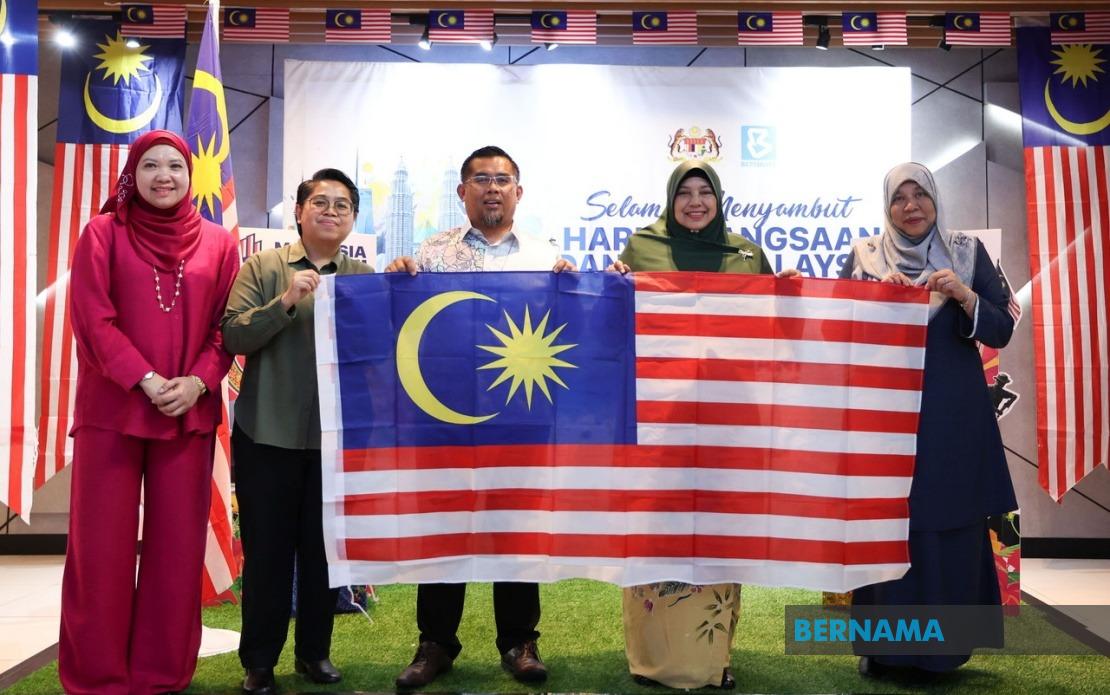
Malaysia's 2026 National Day and Malaysia Day (HKHM) celebrations will be significantly expanded beyond the capital, with the Communications Ministry introducing a comprehensive package of 16 supplementary programmes designed to deepen patriotic sentiment and reinforce national cohesion among citizens from all backgrounds. The initiative marks a strategic shift in how the government approaches independence commemoration, moving away from a Putrajaya-centric model to embrace broader community participation across the nation.
According to Harun Ali, secretary of the Communications Ministry's Management Services Division, the expanded programme slate encompasses the Kembara Merdeka Jalur Gemilang expedition, a National Month Decoration Competition, Ekspresi Merdeka activities, and the Kita MADANI Carnival, alongside numerous grassroots cultural and community-focused initiatives. This diversification reflects deliberate planning to ensure that celebrations resonate with Malaysians regardless of their location, profession, or demographic profile, thereby democratising access to national commemorative events that have traditionally been concentrated in federal territories.
A defining characteristic of the 2026 calendar involves relocating the primary Merdeka Eve Celebration to Stadium Merdeka, a venue laden with historical significance given its role as the birthplace of Malaysian independence in 1957. By returning celebrations to this iconic location, organisers seek to reinforce the continuity of Malaysia's independence narrative while creating a physically and symbolically appropriate setting for nationwide observances. This decision carries particular resonance for Malaysians who recognise Stadium Merdeka as the tangible embodiment of national sovereignty and democratic transition.
The highlight of the Merdeka Eve proceedings will feature Prime Minister Datuk Seri Anwar Ibrahim delivering a special Merdeka Address, an oratorical moment intended to crystallise the emotional and ideological dimensions of independence and encourage citizens to reflect upon collective national purpose as the clock approaches midnight. Such addresses serve multiple functions within Malaysia's political calendar, simultaneously commemorating historical achievement, rallying contemporary political support, and articulating governmental vision for the national trajectory during the year ahead.
Among the most innovative attractions being introduced is "Melukis Senja" (Painting the Dusk), an aerial spectacular executed by Aero 3 featuring aerobatic demonstrations that generate dramatic smoke trails interspersed with pyrotechnic displays across Putrajaya's skyline. This theatrical element introduces a contemporary, visually compelling dimension to traditional independence observances, appealing particularly to younger demographics and urban populations who may otherwise maintain limited engagement with nationalist ceremonies. The deployment of cutting-edge aerial performance techniques signals governmental efforts to modernise celebration formats without abandoning their fundamental patriotic messaging.
Harun Ali emphasised that these multifaceted programmes represent governmental commitment to ensuring that HKHM 2026 celebrations permeate society horizontally across demographic segments rather than vertically through bureaucratic channels. By embedding patriotic messaging within community carnivals, decoration competitions, and cultural activities, the ministry seeks to normalise and naturalise expressions of national pride within everyday Malaysian life, transforming independence commemoration from an annual administrative exercise into a sustained cultural phenomenon.
A crucial rhetorical dimension of the ministry's positioning involves repeatedly emphasising the sacrificial cost through which contemporary Malaysians inherited their independence. Harun articulated this explicitly, stressing that national sovereignty was neither inexpensively procured nor effortlessly achieved, thereby positioning the 16 programmes as opportunities for citizens to reflect upon and reciprocate the historical investments made by earlier generations. This framing attempts to cultivate what might be termed "gratitude patriotism," wherein citizens understand their national loyalty as a response to inherited benefits rather than purely abstract ideological commitment.
The Communications Ministry has accordingly issued a direct appeal to all Malaysians to manifest their patriotic sentiment through visible display of the Jalur Gemilang flag throughout the national month, characterising such actions as expressions of both pride and gratitude for membership within the Malaysian national community. This emphasis on physical flag display transforms an accessible, low-cost symbolic gesture into a mass behavioural outcome that simultaneously democratises patriotic expression while creating visible landscapes of national sentiment throughout urban and rural areas.
For Malaysian readers and Southeast Asian observers, these 2026 arrangements reveal evolving governmental strategies for managing national identity during periods of political transition and social flux. The deliberate decentralisation of celebrations away from Putrajaya suggests recognition that inclusive, geographically distributed commemorations may generate stronger legitimacy and broader social investment than centralised spectacles. Furthermore, the integration of contemporary entertainment formats such as aerial displays alongside traditional community activities indicates adaptation to demographic shifts and changing preferences regarding how modern Malaysians wish to experience and express national belonging.
The scheduling also reflects broader regional patterns whereby Southeast Asian nations increasingly employ national commemorative occasions as opportunities for political narrative-building and social cohesion during complex governance periods. By positioning 2026 celebrations as government-sponsored mechanisms for fostering unity across Malaysia's diverse communities, the ministry implicitly acknowledges contemporary tensions around national identity, religious pluralism, and socioeconomic inequality, positioning patriotic sentiment as a unifying force transcending these divisions.
Logistical coordination of 16 simultaneous programmes across geographically dispersed locations will demand substantial governmental resources and inter-agency cooperation, requiring communications infrastructure capable of simultaneously promoting diverse activities while maintaining thematic coherence around core independence narratives. Success in executing this expanded vision will significantly influence how Malaysians experience and internalise their relationship with national independence during the 2026 commemoration period.

