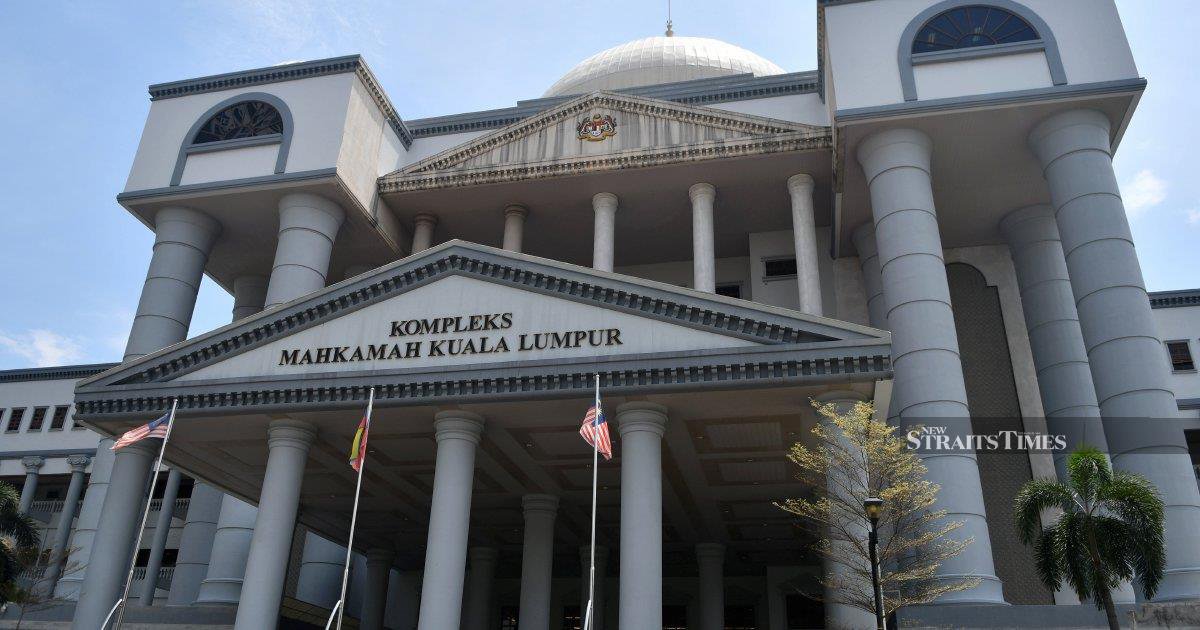
A company director gave candid testimony in the High Court today, declaring he would never have voluntarily donated even RM100 to Bersatu, the Malay-Muslim coalition party founded by former Prime Minister Mahathir Mohamad. His stark admission came during cross-examination in a case centring on a substantial RM19.5 million financial contribution allegedly made in connection with the Jana Wibawa project, a development initiative that has drawn considerable scrutiny from both legal authorities and the public.
The witness's statement carries significant weight in establishing whether the contribution was made freely or under duress from influential business circles with ties to the political establishment. By insisting he would not have parted with such funds absent external pressure, the director effectively positioned himself as a reluctant participant in a transaction that appears to blur the lines between business dealings and political patronage. His testimony underscores the extent to which corporate contributions to political parties in Malaysia may involve coercion or undue influence rather than genuine ideological support or voluntary sponsorship.
The Jana Wibawa project, which translates roughly to "powerful establishment" or "credible authority," has become emblematic of questions surrounding political financing and the mechanisms through which substantial corporate funds flow into party coffers. In Malaysia's political economy, such projects often function as vehicles for wealth redistribution between business elites and political entities, raising persistent concerns about transparency, accountability, and the potential for corruption. The High Court proceedings reveal how individual businesspeople may find themselves ensnared in arrangements they would otherwise avoid, particularly when approached by well-connected intermediaries with demonstrated leverage within political circles.
The involvement of what the court records describe as a "politically connected businessman" as the intermediary who solicited the RM19.5 million donation adds another layer of complexity to the proceedings. Such figures typically occupy crucial positions within Malaysia's business-politics nexus, wielding influence by virtue of their relationships with senior party officials and government representatives. Their capacity to approach corporate directors and request massive financial commitments implies an understanding that refusal carries potential consequences, whether direct or indirect, for business interests. The director's testimony suggests he interpreted the approach precisely in this manner, viewing the request not as a negotiation but as an expectation backed by informal sanctions.
The RM19.5 million sum itself merits examination, particularly regarding its magnitude relative to typical corporate charitable giving or political sponsorships in Malaysia. Such contributions represent extraordinary outlays that would typically require board approval, shareholder consent, or explicit business justification to stakeholders. The fact that a director felt compelled to make such a substantial commitment without genuine enthusiasm raises questions about governance standards at his company and the extent to which corporate resources may be diverted toward political objectives through mechanisms that bypass normal oversight. These dynamics have long concerned corporate governance advocates and regulatory bodies throughout Southeast Asia.
Bersatu's emergence and subsequent trajectory within Malaysian politics provides essential context for understanding the significance of this case. Founded by Mahathir after his departure from UMNO, the party initially positioned itself as a reformist alternative but has become entangled in numerous controversies regarding its financing, internal governance, and political alliances. Contributions to Bersatu have frequently generated debate because the party's leadership and associated figures have faced multiple accusations of financial impropriety. Donations to the party therefore carry implications beyond mere political support, reflecting broader questions about the health of Malaysian democratic institutions and the adequacy of existing regulations governing political financing.
Current Malaysian law establishes limited transparency requirements for political party donations above certain thresholds, yet enforcement remains inconsistent and loopholes remain abundant. The contributions contemplated in this case far exceed typical disclosure thresholds, yet the mechanisms by which they were solicited and transferred apparently operated in grey areas where regulations either fail to apply or receive inadequate enforcement. The High Court proceedings may ultimately influence how regulatory authorities interpret their mandates regarding corporate political contributions, potentially establishing precedents that affect future fundraising practices across Malaysian political parties.
The director's reluctance to contribute voluntarily, if accepted by the court, would establish an important precedent regarding the voluntariness of large political donations in Malaysia. Should the judge conclude that the contribution was made under duress or undue influence rather than freely, it could open pathways for legal challenges to other similarly questionable donations. This outcome would potentially expose the murky mechanisms through which Malaysian corporate entities have historically channelled resources toward political parties, forcing greater scrutiny of relationship networks between business leadership and political establishments that have operated with substantial opaqueness.
For Malaysian corporate governance standards and the broader integrity of the business environment, this case carries implications extending beyond its immediate parties. If large corporations routinely face informal pressure to make unwanted political contributions, their operational independence becomes compromised, and resources that should support shareholder returns or business expansion instead flow toward political objectives. The testimony being heard in the High Court therefore touches fundamental questions about business autonomy, political financing ethics, and the separation between commercial and political spheres that remains imperfectly developed throughout Malaysia and the broader Southeast Asian region.
The proceedings also invite reflection on how Malaysian society has permitted such arrangements to persist and become normalized within elite circles. The apparent ease with which politically connected businesspeople can approach corporate directors to request multi-million-ringgit donations suggests inadequate internal corporate resistance mechanisms and insufficient external regulatory oversight. As Malaysia continues navigating its democratic development and seeking to improve governance standards, the outcomes of this case and others like it will increasingly shape expectations regarding political financing transparency and the legitimate boundaries separating business from political activity.

