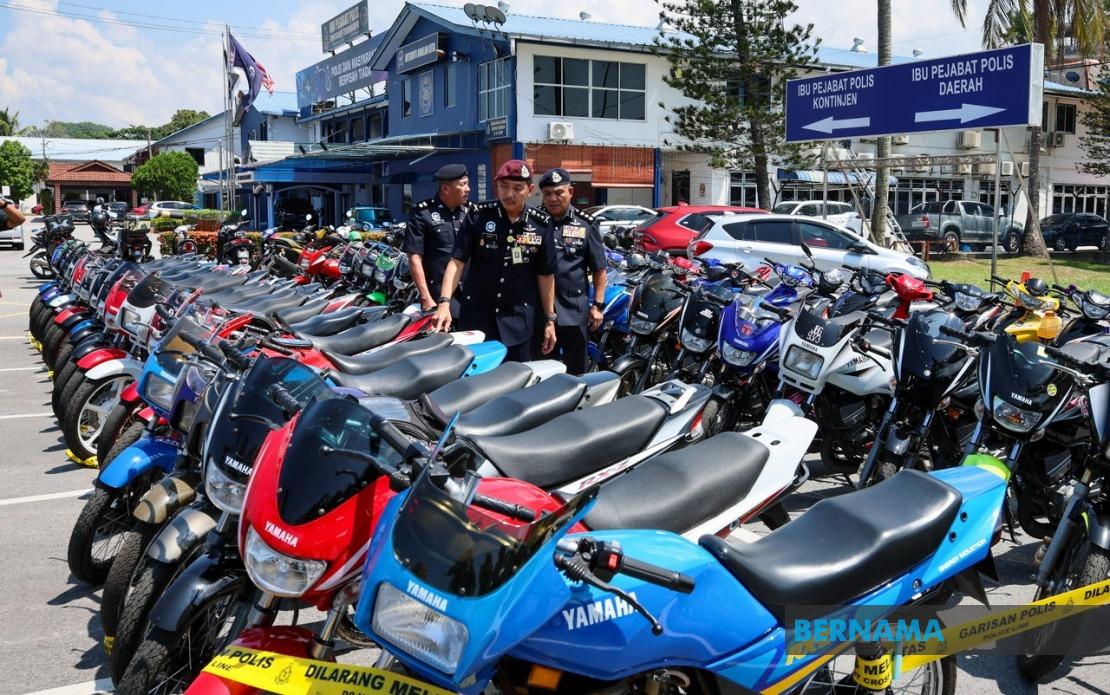
Road safety experts are sounding alarm bells over the escalating death toll at Malaysia's largest motorcycle gathering, with a former researcher from the Malaysian Institute of Road Safety Research calling for immediate implementation of a comprehensive safety framework. Shahrim Tamrin, who previously served on MIROS's board, has made the appeal following this year's RXZ Members 8.0 event, which drew over 200,000 participants to Gong Badak Motor Racing Circuit in Kuala Nerus and resulted in 46 road accidents in just four days.
The statistics paint a troubling picture that extends well beyond a single incident. The trajectory of fatalities associated with the gathering reveals a dangerous pattern: two deaths in 2024, five in 2025, and eleven in 2026. This consistent year-on-year increase suggests systemic vulnerabilities in how the event is currently managed, rather than isolated tragedies that can be dismissed as inevitable consequences of large gatherings. What makes this trend particularly concerning is that the RXZ Members programme, which began in 2017, has evolved into an institution commanding hundreds of thousands of participants from across Malaysia, yet safety protocols appear to have failed to scale accordingly with participation growth.
According to Bukit Aman's Traffic Investigation and Enforcement Department director Datuk Seri Muhammed Hasbullah Ali, the four-day period from July 30 onwards witnessed not only fatal accidents but a distribution of severity that underscores systemic risk exposure. Of the 46 recorded incidents, eleven were fatal, representing nearly a quarter of all accidents, while five qualified as serious and thirty as minor. This concentration of fatalities relative to total accident numbers suggests that when crashes do occur at these gatherings, they tend to be catastrophic, pointing to factors such as excessive speeds, poor road conditions during the event, or inadequate emergency response capabilities at critical junctures.
Tamrin's proposed framework addresses multiple dimensions of event risk management that conventional traffic enforcement alone cannot handle. He advocates for participant projections that allow organisers to anticipate bottlenecks and congestion points, systematic planning of entry and exit routes to distribute traffic flow, designated rest areas to combat rider fatigue, strategically positioned ambulance deployment points to minimise response times, and a dedicated emergency operations centre to coordinate real-time response. Additionally, he emphasises the necessity of comprehensive pre-event risk assessment and a robust communications strategy to disseminate safety information to participants before and during the gathering.
The scale of the RXZ Members programme introduces complexities that standard road policing cannot adequately address. With over 200,000 participants converging on a single location over several days, the event effectively creates a temporary mobile city of motorcycle enthusiasts. This concentration generates unprecedented demand on emergency services, road infrastructure, and traffic management capacity. The sheer volume of vehicles, many operated by riders of varying skill levels and experience, creates compounding hazards that demand engineering solutions rather than reactive enforcement approaches alone.
Tamrin also advocates for a rigorous post-event safety audit mechanism that would examine accident locations, temporal patterns, contributing causes, rider demographics, and mechanical factors related to the motorcycles involved. Critically, he insists that audit findings should be published before the subsequent edition of the event, enabling evidence-based improvements rather than perpetuating practices based on assumptions or reactive policy adjustments following fatalities. This feedback loop is essential for identifying whether deaths cluster around particular routes, times of day, or specific mechanical failures that could be addressed prospectively.
A parallel concern raised involves enforcement of environmental standards during the event. Local residents have lodged complaints regarding excessive noise and smoke emissions, indicating that exhaust modifications and maintenance standards among participating motorcycles warrant regulatory attention. The Yamaha RXZ motorcycles that form the core of these gatherings are typically between 20 and 35 years old, with some having undergone restoration or modification that may affect both performance characteristics and environmental compliance. Rather than blanketly restricting older motorcycles, Tamrin recommends the Road Transport Department facilitate re-registration of roadworthy machines following Computerised Vehicle Inspection Centre assessments, provided safety-critical modifications are either reversed or rejected.
The registration and insurance status of aging motorcycle fleet presents another overlooked safety dimension. Many RXZ motorcycles may operate with incomplete ownership documentation after multiple ownership transfers, and some may lack valid road tax or insurance coverage. This administrative vulnerability not only creates enforcement complications but suggests riders may be under-resourced for emergency expenses should accidents occur. Streamlining re-registration pathways while maintaining rigorous safety standards could improve compliance without discouraging participation among riders maintaining genuinely roadworthy machines.
Tamrin has additionally recommended that police and the Road Transport Department collaborate with RXZ clubs and programme organisers to conduct comprehensive marshal and group leader training focused on safe convoy operation. Large motorcycle groups require coordinated movement practices that differ substantially from ordinary road traffic patterns. Leaders and marshals who understand convoy discipline, pacing management, and emergency communication protocols can significantly reduce risky riding behaviours that emerge within group dynamics.
Another practical recommendation involves implementing travel advisory systems modelled on approaches used by highway concessionaires during festive migration periods. Such advisories would communicate peak travel times, suggest alternative routes to avoid congestion-related accidents, and identify safe rest stops where riders can address fatigue. These information-sharing mechanisms leverage technology and communication to influence participant decisions without imposing restrictions on event participation.
The underlying issue illuminated by this case reflects a broader Malaysian governance challenge: accommodating increasingly large spontaneous or semi-organised public gatherings without compromising participant safety. As motorcycle culture and enthusiast events attract ever-larger followings, responding with either prohibition or unmodified status quo approaches represents a false choice. Sophisticated event risk management, applied collaboratively across government agencies, organisers, and community leaders, offers a pathway forward that respects participation rights while protecting lives. The RXZ Members programme's trajectory will test whether Malaysian authorities can implement evidence-based, comprehensive safety frameworks for large-scale gatherings before preventable deaths become normalised.

