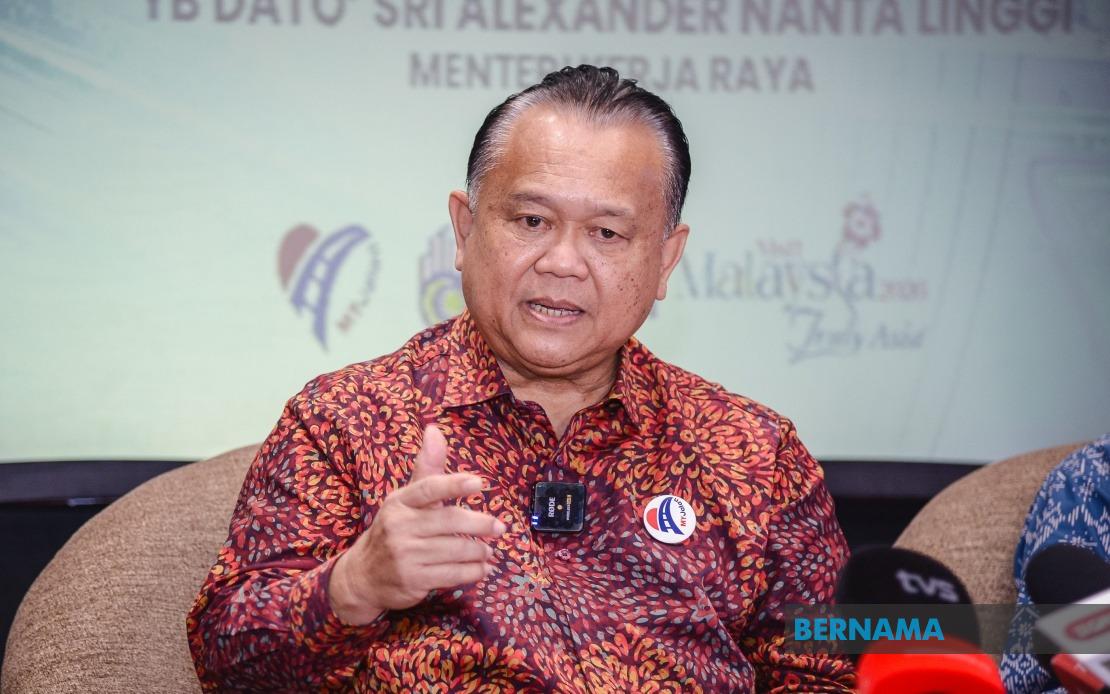
The Works Ministry (KKR) is incorporating extensive feedback from Malaysia's construction sector into Budget 2027 deliberations, having received 30 formal strategic wishlists from industry participants. Minister Datuk Seri Alexander Nanta Linggi unveiled this collection during an industry dialogue in Putrajaya, signalling the government's intention to approach infrastructure planning through genuine stakeholder consultation. The submission represents a narrower slice of a broader feedback exercise, as the ministry has accumulated 117 total proposals on budget and sector matters, with 87 originating directly from construction industry representatives.
The construction sector's recommendations converge on several substantive concerns that extend beyond traditional infrastructure spending. Industry feedback repeatedly emphasised the need for strengthened governance mechanisms and improved contract management practices, reflecting ongoing frustrations with administrative delays and clarity in project execution. Alongside governance improvements, industry players flagged the persistent challenges of workforce development and skills gaps as critical constraints on sector growth. Additionally, the feedback highlighted operational pressures including material costs, logistics expenses, and financing challenges that compress margins for firms of all sizes.
Minister Nanta articulated five transformation priorities that the ministry intends to pursue within the Budget 2027 framework. These priorities encompass comprehensive road network strengthening and delivery of high-impact infrastructure projects that address immediate connectivity and economic needs. Parallel to physical infrastructure, the ministry has identified sustainable development aligned with Malaysia's energy transition obligations as essential, reflecting both environmental imperatives and long-term economic positioning. The remaining three pillars address digitalisation through Building Information Modelling, Internet of Things integration, and artificial intelligence applications; empowerment of local small and medium contractors classified under the G1 to G4 tier; and systematic road safety enhancement through the MYJalan initiative.
A fundamental strategic reorientation emerges from the ministry's stated commitment to measuring success through impact generated per ringgit spent rather than purely through expenditure volume. This approach signals frustration with traditional infrastructure metrics and reflects growing international best practice around productivity-focused public investment. Nanta explicitly called for the construction industry to elevate competition beyond price-based factors toward productivity, technological sophistication, quality standards, and demonstrated value creation. This reframing aims to enable Malaysian firms to compete internationally on innovation and capability rather than cost alone, ultimately positioning local companies to ascend the global value chain.
The ministry's emphasis on building information modelling and Industry 4.0 technologies reflects recognition that Malaysia's construction sector cannot maintain international competitiveness without embracing digital transformation. Green technology adoption and industrialised building systems represent complementary modernisation pathways that can simultaneously improve sustainability metrics and construction efficiency. For Malaysian firms, these technological investments carry dual implications: they promise enhanced project delivery but also require substantial capital outlay and skills development that disproportionately burden smaller contractors.
A significant concern threading through industry feedback involves the unequal starting positions of different contractor categories. Minister Nanta acknowledged this explicitly, noting that not all contractors and consulting firms operate from equivalent foundations. His observation reflects the sector's tiered structure, where larger firms can absorb technological transition costs while smaller G1 to G4 contractors face existential challenges in modernising operations. The ministry's identification of support mechanisms for small contractors, consulting firms, and workers suggests recognition that inclusive sector development requires targeted intervention rather than market-driven solutions alone.
Industry representations also emphasised the necessity for faster environmental, social, and governance practice adoption, indicating that sustainability expectations now form baseline competitive requirements rather than optional differentiators. Simultaneously, players advocated for greater utilisation of local materials, which would support domestic supply chains while potentially reducing logistics costs and project timelines. These seemingly modest preferences carry significant implications for Malaysian resource extraction, manufacturing, and local employment.
The operational pressures highlighted in industry feedback—cash flow constraints, skills deficits, technology access barriers, approval delays, utilities availability, and road maintenance quality—collectively reveal chronic structural issues that persist despite previous policy interventions. These challenges particularly affect smaller operators, where limited reserves and financial flexibility provide little buffer against payment delays or cost fluctuations. The ministry's acknowledgment of these pressures suggests Budget 2027 may address systematic friction points rather than pursuing grand infrastructure announcements.
Minister Nanta explicitly rejected the premise that constrained budgets necessitate reduced development ambitions, instead framing budgetary limits as catalysts for creative priority-setting and innovative financing approaches. This rhetorical stance carries particular weight given Malaysia's debt trajectory and fiscal pressures. The challenge becomes identifying infrastructure projects delivering outsized developmental impact while operating within disciplined financial frameworks. For Malaysia and Southeast Asia broadly, this approach mirrors international trends toward outcome-focused public investment and private-sector partnerships.
The ministry's reception of detailed industry feedback demonstrates institutional openness to consultation, though translating recommendations into budget allocations involves countless trade-offs and competing priorities. The October 9 tabling of Budget 2027 in the Dewan Rakyat will reveal whether the ministry's five stated transformation priorities and the received wishlists translate into measurable budget commitments. Meanwhile, the KKR's RM10.692 billion allocation under Budget 2026, representing 3.3 percent growth, provides context for discussions around expansion or reallocation for 2027.
For Malaysian stakeholders, the budget dialogue process indicates that construction sector concerns occupy genuine priority space within government planning. However, the gap between acknowledging problems and implementing solutions remains substantial. Small contractors particularly face uncertainty regarding whether proposed support mechanisms will materialise and whether technological transition support will prove adequate. The coming months will clarify whether Budget 2027 represents incremental adjustments or structural reorientation toward sector transformation.

