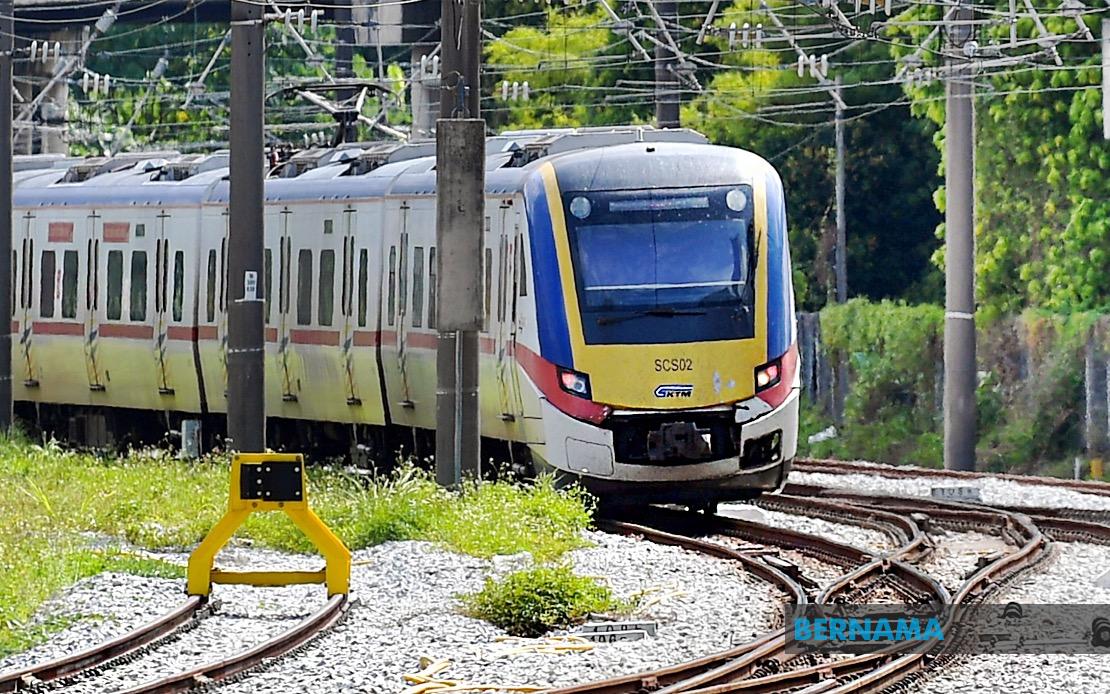
Malaysia's rail network experienced significant disruption on July 23 when a wooden construction structure fell onto railway tracks near Batang Benar, severing power supplies to both KTM Komuter and Electric Train Service operations across the Klang Valley region. The incident highlighted critical gaps in construction site safety protocols and raised fresh questions about oversight mechanisms for third-party works on railway infrastructure. Keretapi Tanah Melayu Berhad, the operator, swiftly mobilised contingency arrangements, but the disruption affected tens of thousands of commuters during a critical travel period.
The fallen structure struck the overhead line system between Batang Benar and Labu stations, immediately severing the electrical supply that powers both services. The incident forced immediate service suspensions across multiple routes. KTM Komuter trains departing from Pulau Sebang destined for KL Sentral were forced to terminate at Seremban Station, while northbound services heading towards KL Sentral or Batu Caves operated only from Bangi Station onwards. The complete cessation of services between Bangi and Seremban represented a critical bottleneck, isolating commuters across the Negeri Sembilan-Selangor corridor and forcing thousands to seek alternative transport arrangements during what may have been mid-journey.
To mitigate the disruption, Keretapi Tanah Melayu Berhad rapidly deployed compensatory shuttle bus services. Three dedicated shuttle buses were placed into operation, rotating between Seremban, Tiroi, Batang Benar, Labu and Bangi stations to accommodate stranded KTM Komuter passengers. For Electric Train Service users, the operator arranged seven additional shuttle buses stationed at KL Sentral, Bandar Tasik Selatan, Kajang and Seremban. The company also offered full refunds to ETS passengers who elected not to continue their journeys from their initial departure points, recognising the significant inconvenience imposed upon the travelling public.
The preliminary investigation revealed troubling lapses in contractor compliance that underscore systemic weaknesses in construction site management on railway corridors. According to Keretapi Tanah Melayu Berhad's statement, the Public Works Department contractor engaged in the wayleave project failed to adhere to mandatory safety procedures. Critically, the contractor neither submitted a comprehensive work schedule nor provided KTMB with advance notification of the actual timing of bridge construction activities occurring on the day of the incident. This absence of prior communication represents a fundamental breach of coordination protocols designed specifically to prevent such accidents.
Under the Site Entry Permit Standard Operating Procedure, construction works on railway corridors demand the on-site presence of three dedicated KTMB technical representatives drawn from the Regional Engineer, Signalling and Communications, and Electrification departments. These monitors are tasked with supervising construction activities once full approval has been granted and all required documentation has been submitted. The contractor's failure to trigger this protocol through proper notification meant that no KTMB personnel were present to supervise the bridge works, eliminating the critical human safeguards that might have prevented the structural collapse. This absence highlights a fundamental gap between written procedures and their consistent enforcement across construction sites.
For Malaysian rail commuters and the broader transport ecosystem, this incident carries significant implications. The Klang Valley rail network has experienced periodic disruptions in recent years, often attributed to third-party construction works, asset maintenance, or infrastructure deficiencies. Each disruption ripples across the economy, displacing thousands of commuters onto already congested road networks and potentially delaying business operations that depend upon reliable rail connectivity. The incident at Batang Benar demonstrates that even infrastructure managed by state-owned operators remains vulnerable to external actors who fail to respect established safety frameworks.
The regulatory dimension merits scrutiny. While KTMB possesses clear Standard Operating Procedures and Site Entry Permit requirements, the contractor's apparent disregard for notification obligations suggests that enforcement mechanisms may lack sufficient rigour or consequence. Contractors operating on railway corridors must confront meaningful penalties for non-compliance—financial sanctions, permit revocations, or mandatory safety retraining—that exceed the inconvenience costs imposed by brief service suspensions. Without such deterrents, contractors may calculate that cutting corners on communication and coordination poses acceptable risks relative to project scheduling pressures.
The overhead line system damage required repair efforts from KTMB's technical team, though the operator provided no specific timeline for restoration. Overhead electrification infrastructure represents one of the most critical and sensitive components of modern rail networks, and damage to these systems necessitates careful, methodical repairs rather than hasty remediation that might introduce safety hazards. Commuters relying upon rail services would have faced significant uncertainty about when normal operations might resume, potentially forcing them to adjust travel plans based on incomplete information.
For Southeast Asian transport planners, this incident offers instructive lessons about the intersection of infrastructure safety and third-party activities. Rail corridors passing through developing urban areas frequently encounter construction works undertaken by municipal governments, utility companies, or private developers whose activities occur in close proximity to tracks. Indonesia, Thailand, and the Philippines face similar challenges as rapid urbanisation generates competing demands for infrastructure space. The Batang Benar incident illustrates that notification and coordination protocols, however well-designed on paper, require consistent, culturally-embedded enforcement to prevent contractor complacency.
KTMB's apologetic statement acknowledged the incident as unforeseen while reaffirming its commitment to passenger safety and operational reliability. The operator directed passengers to monitor official social media platforms and consult station staff for real-time service updates, recognising that modern commuters require immediate, accessible information to adjust their travel strategies. However, the incident raises uncomfortable questions about whether such assurances sufficiently address structural vulnerabilities that allowed a construction contractor to operate without proper coordination oversight.
Moving forward, stakeholders including Keretapi Tanah Melayu Berhad, the Public Works Department, and construction contractors must collectively strengthen accountability mechanisms. This might include mandatory pre-construction briefings attended by all relevant contractors, real-time communication systems that flag construction activities to rail operators, and surprise compliance audits that verify adherence to Site Entry Permit procedures. Technology-enabled solutions such as geofencing systems that alert both contractors and rail operators when activities commence near electrified tracks could provide additional safeguards against human error or negligence.
The Batang Benar incident ultimately reflects a vulnerability endemic to complex modern infrastructure systems that depend upon coordination between multiple institutional actors operating according to different incentive structures. Rail operators prioritise uninterrupted service delivery, while construction contractors prioritise schedule completion and cost minimisation. When formal protocols fail to bridge these competing objectives, passenger safety and service reliability suffer. Malaysian policymakers should view this disruption not merely as an operational setback but as a signal requiring systemic strengthening of the mechanisms that govern how third parties interact with critical infrastructure corridors. The cost of such strengthening, measured in enhanced coordination and oversight, remains modest relative to the economic and social damage inflicted by infrastructure failures affecting millions of daily commuters.

