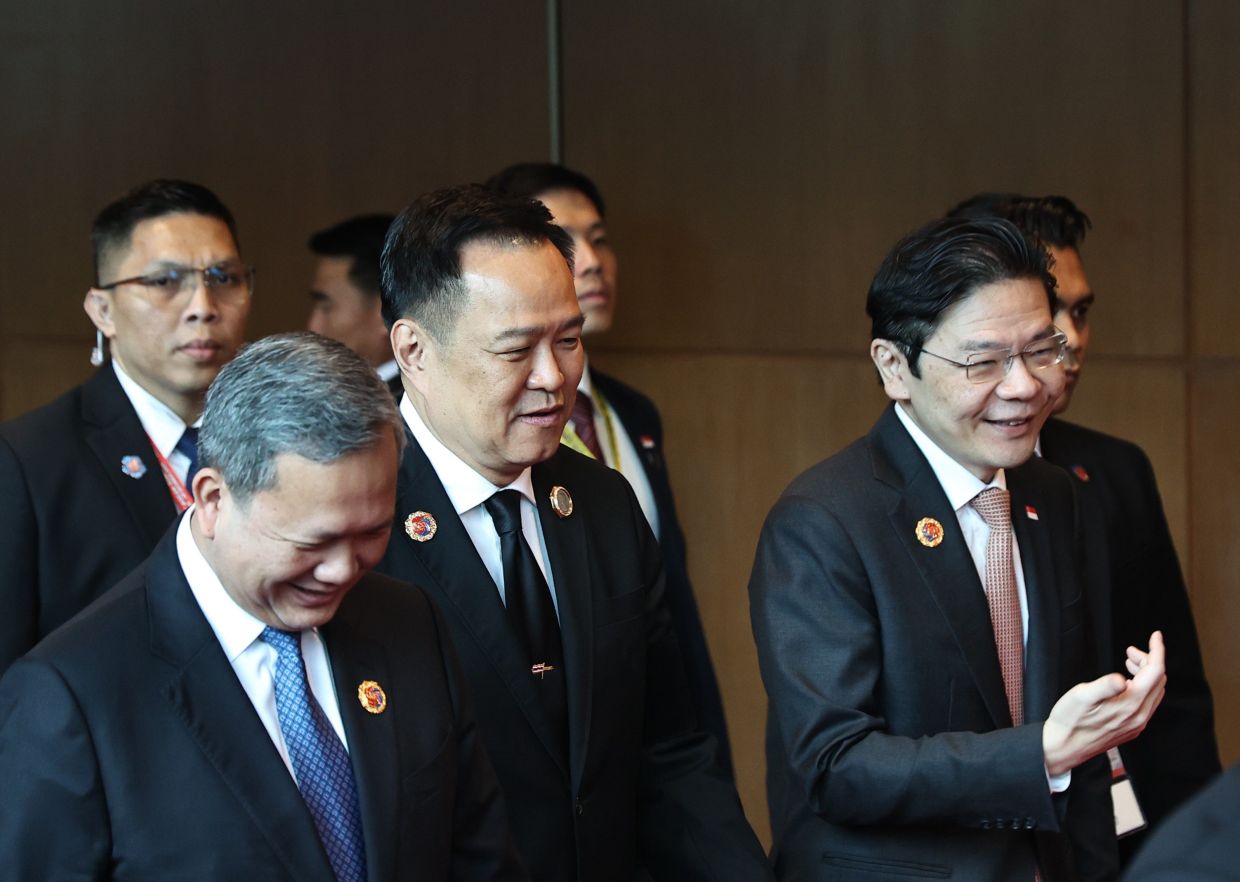
Diplomatic signals from Southeast Asia's two feuding neighbours suggest that China might be positioned to play a greater role in resolving the long-running Cambodia-Thailand border dispute, even as neither party has formally requested Beijing's intervention. The possibility has gained momentum following simultaneous visits to China by both countries' leaders this week, with each offering cautious openness to Chinese involvement whilst stopping short of explicit requests for mediation.
During a meeting with Chinese Premier Li Qiang in Beijing on July 16, Cambodian Prime Minister Hun Manet took the unusual step of personally briefing China's leadership on the latest developments along the contested frontier. The encounter occurred while Manet was in China to participate in the 2026 World Artificial Intelligence Conference, yet the border discussion represented one of the highest-level formal presentations of the dispute that Phnom Penh has made to Beijing since tensions escalated last year. In his remarks, Manet reiterated Cambodia's steadfast commitment to resolving the territorial disagreement through peaceful means grounded in international law, referencing existing treaties and agreements between the two neighbours.
Premier Li responded by reaffirming Beijing's traditional backing of Cambodia and characterising the bilateral relationship as one between "ironclad friends". Significantly, whilst neither government released official statements explicitly referencing mediation, the carefully calibrated language and the high-level nature of the exchange have prompted regional observers to wonder whether China is being positioned as a potential diplomatic bridge. The substance and timing of these discussions suggest that Phnom Penh regards keeping its powerful ally informed as a strategic priority in managing the border crisis.
Meanwhile, Thai Prime Minister Anutin Charnvirakul, visiting Beijing concurrently for the same conference, struck a notably different tone when speaking with Thai media. Rather than ruling out external involvement, Bangkok signalled flexibility by stating that Thailand was "not closing the door" to a possible Chinese mediatory role. Anutin emphasised that Thailand had not formally requested Beijing's intervention, yet acknowledged that if China wished to contribute constructively to tension reduction, such an offer would be considered. Crucially, he added that Bangkok still preferred bilateral dialogue as the primary mechanism for resolving differences, suggesting that Chinese involvement would be welcomed only as a supplementary measure.
China's diplomatic posture on the dispute has evolved cautiously over the past year. In 2023, Foreign Minister Wang Yi made public statements expressing Beijing's willingness to "uphold an objective and fair position and play a constructive role for the harmonious coexistence between Thailand and Cambodia" when meeting separately with both countries' foreign ministers at the Asean Foreign Ministers' Meeting. Wang called for peaceful resolution through dialogue whilst emphasising China's commitment to regional stability. Since those remarks, Beijing has actively supported implementation of the existing ceasefire agreement between the two nations and has hosted trilateral meetings involving senior officials from all three countries.
The pattern emerging from China's conduct suggests a calculated approach: Beijing has deliberately avoided formally offering mediation whilst maintaining consistent openness to the possibility. This diplomatic strategy allows China to preserve its relationship with both countries whilst avoiding the risks and complications associated with taking on an explicit mediatory role without both parties' clear agreement. By hosting high-level meetings and facilitating trilateral discussions, China has positioned itself as a stabilising force without formally assuming responsibility for resolving what remains a complex territorial dispute.
Cambodia's broader diplomatic approach to the border issue reveals Phnom Penh's recognition that resolving the dispute will require multifaceted engagement. Beyond seeking China's involvement, Cambodia has proactively welcomed Asean observer missions and pursued legal mechanisms under international law to address the disagreement. These parallel initiatives demonstrate that Phnom Penh views the dispute through an international lens rather than as a purely bilateral matter, a perspective that arguably creates space for countries like China to contribute to confidence-building and dialogue facilitation.
The simultaneous presence of Hun Manet and Anutin in Beijing, despite no announced bilateral meeting between the two leaders, underscores the peculiar diplomatic dynamics at play. Both countries are engaging with China separately, each signalling different degrees of interest in potential mediation, yet neither is publicly committing to a process that would formally involve Beijing. This careful manoeuvring reflects the sensitivities surrounding border disputes in Southeast Asia, where nationalist sentiments run high and any perception of compromising territorial claims can provoke domestic political backlash.
For Malaysia and other ASEAN members, the prospect of Chinese mediation carries both potential benefits and risks. A successful Chinese-brokered resolution could enhance regional stability and reduce the likelihood of border escalation that might draw in other actors. Conversely, deepening Cambodia's reliance on Chinese diplomatic support could further cement Beijing's influence in the region at a time when concerns about Chinese regional dominance are already significant. How this situation unfolds will likely influence the broader trajectory of great power competition within Southeast Asia and the space available for smaller nations to manage external relationships independently.
Whether China will ultimately formalise a mediation role remains uncertain. No Chinese mediation initiative has been announced, and neither Cambodia nor Thailand has publicly requested one. The diplomatic dance continuing in Beijing this week suggests that the possibility remains open, with each party carefully preserving its options whilst assessing the political costs and benefits of greater external involvement. For now, Beijing appears content to remain positioned as a concerned and supportive stakeholder, ready to assist if both neighbours agree that such help is needed.

