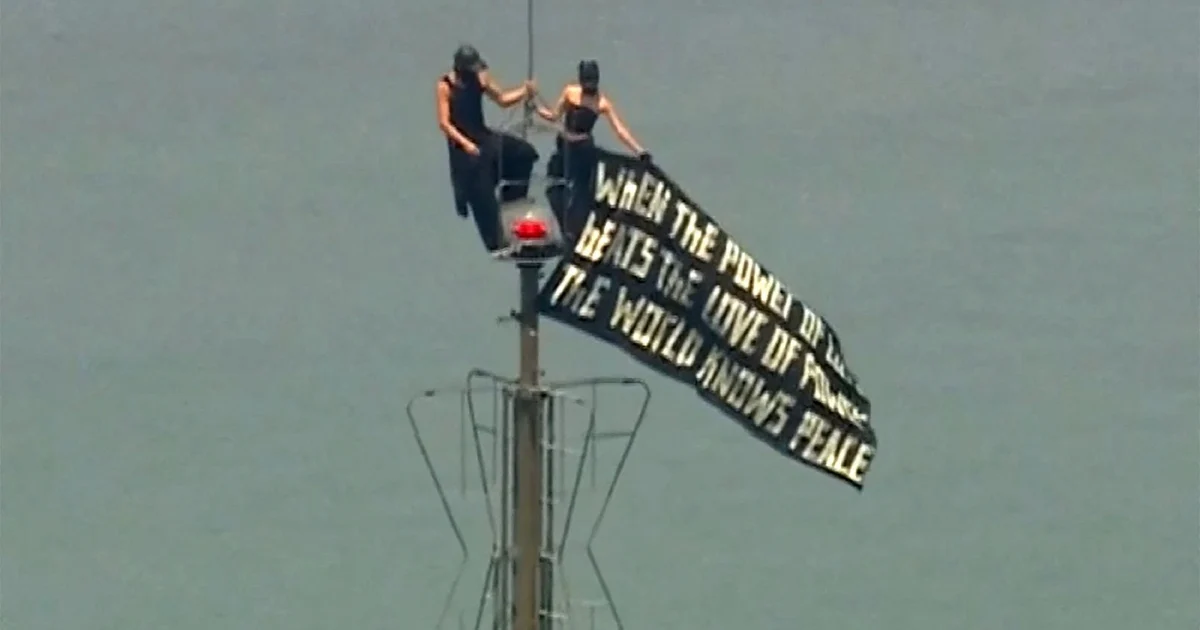
A dramatic incident unfolded atop one of America's most recognisable landmarks on Wednesday when two people were taken into custody following an unauthorised climb of an antenna structure at the Empire State Building in Manhattan. The pair's ascent to the building's apex appears to have coincided with a significant personal moment, with witnesses and authorities suggesting that an engagement proposal may have taken place during their time at the summit.
The Empire State Building stands as a defining symbol of New York's skyline and American urban prowess, commanding the attention of millions of visitors annually who ascend through its observation decks via authorised routes. The structure's distinctive antenna, which crowns the building at its highest point, serves both functional and aesthetic purposes, transmitting broadcast signals whilst contributing to the building's iconic silhouette visible across the city's boroughs.
Scaling unauthorised portions of the building represents a significant breach of security protocols at a location that attracts tourists from around the world. The building's management and security personnel maintain strict access controls to protect visitors and preserve the integrity of the structure itself. Such incidents underscore the challenges faced by iconic American landmarks in balancing public access with comprehensive safety measures.
The arrests reflect the serious legal consequences that accompany trespassing on restricted areas of high-profile buildings. New York City authorities enforce stringent regulations governing unauthorised entry into controlled zones of landmark structures, particularly those involving climbing external features. The charges resulting from such actions can carry substantial penalties designed to deter similar incidents.
Public stunts at famous landmarks have become increasingly common in recent years, often tied to social media visibility and the desire to create memorable moments. Engagement proposals, in particular, frequently occur at locations imbued with romantic significance or architectural grandeur. The Empire State Building, with its long association with romance and its appearance in countless films and cultural narratives, represents a coveted backdrop for such life-defining moments.
For Malaysian and Southeast Asian readers, this incident highlights the tensions between personal expression and institutional safety standards that exist globally across tourist destinations and landmark preservation. Major cities throughout the region, from Kuala Lumpur's Petronas Twin Towers to Singapore's Marina Bay Sands, implement comparable security measures to prevent unauthorised access to high-altitude areas and prominent architectural features.
The incident raises questions about how individuals navigate the boundaries between creating unique, memorable experiences and respecting the legal and safety frameworks that protect shared cultural assets. Engagement proposals have traditionally served as opportunities for public affirmation of commitment, yet the methods employed to achieve maximum impact must be reconciled with institutional responsibilities.
Security personnel at prominent buildings face ongoing pressure to prevent unauthorised access whilst maintaining the welcoming atmosphere necessary for legitimate visitors. The resources devoted to monitoring and responding to unauthorised climbing attempts represent substantial costs to building operators and municipal authorities. Each incident requiring law enforcement response diverts resources that might otherwise be allocated to routine security operations.
The legal implications for the arrested individuals extend beyond immediate charges, potentially affecting employment prospects, travel opportunities, and personal records. Such consequences serve as cautionary examples of how momentary decisions made in pursuit of memorable experiences can have lasting repercussions on individual futures.
Beyond the legal dimensions, the incident reflects broader societal conversations about how digital culture and social media have reshaped the pressures surrounding milestone moments. The impulse to document and share significant life events across platforms has created incentives for increasingly dramatic public displays, sometimes at the expense of prudent judgment.
The Empire State Building's continued prominence in global consciousness—particularly through its role in entertainment, tourism, and cultural discourse—makes it a frequent target for such unauthorised activities. Building management must continually adapt security measures to address evolving challenges whilst preserving the visitor experience that has made the structure economically viable and culturally significant for nearly a century.
As New York's authorities process the case, the incident serves as a reminder that iconic landmarks exist within complex networks of legal, safety, and commercial considerations. For those contemplating unconventional proposals at famous locations, the risks extend well beyond the romantic possibilities, encompassing serious legal consequences that extend far beyond a single dramatic moment.

